Research & Development World

  • R&D World Home
  • Topics
    • Aerospace
    • Automotive
    • Biotech
    • Careers
    • Chemistry
    • Environment
    • Energy
    • Life Science
    • Material Science
    • R&D Management
    • Physics
  • Technology
    • 3D Printing
    • A.I./Robotics
    • Software
    • Battery Technology
    • Controlled Environments
      • Cleanrooms
      • Graphene
      • Lasers
      • Regulations/Standards
      • Sensors
    • Imaging
    • Nanotechnology
    • Scientific Computing
      • Big Data
      • HPC/Supercomputing
      • Informatics
      • Security
    • Semiconductors
  • R&D Market Pulse
  • R&D 100
    • 2025 R&D 100 Award Winners
    • 2025 Professional Award Winners
    • 2025 Special Recognition Winners
    • R&D 100 Awards Event
    • R&D 100 Submissions
    • Winner Archive
  • Resources
    • Research Reports
    • Digital Issues
    • Educational Assets
    • Subscribe
    • Video
    • Webinars
    • PharmSci360
    • Content submission guidelines for R&D World
  • Global Funding Forecast
  • Top Labs
  • Advertise
  • SUBSCRIBE

U.S. Space Force invests $13.7 billion in next-gen launch vehicles from SpaceX, ULA, and Blue Origin

By Brian Buntz | April 6, 2025

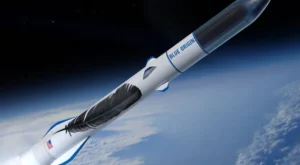
New Glenn

New Glenn [Image courtesy of Blue Origin]

Blue Origin broke into the military’s most critical space launch market Friday, securing a multi-billion dollar share alongside SpaceX and United Launch Alliance in new U.S. Space Force contracts worth up to $13.7 billion designed to ensure access to orbit for national security missions through 2032.

The contract awards are a significant expansion of the Space Force’s National Security Space Launch (NSSL) program. SpaceX captured the largest share at $5.9 billion for 28 missions. Meanwhile, ULA secured $5.4 billion for 19 launches, and Blue Origin receiving $2.4 billion for seven missions through 2032.

“A robust and resilient space launch architecture is the foundation of both our economic prosperity and our national security,” said Gen. Chance Saltzman of the U.S. Space Force Chief of Space Operations in a press release. “National Security Space Launch isn’t just a program; it’s a strategic necessity that delivers the critical space capabilities our warfighters depend on to fight and win.”

This marks Blue Origin’s first entry into the Space Force’s Lane 2 category for high-priority national security payloads, despite New Glenn not yet completing military certification after its January 2025 orbital debut. The dramatic jump in mission tempo — with 54 Lane 2 launches planned between 2027–2032 — nearly doubles previous five-year launch rates. Space Force officials emphasized the contracts’ role in fostering a more competitive domestic launch market while ensuring reliable access to orbit for America’s most sensitive military and intelligence satellites.

The decision to split launch contracts among SpaceX, ULA, and Blue Origin allows the Space Force to use proven rockets while bringing in New Glenn’s heavy-lift capability. This diversification is intended to bolster the U.S. launch industry. Assigning important missions to multiple providers stimulates competition and lowers the risk associated with relying on just one company or rocket type. This multi-provider approach is key to maintaining access to space for critical national security satellites through 2032, acting as a hedge against potential launch failures or shifts in the commercial market.

“America leads the world in space launch, and through these NSSL Phase 3 Lane 2 contracts, we will ensure continued access to this vital domain,” said Maj. Gen. Stephen Purdy, Acting Assistant Secretary of the Air Force for Space Acquisition and Integration, in a press release. “These awards bolster our ability to launch critical defense satellites while strengthening our industrial base and enhancing operational readiness.”

The Space Force will begin assigning these missions to providers in fiscal year 2025, though actual launches won’t start until 2027. This extended timeline allows for the roughly two-year integration period typically needed between mission assignment and launch. The contract structure comes as global government spending on space defense reached $58.4 billion in 2023 — nearly double the 2018 figure. Space Force acquisition executive Frank Calvelli has emphasized that these contracts represent just one part of a broader strategy that includes separate “Lane 1” awards for lower-risk missions, which could involve newer providers like Rocket Lab and Stoke Space. Those additional contracts, worth up to $5.6 billion for approximately 30 missions, aim to create entry points for emerging launch companies while reserving the most sensitive payloads for providers with proven heavy-lift capabilities.

Related Articles Read More >

No storms, no forecast: NASA’s DAPHNE mission targets quiet-time space weather
How a plant virus could keep astronauts medicated on a trip to Mars
The science behind the Prada-designed spacesuit for Artemis 
NASA is confident Blue Origin will be ready for Artemis III despite explosion
rd newsletter
EXPAND YOUR KNOWLEDGE AND STAY CONNECTED
Get the latest info on technologies, trends, and strategies in Research & Development.

R&D World Digital Issues

Fall 2025 issue

Browse the most current issue of R&D World and back issues in an easy to use high quality format. Clip, share and download with the leading R&D magazine today.

R&D 100 Awards
Research & Development World
  • Subscribe to R&D World Magazine
  • Sign up for R&D World’s newsletter
  • Contact Us
  • About Us
  • Drug Discovery & Development
  • Pharmaceutical Processing
  • Global Funding Forecast

Copyright © 2026 Arrowfly LLC. All Rights Reserved. The material on this site may not be reproduced, distributed, transmitted, cached or otherwise used, except with the prior written permission of Arrowfly
Privacy Policy | Advertising | About Us

Search R&D World

  • R&D World Home
  • Topics
    • Aerospace
    • Automotive
    • Biotech
    • Careers
    • Chemistry
    • Environment
    • Energy
    • Life Science
    • Material Science
    • R&D Management
    • Physics
  • Technology
    • 3D Printing
    • A.I./Robotics
    • Software
    • Battery Technology
    • Controlled Environments
      • Cleanrooms
      • Graphene
      • Lasers
      • Regulations/Standards
      • Sensors
    • Imaging
    • Nanotechnology
    • Scientific Computing
      • Big Data
      • HPC/Supercomputing
      • Informatics
      • Security
    • Semiconductors
  • R&D Market Pulse
  • R&D 100
    • 2025 R&D 100 Award Winners
    • 2025 Professional Award Winners
    • 2025 Special Recognition Winners
    • R&D 100 Awards Event
    • R&D 100 Submissions
    • Winner Archive
  • Resources
    • Research Reports
    • Digital Issues
    • Educational Assets
    • Subscribe
    • Video
    • Webinars
    • PharmSci360
    • Content submission guidelines for R&D World
  • Global Funding Forecast
  • Top Labs
  • Advertise
  • SUBSCRIBE