Researchers have measured CO2 emissions from fossil fuel use in California and compared them to reported emissions.
This is the first time fossil fuel emissions have been independently checked for such a large area.
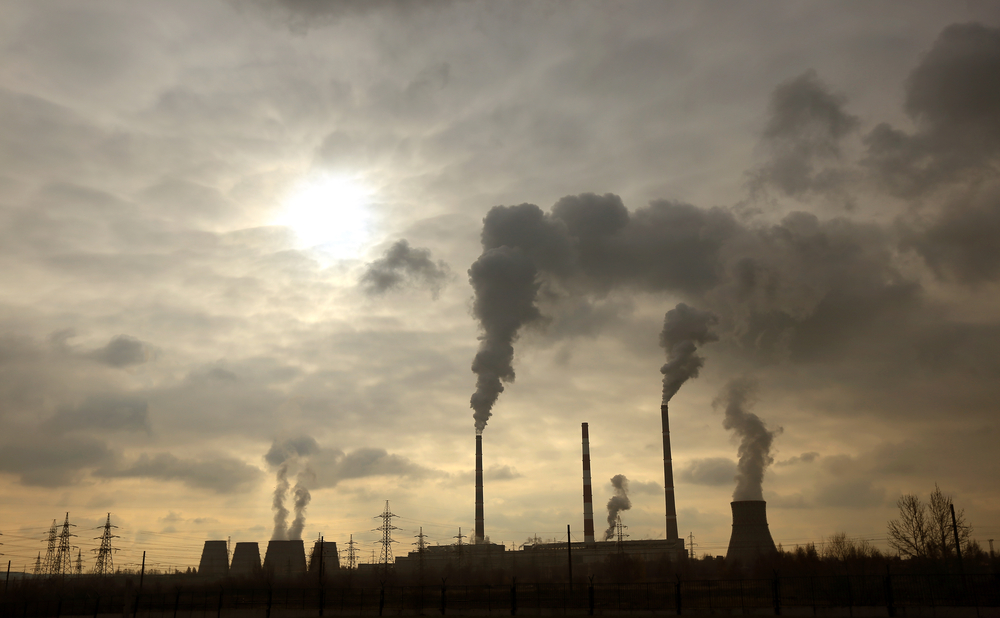
Carbon dioxide (CO2) from fossil fuel combustion is the primary driver of climate change, and many governments, companies and citizens are making efforts to curb their emissions. A key part of this effort is measuring the change in emissions.
Countries and regions report their CO2 emissions from fossil fuels by counting what they have used, such as the amount of oil, coal or gas they have burned. However, there may be uncertainty in these estimates, for example depending on the composition of the fuel.
Now, a team of researchers, led by members from Imperial College London, have reported a technique to estimate CO2 emissions from fossil fuels using atmospheric measurements, tested over three months in California.
In this case the reported and actual emissions matched up well – but researchers warn this may not be the case everywhere else in the world.
The study, funded by NASA and published today in Environmental Research Letters, is the first time scientists have been able to measure fossil fuel CO2 emissions over a large area like California. The researchers suggest the technique could also be used in other regions, strengthening the ability to report and monitor efforts to curb emissions.
The Paris Agreement, which came into force in November 2016, aims to keep the global temperature rise below two degrees Celsius above pre-industrial levels. As part of this, most countries around the world have agreed to reduce their CO2 emissions. Individual regions like California have also set their own emissions reduction goals and policies.
Lead author Dr Heather Graven, from the Department of Physics at Imperial, said: “The Paris Agreement requires that ‘stocktakes’ are conducted every five years, but the details of how these will be conducted are not settled and are in need of input from researchers.
“Our study is the first example of how atmospheric measurements can help to check on fossil fuel CO2 emissions over an area large enough to encompass nations, provinces or states.”
While there are many instruments that can measure CO2 concentration in the atmosphere, the difficulty is in separating natural CO2 from plant life from manmade CO2 emitted by fossil fuel burning. However, because gas, coal and oil are millions of years old, their carbon has a key difference compared to the carbon cycling through plants.
Fossil fuels lack a type of radioactive carbon, an isotope called carbon-14, which decays over time. By measuring the ratio of carbon isotopes in the samples the team collected, they were able to tell how much carbon was from fossil fuel combustion.
The team, which included researchers from ten different laboratories in the US, made their measurements at nine monitoring stations around California. They combined the data with a California-specific atmospheric circulation model, which shows how air moves around the state.
They then compared their results with other estimates of fossil fuel emissions, including estimates from the California Air Resources Board, who assisted with the study. The researchers found there was a good match between the different estimates.
California’s estimates are based on calculating what has been burnt and this study provided a way to check that their reported emissions are unlikely to have any large biases.
The researchers say that adding this atmospheric monitoring technique to the suite of tools used to monitor climate change can help to better understand greenhouse gas emissions from specific regions and how they are changing over time.