Research & Development World

  • R&D World Home
  • Topics
    • Aerospace
    • Automotive
    • Biotech
    • Careers
    • Chemistry
    • Environment
    • Energy
    • Life Science
    • Material Science
    • R&D Management
    • Physics
  • Technology
    • 3D Printing
    • A.I./Robotics
    • Software
    • Battery Technology
    • Controlled Environments
      • Cleanrooms
      • Graphene
      • Lasers
      • Regulations/Standards
      • Sensors
    • Imaging
    • Nanotechnology
    • Scientific Computing
      • Big Data
      • HPC/Supercomputing
      • Informatics
      • Security
    • Semiconductors
  • R&D Market Pulse
  • R&D 100
    • 2025 R&D 100 Award Winners
    • 2025 Professional Award Winners
    • 2025 Special Recognition Winners
    • R&D 100 Awards Event
    • R&D 100 Submissions
    • Winner Archive
  • Resources
    • Research Reports
    • Digital Issues
    • Educational Assets
    • R&D Index
    • Subscribe
    • Video
    • Webinars
    • Content submission guidelines for R&D World
  • Global Funding Forecast
  • Top Labs
  • Advertise
  • SUBSCRIBE

Curiosity Rover to Temporarily Switch ‘Brains’

By NASA | October 4, 2018

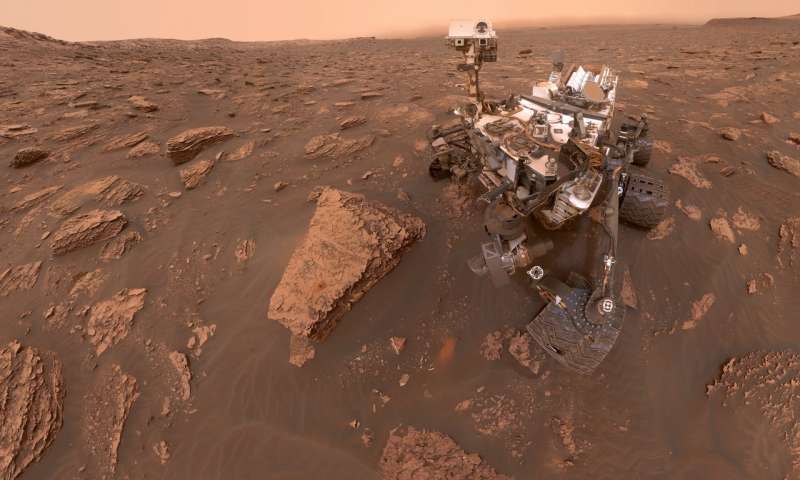
A self-portrait taken by NASA’s Curiosity rover taken on Sol 2082 (June 15, 2018). A Martian dust storm has reduced sunlight and visibility at the rover’s location in Gale Crater. Credit: NASA/JPL-Caltech/MSSS

Engineers at NASA’s Jet Propulsion Laboratory in Pasadena, California, this week commanded the agency’s Curiosity rover to switch to its second computer. The switch will enable engineers to do a detailed diagnosis of a technical issue that has prevented the rover’s active computer from storing science and some key engineering data since Sept. 15.

Like many NASA spacecraft, Curiosity was designed with two, redundant computers—in this case, referred to as a Side-A and a Side-B computer—so that it can continue operations if one experiences a glitch. After reviewing several options, JPL engineers recommended that the rover switch from Side B to Side A, the computer the rover used initially after landing.

The rover continues to send limited engineering data stored in short-term memory when it connects to a relay orbiter. It is otherwise healthy and receiving commands. But whatever is preventing Curiosity from storing science data in long-term memory is also preventing the storage of the rover’s event records, a journal of all its actions that engineers need in order to make a diagnosis. The computer swap will allow data and event records to be stored on the Side-A computer.

Side A experienced hardware and software issues over five years ago on sol 200 of the mission, leaving the rover uncommandable and running down its battery. At that time, the team successfully switched to Side B. Engineers have since diagnosed and quarantined the part of Side A’s memory that was affected so that computer is again available to support the mission.

“At this point, we’re confident we’ll be getting back to full operations, but it’s too early to say how soon,” said Steven Lee of JPL, Curiosity’s deputy project manager. “We are operating on Side A starting today, but it could take us time to fully understand the root cause of the issue and devise workarounds for the memory on Side B.

“We spent the last week checking out Side A and preparing it for the swap,” Lee said. “It’s certainly possible to run the mission on the Side-A computer if we really need to. But our plan is to switch back to Side B as soon as we can fix the problem to utilize its larger memory size.”

Related Articles Read More >

NASA R&D 100 Winner enables high-speed data transfer from space
The Milky Way is glowing: these scientists think dark matter may be the cause
Reusable rocket startup raises $510 million
2025 R&D layoffs tracker: hardware and chips lead the year’s biggest cuts while biopharma pares pipelines
rd newsletter
EXPAND YOUR KNOWLEDGE AND STAY CONNECTED
Get the latest info on technologies, trends, and strategies in Research & Development.
RD 25 Power Index

R&D World Digital Issues

Fall 2025 issue

Browse the most current issue of R&D World and back issues in an easy to use high quality format. Clip, share and download with the leading R&D magazine today.

Research & Development World
  • Subscribe to R&D World Magazine
  • Sign up for R&D World’s newsletter
  • Contact Us
  • About Us
  • Drug Discovery & Development
  • Pharmaceutical Processing
  • Global Funding Forecast

Copyright © 2025 WTWH Media LLC. All Rights Reserved. The material on this site may not be reproduced, distributed, transmitted, cached or otherwise used, except with the prior written permission of WTWH Media
Privacy Policy | Advertising | About Us

Search R&D World

  • R&D World Home
  • Topics
    • Aerospace
    • Automotive
    • Biotech
    • Careers
    • Chemistry
    • Environment
    • Energy
    • Life Science
    • Material Science
    • R&D Management
    • Physics
  • Technology
    • 3D Printing
    • A.I./Robotics
    • Software
    • Battery Technology
    • Controlled Environments
      • Cleanrooms
      • Graphene
      • Lasers
      • Regulations/Standards
      • Sensors
    • Imaging
    • Nanotechnology
    • Scientific Computing
      • Big Data
      • HPC/Supercomputing
      • Informatics
      • Security
    • Semiconductors
  • R&D Market Pulse
  • R&D 100
    • 2025 R&D 100 Award Winners
    • 2025 Professional Award Winners
    • 2025 Special Recognition Winners
    • R&D 100 Awards Event
    • R&D 100 Submissions
    • Winner Archive
  • Resources
    • Research Reports
    • Digital Issues
    • Educational Assets
    • R&D Index
    • Subscribe
    • Video
    • Webinars
    • Content submission guidelines for R&D World
  • Global Funding Forecast
  • Top Labs
  • Advertise
  • SUBSCRIBE