High-Rate Delay-Tolerant Networking (HDTN) is software for streaming and networking communications in space. The software has the potential to enable a solar system internet, allowing space exploration teams to receive data from rovers and other space vehicles and to maintain connections between spacecraft and Earth.
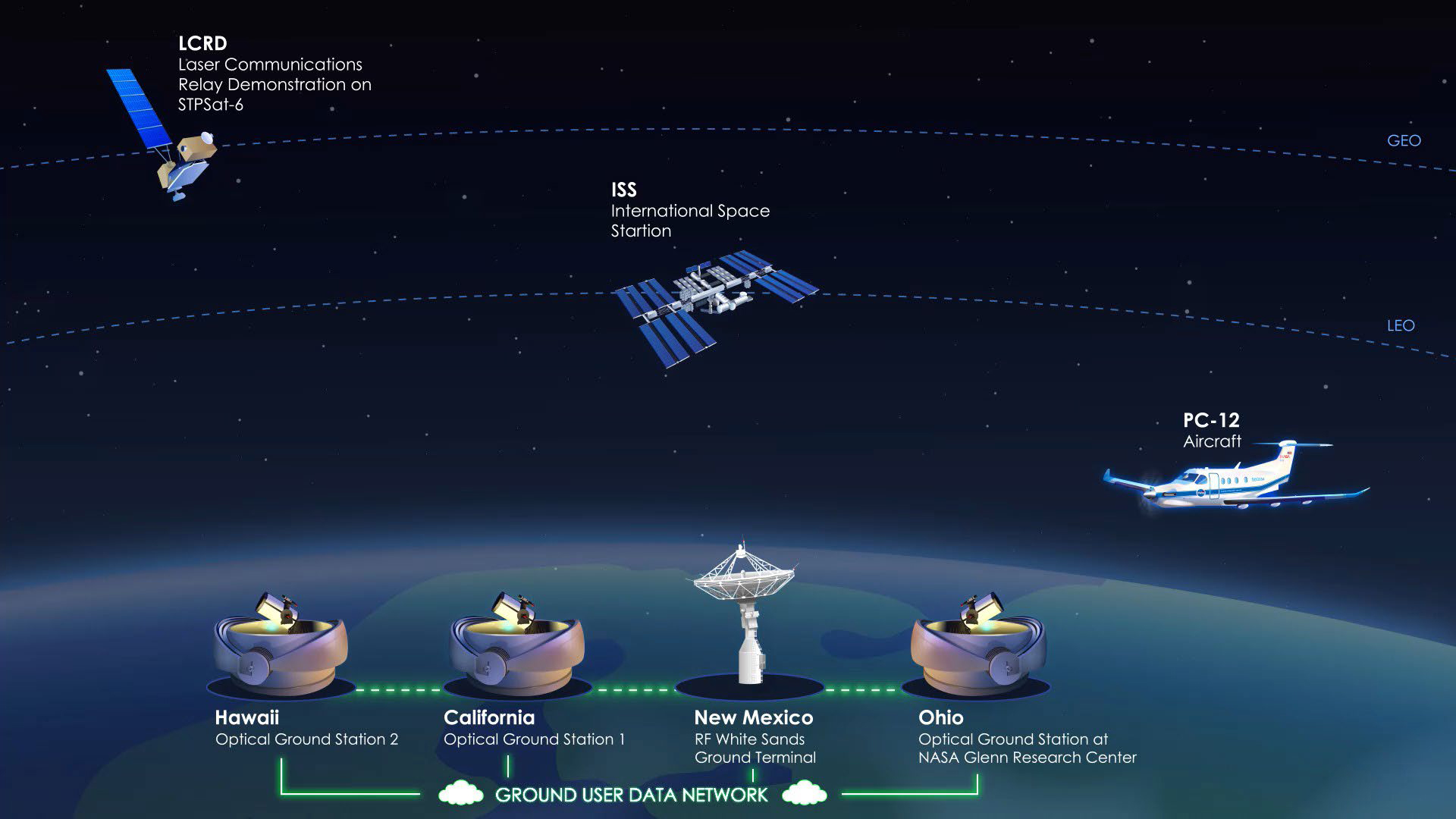
The software enables communication between space and Earth. Credit: NASA Glenn Research Center
The software can transfer data up to 10 times faster than current delay-tolerant networking (DTN) technology, according to the NASA Glenn Research Center, where the project was based. The software uses the Bundle Protocol (BP), which provides store-and-forward capabilities to navigate the challenges of the space environment.
The software is open source and available at no cost on GitHub. NASA Glenn Research Center has also posted several video tutorials on its YouTube channel to help users access the technology.
HDTN on the ISS
In June 2024, the HDTN software was tested on the International Space Station (ISS), demonstrating more than 900 megabits per second over a laser communications link from the ISS.
“We don’t know of any other software that has demonstrated those rates in space or in a laboratory environment in relation to DTN software,” said Rachel Dudukovich, a principal investigator on the project.
The software enables 4K video streaming from space to Earth, from Earth to the ISS and from aircraft to the ISS. It also allows for HD livestreaming from aircraft to the ISS. HDTN was used to establish ISS connectivity to a NASA field center for the first time, bypassing the traditional Mission Control Center.
HDTN has been used by the Goddard Space Flight Center, Johnson Space Center (JSC), Marshall Space Flight Center (MSFC), Kennedy Space Center and Ames Research Center, as well as several small businesses and universities.
Origin and future development
The need for software like HDTN was identified by another project at Glenn, called Integrated Radio Optical Communications, which was focused on developing a hybrid radio-frequency and optical terminal. What eventually became HDTN started as a small study that was assessing the capabilities of existing space networking software packages, Dudukovich said.
To achieve the gigabit per second data rates to support the optical link created by the Integrated Radio and Optical Communications project, researchers created HDTN.
NASA will continue developing implementations of DTN technology to bring internet-like capabilities to space for future explorers.