Research & Development World

  • R&D World Home
  • Topics
    • Aerospace
    • Automotive
    • Biotech
    • Careers
    • Chemistry
    • Environment
    • Energy
    • Life Science
    • Material Science
    • R&D Management
    • Physics
  • Technology
    • 3D Printing
    • A.I./Robotics
    • Software
    • Battery Technology
    • Controlled Environments
      • Cleanrooms
      • Graphene
      • Lasers
      • Regulations/Standards
      • Sensors
    • Imaging
    • Nanotechnology
    • Scientific Computing
      • Big Data
      • HPC/Supercomputing
      • Informatics
      • Security
    • Semiconductors
  • R&D Market Pulse
  • R&D 100
    • 2025 R&D 100 Award Winners
    • 2025 Professional Award Winners
    • 2025 Special Recognition Winners
    • R&D 100 Awards Event
    • R&D 100 Submissions
    • Winner Archive
  • Resources
    • Research Reports
    • Digital Issues
    • Educational Assets
    • Subscribe
    • Video
    • Webinars
    • Content submission guidelines for R&D World
  • Global Funding Forecast
  • Top Labs
  • Advertise
  • SUBSCRIBE

Disruption Tolerant Networking to Demonstrate Internet in Space

By Nasa/Goddard Space Flight Center | July 17, 2018

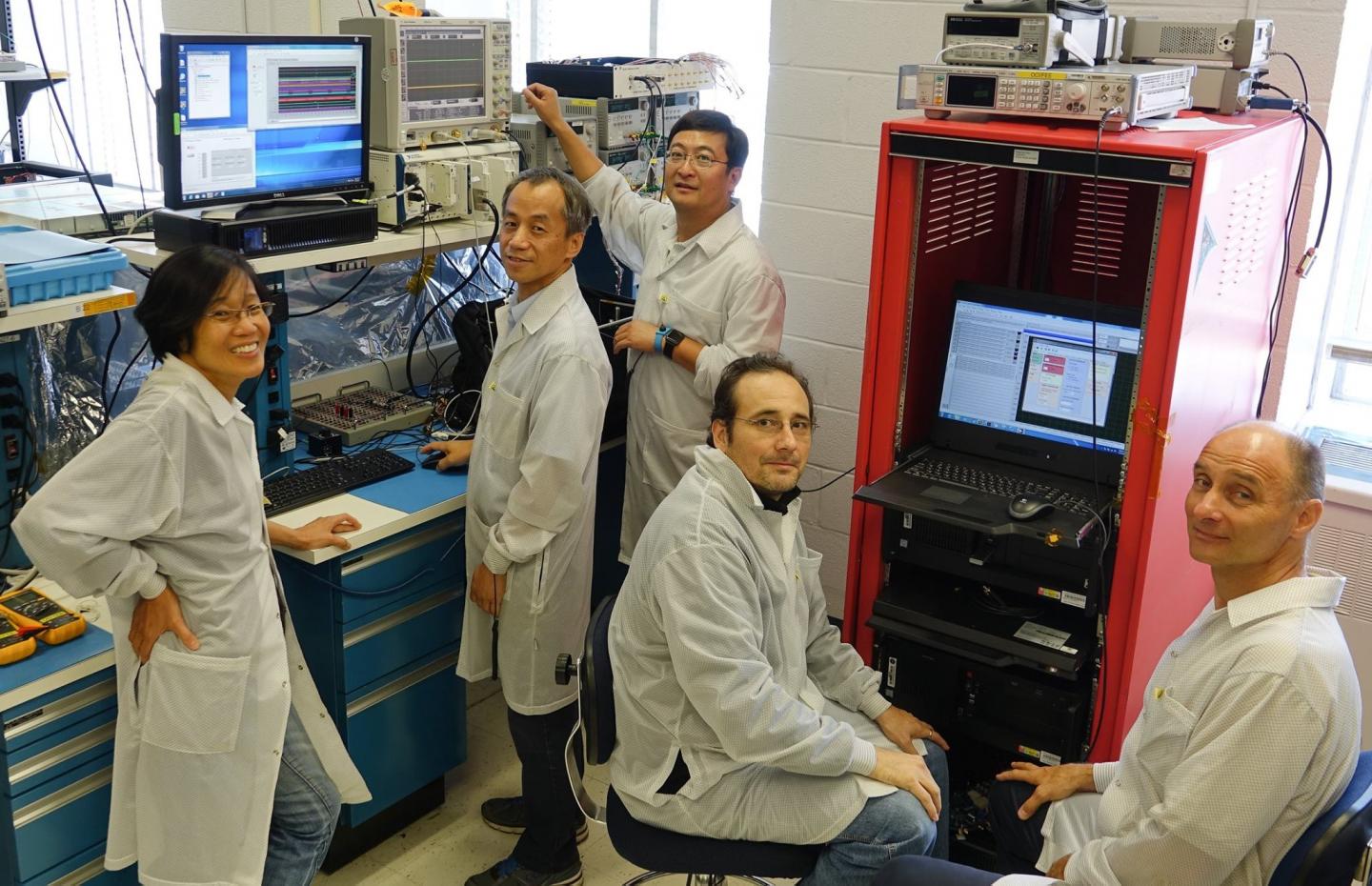
NASA’s new Plankton, Aerosol, Cloud, ocean Ecosystem, or PACE, mission will be the first space mission to use a new communication technology. From left to right are the engineers helping to build the mission: Nga Cao, Steve Feng, Wei Lu, Chris Zincke, and Zoran Kahric. Credit: NASA

NASA’s Human Exploration and Operations and Science Mission Directorates are collaborating to make interplanetary internet a reality.

They’re about to demonstrate Delay/Disruption Tolerant Networking, or DTN – a technology that sends information much the same way as conventional internet does. Information is put into DTN bundles, which are sent through space and ground networks to its destination.

Data Delivery

The Science Mission Directorate looks forward to incorporating DTN into future missions and has identified the Plankton, Aerosol, Cloud, ocean Ecosystem, or PACE, mission as the first key opportunity to demonstrate this revolutionary capability.

NASA’s Jet Propulsion Laboratory in Pasadena, California, first tested DTN during a science mission to a comet in 2008. That technology demonstration proved out the capability of DTN as part of the Deep Impact – EPOXI mission. PACE will take an important next step in using DTN as part of daily operations.

“DTN represents a shift in how data will get delivered in the future. I’m delighted PACE will become the first science mission to employ DTN,” said David Israel.

Targeted to launch in the early 2020s, PACE will advance scientists’ ability to assess the health of Earth’s oceans by measuring the distribution of phytoplankton, tiny plants and algae that sustain the marine food web. It will also continue systematic records of key atmospheric variables associated with air quality and Earth’s climate.

Antarctica Demonstration

The decision to infuse DTN on a space platform comes just months after NASA engineers demonstrated the technology from the National Science Foundation’s McMurdo Station in Antarctica — a highly remote location with limited communication infrastructure. The demonstration showed that NASA could operate “internet style” between two endpoints within two different networks that do not have a continuous path between them, Israel said.

DTN could become a communication necessity for all types of terrestrial applications. Any remote location on Earth that has limited network connectivity is a candidate for DTN, Israel said.

NASA plans to build out a Solar System Internet with international partners, beginning with NASA’s Near Earth Network, Space Network and Deep Space Network, Israel added. Both the Solar System Internet concept and DTN are part of NASA’s Decade of Light initiative, through which the agency is developing and refining next-generation communications and navigation technologies for use in future science and exploration missions. Exploration missions will use DTN to expand the network to the Moon, allowing communication between surface and orbiting elements and with Earth.

“We’re really pushing to get DTN in use,” Israel said. “This is an important first step in that process.”
Related Articles Read More >

The science behind the Prada-designed spacesuit for Artemis 
NASA is confident Blue Origin will be ready for Artemis III despite explosion
Blue Origin explosion leaves Artemis experiments in limbo
SpaceX’s Starship V3 rocket completed its launch rehearsal
rd newsletter
EXPAND YOUR KNOWLEDGE AND STAY CONNECTED
Get the latest info on technologies, trends, and strategies in Research & Development.

R&D World Digital Issues

Fall 2025 issue

Browse the most current issue of R&D World and back issues in an easy to use high quality format. Clip, share and download with the leading R&D magazine today.

R&D 100 Awards
Research & Development World
  • Subscribe to R&D World Magazine
  • Sign up for R&D World’s newsletter
  • Contact Us
  • About Us
  • Drug Discovery & Development
  • Pharmaceutical Processing
  • Global Funding Forecast

Copyright © 2026 WTWH Media LLC. All Rights Reserved. The material on this site may not be reproduced, distributed, transmitted, cached or otherwise used, except with the prior written permission of WTWH Media
Privacy Policy | Advertising | About Us

Search R&D World

  • R&D World Home
  • Topics
    • Aerospace
    • Automotive
    • Biotech
    • Careers
    • Chemistry
    • Environment
    • Energy
    • Life Science
    • Material Science
    • R&D Management
    • Physics
  • Technology
    • 3D Printing
    • A.I./Robotics
    • Software
    • Battery Technology
    • Controlled Environments
      • Cleanrooms
      • Graphene
      • Lasers
      • Regulations/Standards
      • Sensors
    • Imaging
    • Nanotechnology
    • Scientific Computing
      • Big Data
      • HPC/Supercomputing
      • Informatics
      • Security
    • Semiconductors
  • R&D Market Pulse
  • R&D 100
    • 2025 R&D 100 Award Winners
    • 2025 Professional Award Winners
    • 2025 Special Recognition Winners
    • R&D 100 Awards Event
    • R&D 100 Submissions
    • Winner Archive
  • Resources
    • Research Reports
    • Digital Issues
    • Educational Assets
    • Subscribe
    • Video
    • Webinars
    • Content submission guidelines for R&D World
  • Global Funding Forecast
  • Top Labs
  • Advertise
  • SUBSCRIBE