In Norway, scientists are using drones to detect a virus in humpback whales called cetacean morbillivirus. The drones are used to collect samples from whale blow, which the scientists then test for four different viruses. They published their findings last month in BMC Veterinary Research, showing that cetacean morbillivirus is circulating in northern ecosystems.
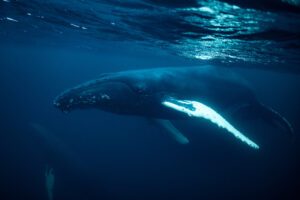
Humpback whales in Kvænangen fjord in Norway hunting for herrings. Adobe Stock
The virus was detected in the blows of two asymptomatic groups of humpback whales, as well as in one symptomatic sperm whale and the kidney of a stranded pilot whale. The scientists also detected alphaherpesvirus in five humpback whale groups and gammaherpesvirus in one humpback whale skin biopsy.
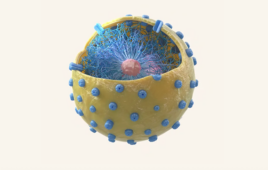
Cetacean morbillivirus has never been reported in the Arctic Circle before, Helena Costa, who led the study, told The New York Times. This may reflect gaps in surveillance rather than a true absence of the disease, the study concluded. The virus is highly infectious and deadly, affecting the respiratory and neurological systems. Outbreaks have caused mass strandings and deaths in the North Atlantic and the Mediterranean.
The virus is transmitted through direct contact between marine mammals and through respiratory droplets. Some infected animals exhibit no symptoms.
Traditionally, skin biopsies are used to test whales for pathogens, which leaves a small wound on the animal. Using drones to test the air expelled through the blowhole is a less invasive method.
Between 2016 and 2025, drones equipped with petri dishes collected more than 50 samples from humpback, sperm and fin whales. The scientists were able to follow the humpback whales’ migration patterns to collect samples from groups in northern Norway and Iceland, as well as off the coast of West Africa.
“The interesting thing would be to see it in the long term,” Costa said. “You get the most valuable data when you have decades of research.”
The scientists also tested the whales for the bird flu and Brucella, which can both infect humans. Neither disease was detected in the samples.