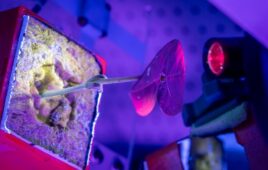
The heat shield on Orion was tested during the uncrewed Artemis I mission and experienced an anomaly during reentry. As the Orion spacecraft reenters the atmosphere this evening, the Avcoat heat shield will be essential to the safety of the crew. Although NASA is confident the splashdown will occur safely as planned, some experts disagree.
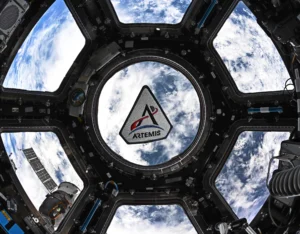
Image credit: NASA/Jessica Meir
Charlie Camarda, a former NASA astronaut and an expert on heat shields, says NASA should never have launched Artemis II, according to The New York Times.
During the Artemis I mission, chunks of the Avcoat, which covers the heat shield, charred and broke off differently than expected. The material, which was originally developed for the Apollo missions, is intentionally designed to ablate, carrying heat away from the capsule as it reenters the atmosphere.
During Artemis I’s skip entry, when the capsule dips in and out of the atmosphere, the outer layer hardened and caused gases to get trapped in the decomposition layer of the Avcoat. This caused a buildup of pressure, which caused the material to crack and pop off.
NASA’s engineering response: trajectory over hardware replacement
When the Artemis I data came in, the Orion’s heat shield was already built. NASA chose not to replace the shield, which would have taken two years. Instead, it modified the reentry profile and refined the bonding of the Avcoat blocks.
“The heat shield investigation helped ensure we fully understand the cause and nature of the issue, as well as the risk we are asking our crews to take when they venture to the Moon,”
said Amit Kshatriya, NASA’s associate administrator of the Moon to Mars program. “NASA teams unanimously agreed the agency can develop an acceptable flight rationale that will keep the crew safe using the current Artemis II heat shield with operational changes to the entry.”
NASA altered the trajectory of the mission, modifying the skip trajectory to a loft movement, coming in at a steeper angle and spending less time in the part of the atmosphere where Artemis I’s problems occurred. This ensures the shield stays hot enough to keep off-gassing throughout the descent, preventing pressure from building up.
Avcoat is a mixture of three materials applied in over 180 3D machined blocks bonded to a carbon-fiber skin, which is bolted to a titanium skeleton. An Epoxy Novolac resin that remains stable at high temperatures but decomposes predictably, silica fibers that provide structural integrity and phenolic micro-balloons that make the material light and act as an insulator by trapping air.
Pyrolysis, char formation and the three-zone ablation process
When Orion hits the atmosphere, the Avcoat will transform into three distinct zones. The surface of the material turns into a black, carbon-rich crust. This char layer can reach temperatures up to 5,000 degrees Fahrenheit without melting by reradiating most of the heat into space.
Beneath the char layer, the heat causes the epoxy resin to chemically decompose, an endothermic reaction called pyrolysis. This creates gases that filter out through the porous char layer, creating a cooler boundary layer between the heat shield and the 5,000-degree plasma surrounding the craft and blowing the plasma away from the surface of the craft.
For the whole process to work, the gases produced during pyrolysis need to escape smoothly. In Artemis I, the Avcoat lacked permeability in some areas. This caused the outer char layer to harden during the skip reentry. Then the gases created during the pyrolysis could not escape and pressure built up, causing spallation, micro-explosions that popped off chunks of the shield.
The reentry of Orion this evening represents a critical test of NASA’s decision to proceed with the existing Avcoat hardware despite the anomalies observed during Artemis I. By opting for trajectory adjustments over a complete heat shield redesign, the agency has prioritized mission continuity while betting that controlled off-gassing will prevent a repeat of the spallation issues. As the spacecraft begins its descent into the Pacific, the performance of the modified loft entry will ultimately determine if NASA’s engineering refinements were enough to mitigate the risks identified by its critics.