Virtual reality (VR) has significant potential as a research tool, but thus far, it hasn’t been highly utilized.
This is because many early VR systems were not suited for analysis and research purposes, said Tom Skillman, the founder of Immersive Science, in an exclusive interview with R&D Magazine.
Immersive Science, based in Seattle, develops what they call ‘perceptual experiences’ that are more than the simple visualization tools that are often utilized. This technology—specifically designed for biomedical research purposes—gives scientists the ability to engage with their data and feel like they are inside of the cells or tissue samples they are analyzing. It also gives them the ability to manipulate and change different aspects within the three-dimensional environment.
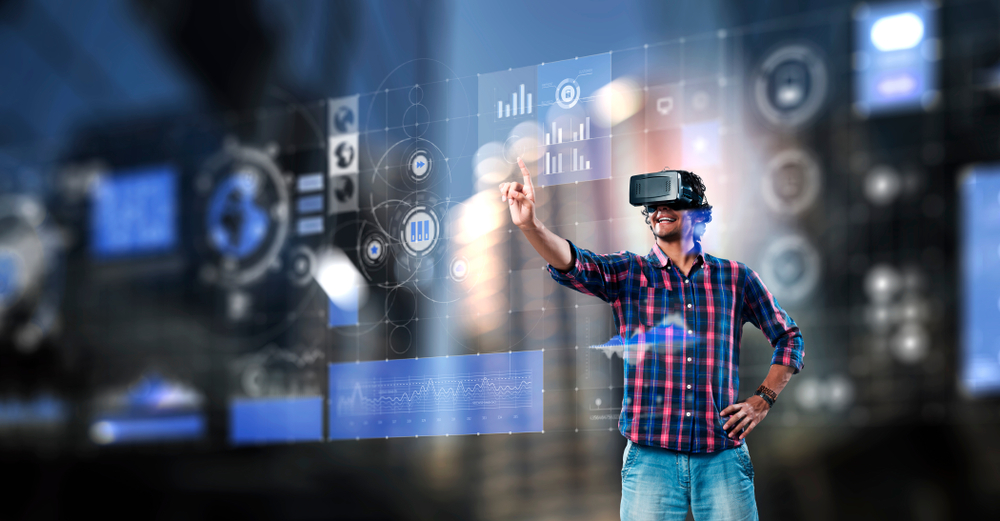
“I think the early VR tools sort of missed the mark and under delivered on what’s necessary to have the experience,” said Skillman. “In reality being in the space, being able to grab things, move them, manipulate them and adjust things with your arms is a much richer experience and is something that I’ve really tried to focus on exploiting. I think it is only when you take the time to use these systems that are doing full six degrees of freedom where you are fully immersed that you no longer feel like you are looking at something but you are there with it.”
Immersive Science offers a wide-range of VR systems to enhance research, including confocal VR microscopes that allow researchers to see the details of cell structure in stack-images, multichannel flow cytometry VR that enable researchers to increase their understanding of data by switching which parameters are plotted on which axis, and a variety of protein structure analysis VR tools.
It is possible, using VR, to trick your brain into believing in some ways that you are in a different space and that the experience is real, said Skillman.
“To have that experience there is some key things,” said Skillman. “You have to have good video update rates, low latency because the human vision is pretty fast and sensitive so if want the human vision system to operate as it is looking at the real world your images have to update very quickly as you move your head around. If they are slow to refresh it just makes you sick more than it is interesting.”
Despite its benefits, many scientists remain unfamiliar with even basic VR tools, said Skillman
“You can’t really understand VR until you put on the goggles and have the experience,” Skillman said. “It’s hard to market a scientific application when most people have never had a VR headset on, they don’t know if it is valuable or not.”
Skillman said for those scenarios the company offers a portable VR workstation with a pre-configured VR system that can run Immersive Science applications.
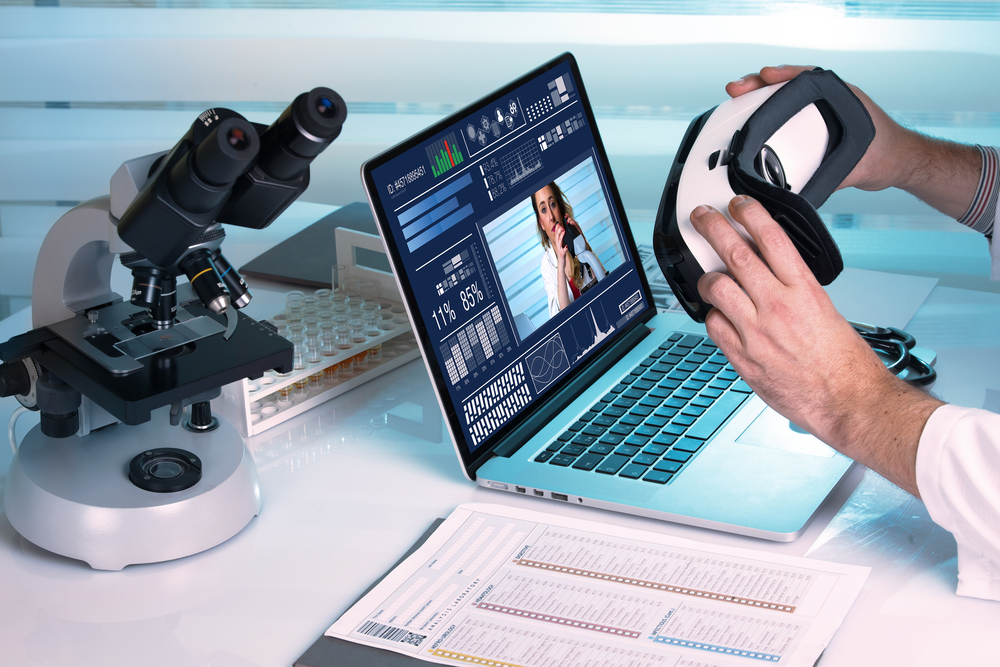
Skillman gave the example of how a cell biologist would use VR, where instead of working with microscopes to view an extremely small cell, they could use virtual reality to be immersed in a three-foot long cell. Here they can walk through the cell, change the contrast to highlight certain parts and manipulate it with their hands.
According to Skillman, each of Immersive Science’s clients will get a VR system that is personalized for their needs.
“In research, there are usually some core needs that everybody has, but then it gets very specific,” he said. “That is sort of the business strategy to be out there talking to scientists and trying to understand the problems and how they would benefit from VR.”
Skillman said he first become interested in using virtual reality for research about five years ago when he noticed that the performance of the technology was increasing as the price of systems was decreasing.
“Lab instruments’ ability to generate data is just going through the roof,” he said. “So if you don’t have better ways of presenting that data to the scientists it just becomes piles of data on disc drives instead of turning it into insights and understanding. I just want to find places where scientists are wrestling with data that is sort of three dimensional by nature.”