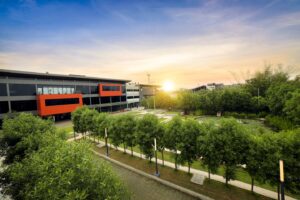
 The global contract research, development, and manufacturing organization (CRDMO) Sai Life Sciences has built one of India’s faster-growing pharma services businesses by doing what most CRDMOs talk about but rarely execute at scale: putting discovery, development, and manufacturing under the same roof. The Hyderabad-based company went public in December 2024 Sai Life Sciences and has been on a tear since, posting FY25 revenue of ₹1,695 crore (roughly $200 million), up 16% year-over-year, with profit after tax surging 105% Business Standard. It now serves more than 300 innovator pharma and biotech companies across the U.S., UK, Europe, and Japan, and employs over 3,400 scientists and professionals across facilities in India, the UK, and the U.S.
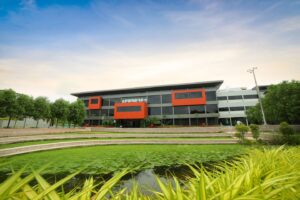
The centerpiece of that operation is its Integrated R&D Campus in Hyderabad’s Genome Valley: 12-acre campus with over 400,000 sq.ft of built-up space that functions as a hub for the company’s integrated discovery and development services. The campus co-locates medicinal chemistry, biology, DMPK–toxicology, developability, process and analytical development, scale-up, and clinical supplies teams in what the company calls an “innovation corridor.” In October 2025, Sai broke ground on a new CMC Process R&D Center at the campus, scheduled for completion by September 2026, that will double process R&D capacity and add dedicated peptide and oligonucleotide capabilities. The company is also hiring 700-plus scientific, technical, and management professionals during 2026–27 to staff the expansion.
Dr. B.V.N.B.S. Sarma, Senior Vice President, Discovery and Site Head of Integrated R&D Campus, Hyderabad, notes that the facility was deliberately designed so that scientists don’t hand off projects across geographies. In the following Q&A, Dr. Sarma explains how this physical layout and digital integration compress development timelines, how the company maintains seamless project continuity with its sites in Boston and Manchester, and how the upcoming CMC center will expand its capabilities in peptides, oligonucleotides, and highly potent compounds.
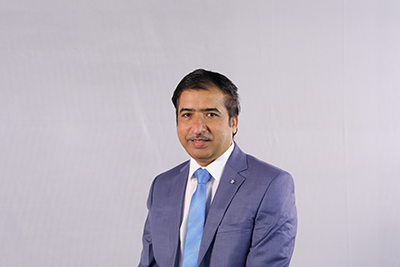
Dr. Sarma
Sai’s integrated R&D campus in Hyderabad is often described as an “innovation corridor” built to foster cross-functional collaboration. How does the physical layout influence day-to-day workflows and scientist interactions?
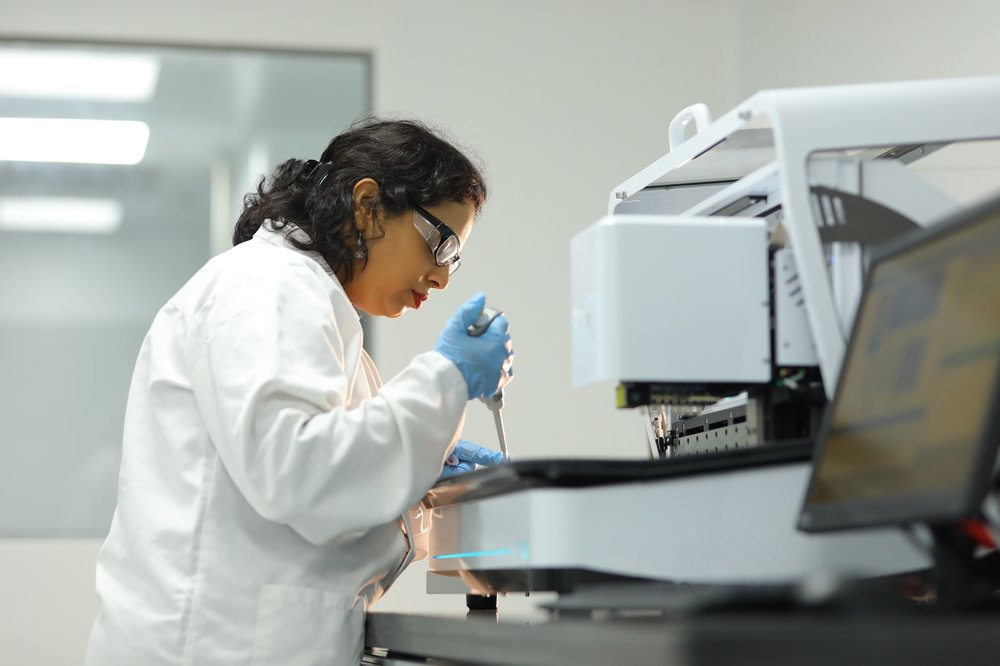 Dr. Sarma: Sai’s Integrated R&D Campus in Hyderabad was designed around a simple idea: a client should be able to arrive with a concept molecule and leave with an IND-enabling package. The physical layout is a direct reflection of that ambition. We have co-located Medicinal Chemistry, Biology, DMPK–Toxicology, Developability and Pre-formulations, Process and Analytical Development, Scale-up, Clinical Supplies, and Tech Transfer teams within a single, contiguous campus. This proximity fundamentally shapes how work gets done. Scientists do not “hand off” projects across geographies or organizational silos. They walk down a corridor.
Daily workflows are built around cross-functional interaction. A medicinal chemist can consult a biologist or DMPK scientist in real time to refine structure–activity relationships. Process chemists engage early with discovery teams to assess scalability. Developability scientists provide formulation insights before compounds advance too far downstream. These micro-interactions reduce rework, shorten feedback loops, and accelerate decision-making.
The campus is digitally integrated as well. Unified IT systems, shared data platforms with appropriate data protection guardrails, electronic lab notebooks, and real-time data connectivity ensure that information flows as seamlessly as people do. Teams operate on a common digital backbone, which supports both transparency and speed.
From a talent perspective, the campus brings together medicinal chemists, computational chemists, biologists, DMPK specialists, toxicologists, analytical scientists, process engineers, formulation scientists, particle science specialists, structural elucidation and characterization teams, technology specialists [Flow, continuous] and regulatory experts. Many of our professionals have cross-disciplinary exposure—chemists who understand biological and ADME considerations, process scientists trained in green chemistry and safety, and formulation experts who collaborate closely with analytical development. It is this blend of co-location and cross-disciplinary depth that makes the “innovation corridor” more than a metaphor—it is a functional operating model.
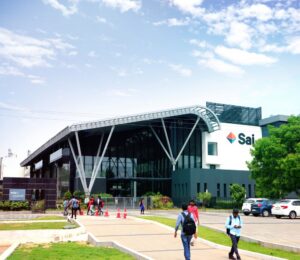
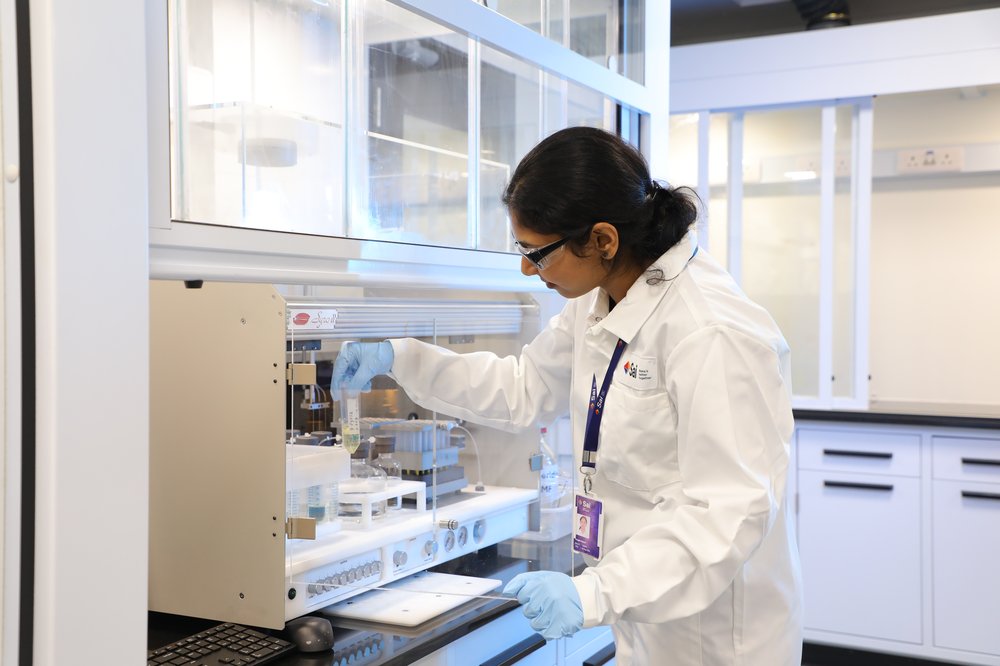
The R&T Centre houses 24 chemistry labs with 250 fume hoods, a dedicated process safety lab, and advanced platform technologies including flow reactors, biocatalyst screening, and photochemical reactors. Which capabilities have proven most impactful in accelerating complex synthesis, and how do these tools compress development timelines?
Dr. Sarma: The R&T Centre, an integral part of our Integrated R&D Campus, was designed to support speed, complexity, and safety in modern synthesis.
One of the most impactful enablers has been our approach to process development. We have high-throughput experimentation (HTE) to rapidly screen reaction conditions, catalysts, solvents, and parameters. Instead of sequential optimization, we run parallel experiments that generate data-rich insights in days rather than weeks. This significantly shortens route selection and optimization cycles.
Flow chemistry has also been transformative, particularly for reactions involving hazardous intermediates, high-energy transformations, or tight thermal control. Continuous processing improves safety, enhances reproducibility, and often increases yields—while enabling faster scale-up decisions. Similarly, photochemical reactors and electrochemical platforms allow us to access novel transformations that are difficult to execute under traditional batch conditions.
Our biocatalyst screening platforms accelerate access to highly selective transformations, reducing purification burden and supporting greener processes. Sustainability is not an afterthought; green chemistry principles are embedded early, helping reduce solvent use, improve atom economy, and simplify downstream processing.
The dedicated process safety lab enables early calorimetric and hazard assessments, minimizing late-stage surprises. In parallel, our high-potency (including OEL 4 and 5 capabilities in select areas) and specialized chemistries—such as amidites for oligonucleotide-related work—allow us to handle increasingly complex and potent molecules.
Particle science and solid-state characterization capabilities further compress timelines by addressing polymorphism, crystallization, and physical form challenges early in development—preventing delays at later CMC stages.
Taken together, these technologies shift development from a linear to a parallel, data-driven model—enabling faster route selection, safer scale-up, and smoother tech transfer.
With facilities in Hyderabad, Boston, and Manchester, Sai operates a global hand-off model where projects may begin in the US or UK and transfer to India for scale-up. How do aligned infrastructure and unified processes enable seamless transitions across sites?
Dr. Sarma: We operate a single global Process R&D organization spanning Manchester and Hyderabad. Leadership roles are structured so that they oversee programs across both sites. This creates continuity in scientific ownership, rather than geographic fragmentation.
Matching infrastructure is critical. Equipment types, reactor configurations, analytical platforms, and digital systems are aligned across sites wherever feasible. When a process is developed in Manchester, the receiving team in Hyderabad works within a familiar technical environment. This reduces translation gaps and accelerates scale-up.
Equally important are unified processes—common SOPs, documentation standards, quality systems, and digital tools. Electronic lab notebooks and shared data repositories allow teams to access real-time data and development history. Tech transfer is therefore not a static document exchange but an informed scientific dialogue.
For example, early-phase route scouting or impurity mapping may begin in Manchester, with Hyderabad teams participating virtually in design reviews. On similar lines, our Biology facility in Boston and Discovery operations in Hyderabad operate as a single integrated global Discovery organization.
As the program advances, scale-up experiments can commence in India with minimal re-optimization, because safety assessments, analytical methods, and process parameters are already harmonized.
The result is a truly integrated global engine, where geography expands capacity and customer proximity—but does not introduce friction.
The new CMC Process R&D Center (expected September 2026) will double process R&D capacity and add peptide and oligo capabilities. What client needs drove this expansion, and how will the addition of a kilo lab and OEL 4 containment expand the types of programs you can support?
Client pipelines are evolving. We are seeing increased demand for complex modalities, higher-potency compounds, and accelerated CMC timelines.
The new CMC Process R&D Center responds directly to these trends. It will double our process R&D capacity, enabling parallel program execution and faster IND-enabling support. Importantly, it adds dedicated peptide and oligonucleotide capabilities—reflecting growing interest in these modalities.
The inclusion of a kilo lab significantly enhances our ability to produce larger quantities of API for toxicology studies and early clinical trials under tightly controlled conditions. This reduces reliance on external facilities and shortens the path from lab-scale optimization to clinical supply readiness.
OEL 4 and 5 containment capabilities will allow us to handle highly potent compounds safely and efficiently. As more pipelines include targeted therapies and high-potency APIs, this containment level expands the range of programs we can support—without compromising operator safety or compliance.
In essence, the new center is about readiness—for new modalities, higher potency, and compressed development timelines.
What is one facility design element or operational approach that you believe differentiates Sai from other CRDMOs?
 If we had to highlight one differentiator, it would be the deliberate integration of physical design with operating model.
Our facilities are not just collections of labs—they are structured ecosystems built around cross-functional program ownership. Co-location, shared digital infrastructure, aligned global processes, and embedded safety and sustainability platforms ensure that design directly supports productivity.
Many organizations speak about integration; we designed our campus to make it unavoidable. Scientists share corridors, data platforms, safety labs, and decision forums. That physical and organizational alignment translates into faster decisions, fewer hand-offs, and ultimately, accelerated outcomes for our clients.