Research & Development World

  • R&D World Home
  • Topics
    • Aerospace
    • Automotive
    • Biotech
    • Careers
    • Chemistry
    • Environment
    • Energy
    • Life Science
    • Material Science
    • R&D Management
    • Physics
  • Technology
    • 3D Printing
    • A.I./Robotics
    • Software
    • Battery Technology
    • Controlled Environments
      • Cleanrooms
      • Graphene
      • Lasers
      • Regulations/Standards
      • Sensors
    • Imaging
    • Nanotechnology
    • Scientific Computing
      • Big Data
      • HPC/Supercomputing
      • Informatics
      • Security
    • Semiconductors
  • R&D Market Pulse
  • R&D 100
    • 2025 R&D 100 Award Winners
    • 2025 Professional Award Winners
    • 2025 Special Recognition Winners
    • R&D 100 Awards Event
    • R&D 100 Submissions
    • Winner Archive
  • Resources
    • Research Reports
    • Digital Issues
    • Educational Assets
    • R&D Index
    • Subscribe
    • Video
    • Webinars
    • Content submission guidelines for R&D World
  • Global Funding Forecast
  • Top Labs
  • Advertise
  • SUBSCRIBE

Metallic Nail Polish Contains Antibacterial Properties

By American Chemical Society | April 3, 2017

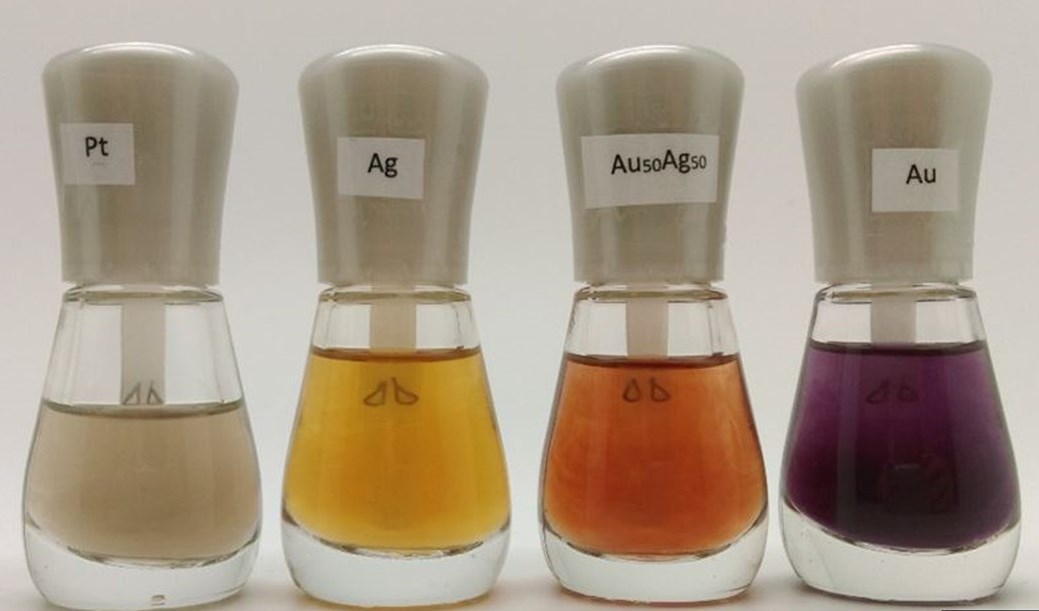
Using metal nanoparticles in clear nail polish makes it durable and colorful without extra additives. Image: American Chemical Society

Since ancient times, people have used lustrous silver, platinum, and gold to make jewelry and other adornments. Researchers have now developed a new way to add the metals to nail polish with minimal additives, resulting in durable, tinted — and potentially antibacterial — nail coloring. They report their method in ACS’ journal Industrial & Engineering Chemistry Research.

Nail polish comes in a bewildering array of colors. Current coloring techniques commonly incorporate pigment powders and additives. Scientists have recently started exploring the use of nanoparticles in polishes and have found that they can improve their durability and, in the case of silver nanoparticles, can treat fungal toenail infections. Marcus Lau, Friedrich Waag, and Stephan Barcikowski wanted to see if they could come up with a simple way to integrate metal nanoparticles in nail polish.

The researchers started with store-bought bottles of clear, colorless nail polish and added small pieces of silver, gold, platinum, or an alloy to them. To break the metals into nanoparticles, they shone a laser on them in short bursts over 15 minutes. Analysis showed that the method resulted in a variety of colored, transparent polishes with a metallic sheen.

The researchers also used laser ablation to produce a master batch of metal nanoparticles in ethyl acetate, a polish thinner, which could then be added to individual bottles of polish. This could help boost the amount of production for commercialization. The researchers say the technique could also be used to create coatings for medical devices.

The authors acknowledge funding from the INTERREG-Program Germany-Netherlands.

Source: American Chemical Society
Related Articles Read More >

The 2025 R&D 100 Finalists are here
New nanotechnology method increases microalgae biofuel yield by 300%
New nanopore sensor paves the way for fast, accurate, low-cost DNA sequencing
Floating solar mats clean polluted water — and generate power
rd newsletter
EXPAND YOUR KNOWLEDGE AND STAY CONNECTED
Get the latest info on technologies, trends, and strategies in Research & Development.
RD 25 Power Index

R&D World Digital Issues

Fall 2024 issue

Browse the most current issue of R&D World and back issues in an easy to use high quality format. Clip, share and download with the leading R&D magazine today.

Research & Development World
  • Subscribe to R&D World Magazine
  • Sign up for R&D World’s newsletter
  • Contact Us
  • About Us
  • Drug Discovery & Development
  • Pharmaceutical Processing
  • Global Funding Forecast

Copyright © 2025 WTWH Media LLC. All Rights Reserved. The material on this site may not be reproduced, distributed, transmitted, cached or otherwise used, except with the prior written permission of WTWH Media
Privacy Policy | Advertising | About Us

Search R&D World

  • R&D World Home
  • Topics
    • Aerospace
    • Automotive
    • Biotech
    • Careers
    • Chemistry
    • Environment
    • Energy
    • Life Science
    • Material Science
    • R&D Management
    • Physics
  • Technology
    • 3D Printing
    • A.I./Robotics
    • Software
    • Battery Technology
    • Controlled Environments
      • Cleanrooms
      • Graphene
      • Lasers
      • Regulations/Standards
      • Sensors
    • Imaging
    • Nanotechnology
    • Scientific Computing
      • Big Data
      • HPC/Supercomputing
      • Informatics
      • Security
    • Semiconductors
  • R&D Market Pulse
  • R&D 100
    • 2025 R&D 100 Award Winners
    • 2025 Professional Award Winners
    • 2025 Special Recognition Winners
    • R&D 100 Awards Event
    • R&D 100 Submissions
    • Winner Archive
  • Resources
    • Research Reports
    • Digital Issues
    • Educational Assets
    • R&D Index
    • Subscribe
    • Video
    • Webinars
    • Content submission guidelines for R&D World
  • Global Funding Forecast
  • Top Labs
  • Advertise
  • SUBSCRIBE