Research & Development World

  • R&D World Home
  • Topics
    • Aerospace
    • Automotive
    • Biotech
    • Careers
    • Chemistry
    • Environment
    • Energy
    • Life Science
    • Material Science
    • R&D Management
    • Physics
  • Technology
    • 3D Printing
    • A.I./Robotics
    • Software
    • Battery Technology
    • Controlled Environments
      • Cleanrooms
      • Graphene
      • Lasers
      • Regulations/Standards
      • Sensors
    • Imaging
    • Nanotechnology
    • Scientific Computing
      • Big Data
      • HPC/Supercomputing
      • Informatics
      • Security
    • Semiconductors
  • R&D Market Pulse
  • R&D 100
    • 2025 R&D 100 Award Winners
    • 2025 Professional Award Winners
    • 2025 Special Recognition Winners
    • R&D 100 Awards Event
    • R&D 100 Submissions
    • Winner Archive
  • Resources
    • Research Reports
    • Digital Issues
    • Educational Assets
    • R&D Index
    • Subscribe
    • Video
    • Webinars
    • Content submission guidelines for R&D World
  • Global Funding Forecast
  • Top Labs
  • Advertise
  • SUBSCRIBE

Microdevice Provides Novel Method of Measuring Cell Mechanical Properties

By Kumamoto University | May 10, 2017

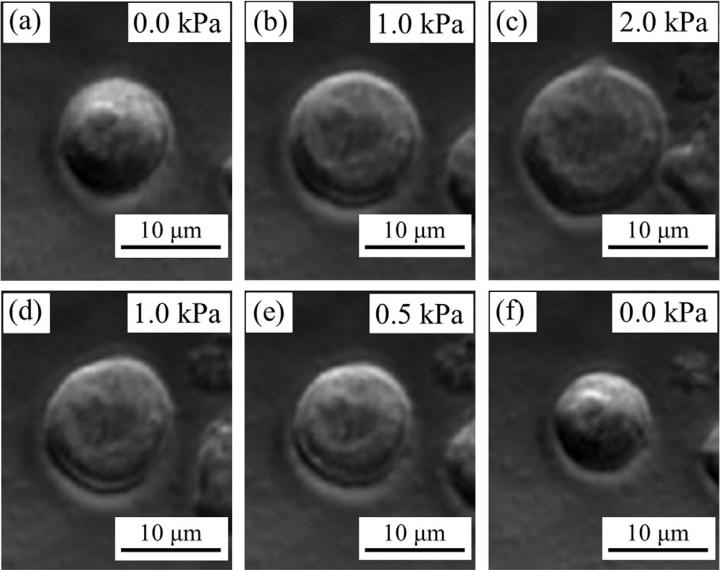
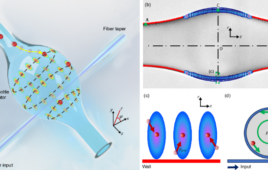
The cell compression microdevice developed by Associate Professor Nakashima from Kumamoto University, Japan is cheaper, easier to use, and less invasive than current methods of measuring the mechanical properties of a cell. This image is a time-lapse of a cell under compression in the microdevice. Image reprinted from Tairo Yokokura, Yuta Nakashima, Yukihiro Yonemoto, Yuki Hikichi, and Yoshitaka Nakanishi. Method for measuring Young’s modulus of cells using a cell compression microdevice. International Journal of Engineering Science, 114():41-48, 2017. DOI: 10.1016/j.ijengsci.2017.02.002 with permission from Elsevier. Source: Associate Professor Yuta Nakashima

The mechanical properties of cells have an impact on biological processes ranging from wound healing and disease to cellular aging and differentiation. Currently, the most popular method of measuring the mechanical properties of a cell is by atomic-force microscopy (AFM). Very simply, AFM works by moving a very fine needle attached to a cantilever beam across the sample surface, and the deflection of the beam is measured directly with a laser. Very high resolution (< nanoscale) measurements are possible with this method, and it is used for imaging, force measurement, and fine manipulation.

AFM and other tools used to measure the properties of small-scale biological samples have been improving, but they are still expensive, difficult to use (even for experienced users), and often damage the cells being analyzed. For these reasons, researchers from Kumamoto University, Japan created a new device to easily evaluate the mechanical properties of cells. Their cell compression microdevice is cheaper and easier to use than other tools. It uses a very thin and soft diaphragm for cell compression making it minimally invasive, and it allows for real-time observation of cell compression. In their most recent research project, they examined the effectiveness of the microdevice by calculating the Young’s modulus (also known as the elastic modulus) of osteoblasts and comparing the measured values with those reported using other methods.

Cell deformation was evaluated after 30 seconds of compression from a digital image taken by a CMOS camera. Compression was performed by applying air pressure to the diaphragm of the microdevice in 0.5 MPa intervals, and measurements were taken from 0 to 2.0 MPa. The researchers estimated the Young’s modulus of the osteoblasts by dividing the applied pressure by the rate of deformation and found that their results (Young’s modulus ≈ 3.5 – 4.2 kPa) corroborated previous findings.

“Other researchers have reported a Young’s modulus anywhere from 1.0 – 2.0 kPa for osteoblasts to 4.0 – 200 kPa for bone marrow stromal cells, which is comparable with our results,” explained Associate Professor Yuta Nakashima, leader of the research project and inventor of the microdevice. “It should be noted, however, that evaluating the Young’s modulus one-dimensionally, as our method does, leaves some room for error since the true Young’s modulus is likely not uniform for the spherical cell. Our measurements might be more accurately referred to as the apparent Young’s modulus.”

Dr. Nakashima intends to improve the precision of mechanical property calculations by using numerical simulations in future studies.
Related Articles Read More >

The 2025 R&D 100 Finalists are here
New nanotechnology method increases microalgae biofuel yield by 300%
New nanopore sensor paves the way for fast, accurate, low-cost DNA sequencing
Floating solar mats clean polluted water — and generate power
rd newsletter
EXPAND YOUR KNOWLEDGE AND STAY CONNECTED
Get the latest info on technologies, trends, and strategies in Research & Development.
RD 25 Power Index

R&D World Digital Issues

Fall 2024 issue

Browse the most current issue of R&D World and back issues in an easy to use high quality format. Clip, share and download with the leading R&D magazine today.

Research & Development World
  • Subscribe to R&D World Magazine
  • Sign up for R&D World’s newsletter
  • Contact Us
  • About Us
  • Drug Discovery & Development
  • Pharmaceutical Processing
  • Global Funding Forecast

Copyright © 2025 WTWH Media LLC. All Rights Reserved. The material on this site may not be reproduced, distributed, transmitted, cached or otherwise used, except with the prior written permission of WTWH Media
Privacy Policy | Advertising | About Us

Search R&D World

  • R&D World Home
  • Topics
    • Aerospace
    • Automotive
    • Biotech
    • Careers
    • Chemistry
    • Environment
    • Energy
    • Life Science
    • Material Science
    • R&D Management
    • Physics
  • Technology
    • 3D Printing
    • A.I./Robotics
    • Software
    • Battery Technology
    • Controlled Environments
      • Cleanrooms
      • Graphene
      • Lasers
      • Regulations/Standards
      • Sensors
    • Imaging
    • Nanotechnology
    • Scientific Computing
      • Big Data
      • HPC/Supercomputing
      • Informatics
      • Security
    • Semiconductors
  • R&D Market Pulse
  • R&D 100
    • 2025 R&D 100 Award Winners
    • 2025 Professional Award Winners
    • 2025 Special Recognition Winners
    • R&D 100 Awards Event
    • R&D 100 Submissions
    • Winner Archive
  • Resources
    • Research Reports
    • Digital Issues
    • Educational Assets
    • R&D Index
    • Subscribe
    • Video
    • Webinars
    • Content submission guidelines for R&D World
  • Global Funding Forecast
  • Top Labs
  • Advertise
  • SUBSCRIBE