New findings put forth by the University of Maryland Fischell Department of Bioengineering (BIOE) and researchers from four other academic institutions outline a targeted therapeutic strategy to treat triple-negative breast cancer (TNBC)—a potential first for the particularly aggressive form of breast cancer.
As demonstrated in the group’s paper published in Nature Nanotechnology, the proposed strategy centers on nanotechnology-based precision-targeting of a gene known as POLR2A.
About 10 to 20 percent of breast cancers are considered triple-negative, which means that, unlike most breast cancers, this particular type is not fueled by the hormones estrogen or progesterone, nor by the HER2 protein.
While treatments for most other forms of breast cancer work by targeting one of these three avenues, TNBC does not respond to modern hormonal therapies or medicines that target HER2 protein receptors. As such, most TNBC patients are limited to chemotherapy as their only systemic treatment option.
“Due to the lack of a targeted therapy option, TNBC patients often face a poorer prognosis compared with patients of other types of breast cancer,” said BIOE Professor Xiaoming (Shawn) He, corresponding author of the paper. “While we have seen dramatic advancements in breast cancer treatment in recent decades, TNBC patients are typically treated with conventional chemotherapy that is often associated with adverse side effects, drug resistance, and even cancer relapse or recurrence. Therefore, it is of urgent need to develop targeted treatments for TNBC.”
All cancers originate as the result of changes that have occurred within the genes of a cell or group of cells. In the case of triple-negative breast cancer, a gene known as TP53 is most frequently deleted or mutated.
But, TP53 is critical. It provides instructions for making a protein called p53 that helps prevent the development of tumors by stopping cells with mutated or damaged DNA from growing and dividing uncontrollably. Although many researchers have considered techniques to restore p53 activity, no such therapy has been translated into the clinic, owing to the complexity of p53 signaling.
Recognizing this, He and his research team have instead focused efforts on POLR2A—an essential neighboring gene of TP53. The group chose this route because genomic alterations tend to be large regional events in the body. Most cancers that lead to the loss of a particular tumor suppressor gene also lead to the partial loss of nearby genes such as POLR2A, a gene that is essential for any cell to survive.
Although cancer cells can survive a partial loss of POLR2A, they become weakened and vulnerable to POLR2A inhibition. Knowing this, He and his research team hypothesized that targeted inhibition of POLR2A could potentially kill TNBC cells while sparing normal cells.
To explore this option, the team looked to RNA interference (RNAi) with small interfering RNA (siRNA), a biological process by which RNA molecules inhibit gene expression or translation. This process can be used to precisely target virtually any genes—including those that may contribute to cancer growth.
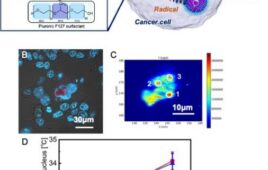
The challenge, however, is that siRNA is extremely unstable in blood and in endosomes and lysosomes, the digestive system of cells. To overcome these obstacles, the research group designed “nano-bomb” particles that they could use to protect POLR2A siRNA in blood circulation and carry the siRNA into the targeted tumor for cells to “eat.” The particles then generate CO2 gas to break open endosomes and lysosomes to ensure timely release of siRNA to inhibit POLR2A.
The group believes that their findings offer hope that one day a nanotechnology-based precision-targeting strategy could be used to fight TNBC and many other types of cancer.
In addition to his BIOE appointment, He is a faculty member of the University of Maryland’s Robert E. Fischell Institute for Biomedical Devices, as well as the University of Maryland’s Marlene and Stewart Greenebaum Comprehensive Cancer Center.
Along with He, the following contributed to the Nature Nanotechnology paper: co-first authors Jiangsheng Xu (BIOE; The Ohio State University/OSU), Yunhua Liu (Indiana University), and Yujing Li (Indiana University); co-authors Hai Wang (BIOE; OSU), Samantha Stewart (BIOE), Kevin Van der Jeught (Indiana University), Pranay Agarwal (OSU), Yuntian Zhang (BIOE; University of Science and Technology of China/USTC), Sheng Liu (Indiana University), Gang Zhao (USTC), and Jun Wan (Indiana University); and co-corresponding author Xiongbin Lu (Indiana University).