 Between late 2014 and 2016, a Virginia woman returned at least 226 counterfeit designer handbags to department stores across 12 states, walking out with full refunds every time. The fakes were good enough that T.J. Maxx, where she became the company’s top online customer worldwide, needed Louis Vuitton’s own experts to confirm the returned bags weren’t real. She was arrested in 2016.
A decade later, counterfeits have only gotten better. Today’s so-called “superfakes” can be virtually indistinguishable from the real thing, crafted using high-quality leathers and carefully matched hardware, with some reportedly incorporating cloned digital credentials to fool standard authentication checks.
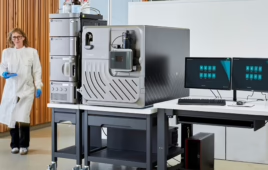
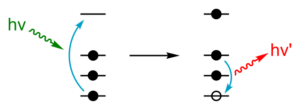
At Pittcon 2026 this month in San Antonio, InsightviewTech, a subsidiary of the South Korean platform Bunjang Global, presented what it says is a more reliable alternative to visual inspection for verifying authenticity. The presentation was “Chemometric Analysis of Portable XRF, NIR, and FT-IR Spectra for Scientific Non-Destructive Authentication of Luxury Materials.” Bunjang, which says it facilitates more than a million resale transactions a month, has built a hybrid authentication system called Corelytics that combines human inspectors, deep learning and portable X-ray fluorescence (XRF) to analyze the elemental composition of handbag hardware and other materials, flagging inconsistencies invisible to the naked eye.
In company figures provided to WTWH Media, Bunjang reported 52,907 inspections in 2024 and 87,579 in 2025, with four misclassifications in each year, a reported accuracy above 99.99%. The company does not publicly separate false positives from false negatives, and the underlying research paper remains under revision after peer review.
The system uses a three-tier approach: human experts conduct up to 18 inspection stages covering roughly 154 checkpoints, followed by non-destructive XRF scanning and digital microscopy, with a deep-learning model trained on hundreds of thousands of prior inspections rendering a final determination. Bunjang says the architecture is human-in-the-loop.
Bunjang also says the technology is being developed with enforcement applications in mind. According to company materials, its authentication research has involved collaboration with the Korean Intellectual Property Office and its Special Judicial Police, which investigate counterfeit crimes.
Bunjang’s self-reported authentication accuracy:
| Year | Total Inspections | Misclassifications | Accuracy | Error Rate |
| 2024 | 52,907 | 4 | 99.99% | 0.0076% |
| 2025 | 87,579 | 4 | 99.99% | 0.0087% |