Research & Development World

  • R&D World Home
  • Topics
    • Aerospace
    • Automotive
    • Biotech
    • Careers
    • Chemistry
    • Environment
    • Energy
    • Life Science
    • Material Science
    • R&D Management
    • Physics
  • Technology
    • 3D Printing
    • A.I./Robotics
    • Software
    • Battery Technology
    • Controlled Environments
      • Cleanrooms
      • Graphene
      • Lasers
      • Regulations/Standards
      • Sensors
    • Imaging
    • Nanotechnology
    • Scientific Computing
      • Big Data
      • HPC/Supercomputing
      • Informatics
      • Security
    • Semiconductors
  • R&D Market Pulse
  • R&D 100
    • 2025 R&D 100 Award Winners
    • 2025 Professional Award Winners
    • 2025 Special Recognition Winners
    • R&D 100 Awards Event
    • R&D 100 Submissions
    • Winner Archive
  • Resources
    • Research Reports
    • Digital Issues
    • Educational Assets
    • Subscribe
    • Video
    • Webinars
    • Content submission guidelines for R&D World
  • Global Funding Forecast
  • Top Labs
  • Advertise
  • SUBSCRIBE

Reducing Expensive Noble Metals for Fuel Cell Reactions

By Washington State University | August 23, 2016

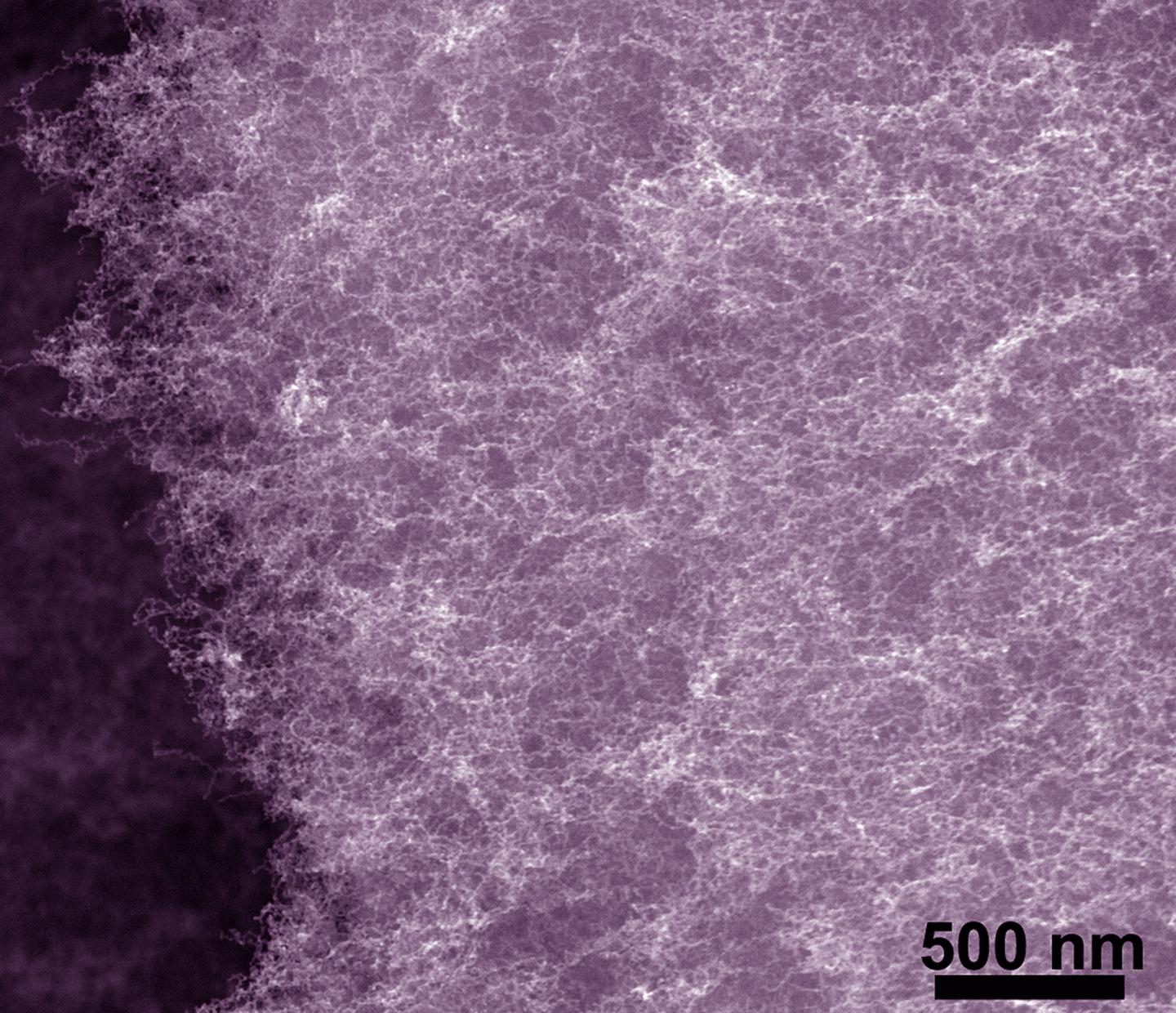
Bi-metallic aerogels at the nanoscale have good porosity and a large surface area, which work well for catalytic reactions in fuel cells. Credit Washington State University

Washington State University researchers have developed a novel nanomaterial that could improve the performance and lower the costs of fuel cells by using fewer precious metals like platinum or palladium.

Led by Yuehe Lin, professor in the School of Mechanical and Materials Engineering, the researchers used inexpensive metal to make a super low density material, called an aerogel, to reduce the amount of precious metals required for fuel cell reactions. They also sped up the time to make the aerogels, which makes them more viable for large-scale production.

Their work is published in Advanced Materials.

Hydrogen fuel cells are a promising green energy solution, producing electricity much more efficiently and cleanly than combustion engines. But they need expensive precious metals to fuel their chemical reactions. This need has limited their acceptance in the marketplace.

Aerogels, which are sometimes also called liquid smoke, are solid materials that are about 92 percent air. Effective insulators, they are used in wet suits, firefighting gear, windows, paints and in fuel cell catalysts. Because metal-based aerogels have large surface areas and are highly porous, they work well for catalyzing in fuel cells.

The WSU team created a series of bimetallic aerogels, incorporating inexpensive copper and using less precious metal than other metal aerogels.

Researchers introduced the copper in the bimetallic system through their new, one-step reduction method to create hydrogel. The hydrogel is the liquid-filled form of aerogel. The liquid component is carefully and completely dried out of the hydrogel to create aerogel. Their method has reduced the manufacturing time of hydrogel from three days to six hours.

“This will be a great advantage for large scale production,” said Chengzhou Zhu, a WSU assistant research professor who created the aerogel.

The research is in keeping with WSU’s Grand Challenges, a suite of research initiatives aimed at large societal issues. It is particularly relevant to the challenge of sustainable resources and its theme of energy.

Related Articles Read More >

How a new permafrost climate model fits a dangerous pattern in climate science
Trump administration to dismantle ocean observatories that provide data freely to researchers
Atmospheric carbon dioxide hits record 431 ppm as Mauna Loa Observatory faces funding cuts
Microplastics may contribute to global warming new research indicates
rd newsletter
EXPAND YOUR KNOWLEDGE AND STAY CONNECTED
Get the latest info on technologies, trends, and strategies in Research & Development.

R&D World Digital Issues

Fall 2025 issue

Browse the most current issue of R&D World and back issues in an easy to use high quality format. Clip, share and download with the leading R&D magazine today.

R&D 100 Awards
Research & Development World
  • Subscribe to R&D World Magazine
  • Sign up for R&D World’s newsletter
  • Contact Us
  • About Us
  • Drug Discovery & Development
  • Pharmaceutical Processing
  • Global Funding Forecast

Copyright © 2026 WTWH Media LLC. All Rights Reserved. The material on this site may not be reproduced, distributed, transmitted, cached or otherwise used, except with the prior written permission of WTWH Media
Privacy Policy | Advertising | About Us

Search R&D World

  • R&D World Home
  • Topics
    • Aerospace
    • Automotive
    • Biotech
    • Careers
    • Chemistry
    • Environment
    • Energy
    • Life Science
    • Material Science
    • R&D Management
    • Physics
  • Technology
    • 3D Printing
    • A.I./Robotics
    • Software
    • Battery Technology
    • Controlled Environments
      • Cleanrooms
      • Graphene
      • Lasers
      • Regulations/Standards
      • Sensors
    • Imaging
    • Nanotechnology
    • Scientific Computing
      • Big Data
      • HPC/Supercomputing
      • Informatics
      • Security
    • Semiconductors
  • R&D Market Pulse
  • R&D 100
    • 2025 R&D 100 Award Winners
    • 2025 Professional Award Winners
    • 2025 Special Recognition Winners
    • R&D 100 Awards Event
    • R&D 100 Submissions
    • Winner Archive
  • Resources
    • Research Reports
    • Digital Issues
    • Educational Assets
    • Subscribe
    • Video
    • Webinars
    • Content submission guidelines for R&D World
  • Global Funding Forecast
  • Top Labs
  • Advertise
  • SUBSCRIBE