Research & Development World

  • R&D World Home
  • Topics
    • Aerospace
    • Automotive
    • Biotech
    • Careers
    • Chemistry
    • Environment
    • Energy
    • Life Science
    • Material Science
    • R&D Management
    • Physics
  • Technology
    • 3D Printing
    • A.I./Robotics
    • Software
    • Battery Technology
    • Controlled Environments
      • Cleanrooms
      • Graphene
      • Lasers
      • Regulations/Standards
      • Sensors
    • Imaging
    • Nanotechnology
    • Scientific Computing
      • Big Data
      • HPC/Supercomputing
      • Informatics
      • Security
    • Semiconductors
  • R&D Market Pulse
  • R&D 100
    • 2025 R&D 100 Award Winners
    • 2025 Professional Award Winners
    • 2025 Special Recognition Winners
    • R&D 100 Awards Event
    • R&D 100 Submissions
    • Winner Archive
  • Resources
    • Research Reports
    • Digital Issues
    • Educational Assets
    • R&D Index
    • Subscribe
    • Video
    • Webinars
    • Content submission guidelines for R&D World
  • Global Funding Forecast
  • Top Labs
  • Advertise
  • SUBSCRIBE

Researchers Develop Remote-controlled Cancer Immunotherapy System

By University of California - San Diego | January 16, 2018

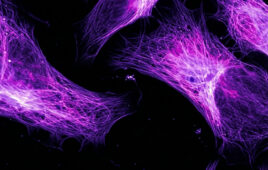
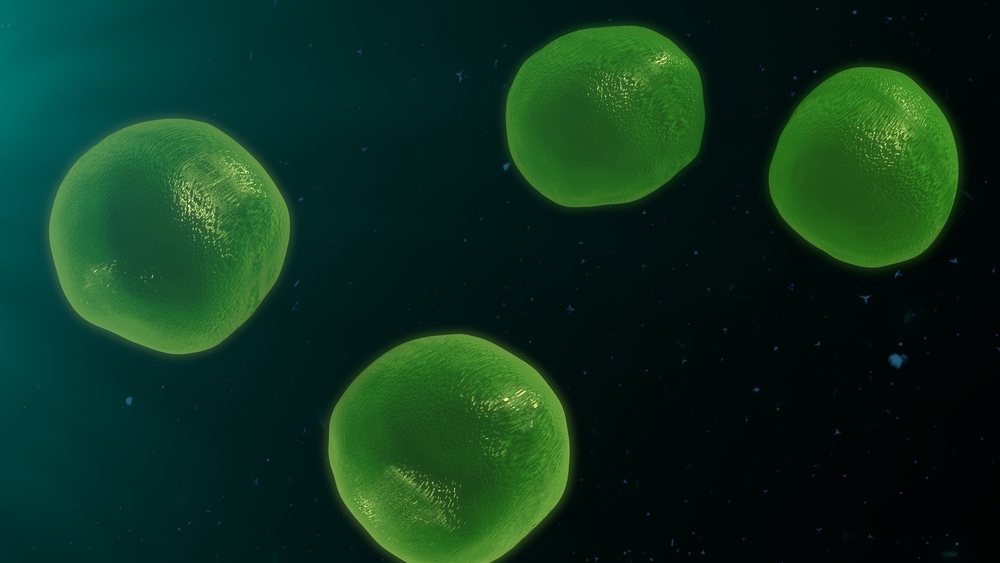
T-cells

A team of researchers has developed an ultrasound-based system that can non-invasively and remotely control genetic processes in live immune T cells so that they recognize and kill cancer cells.

There is a critical need to non-invasively and remotely manipulate cells at a distance, particularly for translational applications in animals and humans, researchers said.

The team developed an innovative approach to use mechanogenetics—a field of science that focuses on how physical forces and changes in the mechanical properties of cells and tissues influence gene expression—for the remote control of gene and cell activations. Researchers used ultrasound to mechanically perturb T cells, and then converted the mechanical signals into genetic control of cells. 

In this study, researchers show how their remote-controlled mechanogenetics system can be used to engineer chimeric antigen receptor (CAR)-expressing T cells that can target and kill cancer cells. The engineered CAR-T cells have mechano-sensors and genetic transducing modules that can be remotely activated by ultrasound via microbubble amplification.

“CAR-T cell therapy is becoming a paradigm-shifting therapeutic approach for cancer treatment,” said bioengineering professor Peter Yingxiao Wang at the University of California San Diego. “However, major challenges remain before CAR-based immunotherapy can become widely adopted. For instance, the non-specific targeting of CAR-T cells against nonmalignant tissues can be life-threatening. This work could ultimately lead to an unprecedented precision and efficiency in CAR-T cell immunotherapy against solid tumors, while minimizing off-tumor toxicities.”

The team brings together the laboratories of professors Wang and Shu Chien, both bioengineering professors at the Jacobs School of Engineering and the Institute of Engineering in Medicine at UC San Diego, in collaboration with professors Kirk Shung of the University of Southern California and Michel Sadelain at Memorial Sloan Kettering Cancer Center in New York. Researchers present their findings in the Jan. 15 issue of the Proceedings of the National Academy of Sciences, with UC San Diego Ph.D. candidate Yijia Pan as the first author.

Researchers found that microbubbles conjugated to streptavidin can be coupled to the surface of a cell, where mechanosensitive Piezo1 ion channels are expressed. Upon exposure to ultrasound waves, microbubbles vibrate and mechanically stimulate Piezo1 ion channels to let calcium ions inside the cell. This triggers downstream pathways, including calcineurin activation, NFAT dephoshorylation and translocation into the nucleus. The nucleus-translocated NFAT can bind to upstream response elements of genetic transducing modules to initiate gene expression of chimeric antigen receptor (CAR) for the recognition and killing of target cancer cells.
Related Articles Read More >

Parallel Bio’s embraces in-house drug development as FDA backs animal testing alternatives
R&D 100 Winner Spotlight: A closer look at Thermo Fisher Scientific’s trio of R&D 100 wins in 2025
Life sciences M&A hit $240B in 2025 as Big Pharma preps for patent cliffs
Hansoh Bio signs 32,000-sq.-ft. lab lease at Research Square in Rockville, MD
rd newsletter
EXPAND YOUR KNOWLEDGE AND STAY CONNECTED
Get the latest info on technologies, trends, and strategies in Research & Development.
RD 25 Power Index

R&D World Digital Issues

Fall 2025 issue

Browse the most current issue of R&D World and back issues in an easy to use high quality format. Clip, share and download with the leading R&D magazine today.

R&D 100 Awards
Research & Development World
  • Subscribe to R&D World Magazine
  • Sign up for R&D World’s newsletter
  • Contact Us
  • About Us
  • Drug Discovery & Development
  • Pharmaceutical Processing
  • Global Funding Forecast

Copyright © 2026 WTWH Media LLC. All Rights Reserved. The material on this site may not be reproduced, distributed, transmitted, cached or otherwise used, except with the prior written permission of WTWH Media
Privacy Policy | Advertising | About Us

Search R&D World

  • R&D World Home
  • Topics
    • Aerospace
    • Automotive
    • Biotech
    • Careers
    • Chemistry
    • Environment
    • Energy
    • Life Science
    • Material Science
    • R&D Management
    • Physics
  • Technology
    • 3D Printing
    • A.I./Robotics
    • Software
    • Battery Technology
    • Controlled Environments
      • Cleanrooms
      • Graphene
      • Lasers
      • Regulations/Standards
      • Sensors
    • Imaging
    • Nanotechnology
    • Scientific Computing
      • Big Data
      • HPC/Supercomputing
      • Informatics
      • Security
    • Semiconductors
  • R&D Market Pulse
  • R&D 100
    • 2025 R&D 100 Award Winners
    • 2025 Professional Award Winners
    • 2025 Special Recognition Winners
    • R&D 100 Awards Event
    • R&D 100 Submissions
    • Winner Archive
  • Resources
    • Research Reports
    • Digital Issues
    • Educational Assets
    • R&D Index
    • Subscribe
    • Video
    • Webinars
    • Content submission guidelines for R&D World
  • Global Funding Forecast
  • Top Labs
  • Advertise
  • SUBSCRIBE