Atomically thin crystals will play an ever greater role in future — but how can their crystallization process be controlled? A new method is now opening up new possibilities. They are among the thinnest structures on earth: “two dimensional materials” are crystals which consist of only one or a few layers of atoms. They often…
Guidance on the Synthesis of High-quality Graphene
In a paper published in Nano, a team of researchers from the Laboratory of Graphene Mechanics (LogM), Zhejiang University, has shown how the morphological structure of a catalytic substrate influences the growth of graphene. This provides more guidance on the synthesis of high-quality graphene with less domain boundaries. How does the morphological structure of a…
Creating the World’s Lightest Graphene Watch
In January 2017 the world’s lightest mechanical chronograph watch was unveiled in Geneva, Switzerland, showcasing innovative composite development by using graphene. Now the research behind the project has been published. The unique precision-engineered watch was a result of collaboration between The University of Manchester, Richard Mille Watches, and McLaren Applied Technologies. The RM 50-03 watch…
Nano-imaging of Intersubband Transitions
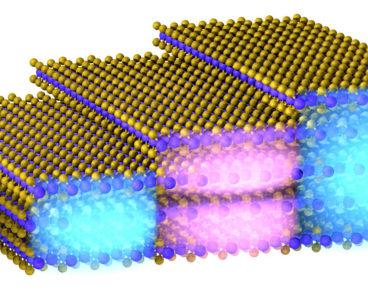
Semiconducting heterostructures have been key to the development of electronics and opto-electronics. Many applications in the infrared and terahertz frequency range exploit transitions, called intersubband transitions, between quantized states in semiconductor quantum wells. These intraband transitions exhibit very large oscillator strengths, close to unity. Their discovery in III-V semiconductor heterostructures depicted a huge impact within…
Graphene Quantum Dot Structure is a Piece of Cake
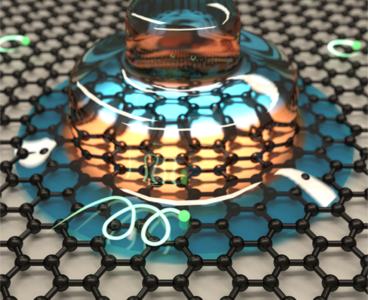
In a marriage of quantum science and solid-state physics, researchers at the National Institute of Standards and Technology (NIST) have used magnetic fields to confine groups of electrons to a series of concentric rings within graphene, a single layer of tightly packed carbon atoms. This tiered “wedding cake,” which appears in images that show the…
Graphene-based Catalysts Get Boost in Effectiveness
National University of Singapore scientists have developed design guidelines that increase the catalytic effectiveness of graphene-based solid state catalysts for potential industry applications. Catalysts are widely used in the chemical industry to make manufacturing processes more efficient and economical. This is achieved by providing an alternative pathway for the synthesis of chemicals and compounds. Graphene-based…
A Human Enzyme Can Biodegrade Graphene

Myeloperoxidase – an enzyme naturally found in our lungs – can biodegrade pristine graphene, according to the latest discovery of Graphene Flagship partners in CNRS, University of Strasbourg (France), Karolinska Institute (Sweden) and University of Castilla-La Mancha (Spain). Among other projects, the Graphene Flagship designs flexible biomedical electronic devices that will interface with the human…
Novel Method to 3D Print Graphene
Researchers from Virginia Tech and Lawrence Livermore National Laboratory have developed a novel way to 3D print complex objects of one of the highest-performing materials used in the battery and aerospace industries. Previously, researchers could only print this material, known as graphene, in 2D sheets or basic structures. But Virginia Tech engineers have now collaborated…
Movements of Paper Controlled Through Actuation Technology
One of the oldest, most versatile and inexpensive of materials — paper — seemingly springs to life, bending, folding, or flattening itself, by means of a low-cost actuation technology developed at Carnegie Mellon University’s Human-Computer Interaction Institute. A thin layer of conducting thermoplastic, applied to common paper with an inexpensive 3D printer or even painted…
Lining O&G Pipes with Graphene Increases their Lifespan
Researchers at The University of Manchester and TWI have discovered ways of using graphene to prolong the lifetime of pipes used in the oil and gas industry. Published in Advanced Materials Interfaces, the team have found a way of incorporating graphene into a polymer liner used in pipes that transport crude oil and gas from…
Onion-like Carbon Material Reduces Friction

In 2015, a team from Argonne National Laboratory created a material with superlubricity (near-zero friction) at engineering scale. The material contained graphene and extremely small diamonds. The team replaced the graphene with molybdenum disulfide. The molybdenum disulfide causes a reaction that turns the diamonds into onion-like carbon. The result? A self-generating, very low friction dry…
Diels-Alder Reaction is a Game-changer for Graphene
RUDN-based researchers, together with Russian colleagues, have studied the Diels-Alder reaction in the derivatives of furan (a heterocyclic organic substance) and managed to reach 100 percent control over the composition of its products. The described patterns may be useful for creating new methods of agricultural waste processing. Moreover, the reaction may be used for the…
Nanotech Leads to Sustainable Fuel Options
Creating a renewable and sustainable source of energy from hydrogen that is also affordable could be unlocked with a university’s innovative use of screen-printed nanotechnology. Researchers at Manchester Metropolitan University will test a way to provide a green source of power that could be harnessed by remote communities who are off the electricity grid and…
Scientists Directly Control Atomic-scale Dislocations
In the 1940s, scientists first explained how materials can deform plastically by atomic-scale line defects called dislocations. These defects can be understood as tiny carpet folds that can move one part of a material relative to the other without spending a lot of energy. Many technical applications are based on this fundamental process, such as…
Graphene Phase Modulators Make Cell Phones Faster
Researchers from Graphene Flagship Partners at the National Inter-University Consortium for Telecommunications (CNIT) in Italy, IMEC in Belgium, and University of Cambridge in the U.K. have created and tested a graphene-based phase modulator that outperforms existing silicon-based ones. Modern optical data and telecommunication employ phase modulators to increase the amount of data relayed and data…
Graphene Used to Create Artificial Retinas
Scientists report they have successfully developed and tested the world’s first ultrathin artificial retina that could vastly improve on existing implantable visualization technology for the blind. The flexible device, based on very thin 2D materials, could someday restore sight to the millions of people with retinal diseases. And with a few modifications, the device could…
Graphene Does the Twist for Tunable Electronic Devices
Engineering a band gap into graphene has become almost a rite of passage for research groups who work with the material. While many have accomplished this feat, many more have written off graphene in digital logic applications because of the fact that you have to give it a band gap. It turns out that all…
Graphene Oxide Makes Batteries Cleaner, Cheaper
Incorporating organic materials into lithium ion batteries could lower their cost and make them more environmentally friendly, A*STAR researchers have found. The team has developed an organic-based battery cathode that has significantly improved electrochemical performance compared to previous organic cathode materials. Crucially, the new material is also robust, remaining stable over thousands of battery charge/discharge…
Molecule Undergoes Chemical Transformations
Graphene and related materials hold great potential for technological applications such as electronics, sensors, and energy storage devices, among others. Thanks to their high surface sensitivity, these materials are an ideal platform to study the interplay between molecular assemblies at the nanoscale and macroscopic electrical phenomena. Researchers within the Graphene Flagship designed a molecule that…
Never Underestimate the Power of the Schwarzite
The discovery of buckyballs surprised and delighted chemists in the 1980s, nanotubes jazzed physicists in the 1990s, and graphene charged up materials scientists in the 2000s, but one nanoscale carbon structure — a negatively curved surface called a schwarzite — has eluded everyone. Until now. UC Berkeley chemists have proved that three carbon structures recently…
Nanomaterials Used to Create Artificial Woods

Nature has provided the inspiration for the design and fabrication of high-performance biomimetic engineering materials. Wood, which has been used for thousands of years, has received considerable attention due to the low density and high strength. A unique anisotropic cellular structure endows wood with outstanding mechanical performance. In recent decades, researchers have developed monolithic materials…
Breakthrough for Quantum Chains in Graphene Nanoribbons

Empa researchers, together with colleagues from the Max Planck Institute for Polymer Research in Mainz and other partners, have achieved a breakthrough that could in future be used for precise nanotransistors or — in the distant future — possibly even quantum computers, as the team reports in the current issue of the scientific journal Nature.…
Setting a Trap with Graphene
Scientists are experimenting with narrow strips of graphene, called nanoribbons, in hopes of making cool new electronic devices, but University of California, Berkeley scientists have discovered another possible role for them: as nanoscale electron traps with potential applications in quantum computers. Graphene, a sheet of carbon atoms arranged in a rigid, honeycomb lattice resembling chicken…
Art for Graphene’s Sake
Nobel laureate Sir Kostya Novoselov has worked with artist Mary Griffiths to create Prospect Planes — a video artwork resulting from months of scientific and artistic research and experimentation using graphene. Prospect Planes will be unveiled on Aug. 17 as part of The Hexagon Experiment series of events at the Great Exhibition of the North…
Graphene Heads for the Stratosphere
The Centre for Advanced Two-Dimensional Materials (CA2DM) at the National University of Singapore (NUS) has teamed up with US-based aerospace company Boreal Space to test the properties of graphene after it has been launched into the stratosphere. The results could provide insights into how graphene could be used for space and satellite technologies. “Graphene’s usefulness…