Research & Development World

  • R&D World Home
  • Topics
    • Aerospace
    • Automotive
    • Biotech
    • Careers
    • Chemistry
    • Environment
    • Energy
    • Life Science
    • Material Science
    • R&D Management
    • Physics
  • Technology
    • 3D Printing
    • A.I./Robotics
    • Software
    • Battery Technology
    • Controlled Environments
      • Cleanrooms
      • Graphene
      • Lasers
      • Regulations/Standards
      • Sensors
    • Imaging
    • Nanotechnology
    • Scientific Computing
      • Big Data
      • HPC/Supercomputing
      • Informatics
      • Security
    • Semiconductors
  • R&D Market Pulse
  • R&D 100
    • 2025 R&D 100 Award Winners
    • 2025 Professional Award Winners
    • 2025 Special Recognition Winners
    • R&D 100 Awards Event
    • R&D 100 Submissions
    • Winner Archive
  • Resources
    • Research Reports
    • Digital Issues
    • Educational Assets
    • Subscribe
    • Video
    • Webinars
    • Content submission guidelines for R&D World
  • Global Funding Forecast
  • Top Labs
  • Advertise
  • SUBSCRIBE

Understanding Brittle Crack Behaviors to Design Stronger Materials

By Northeastern University College of Science | August 21, 2017

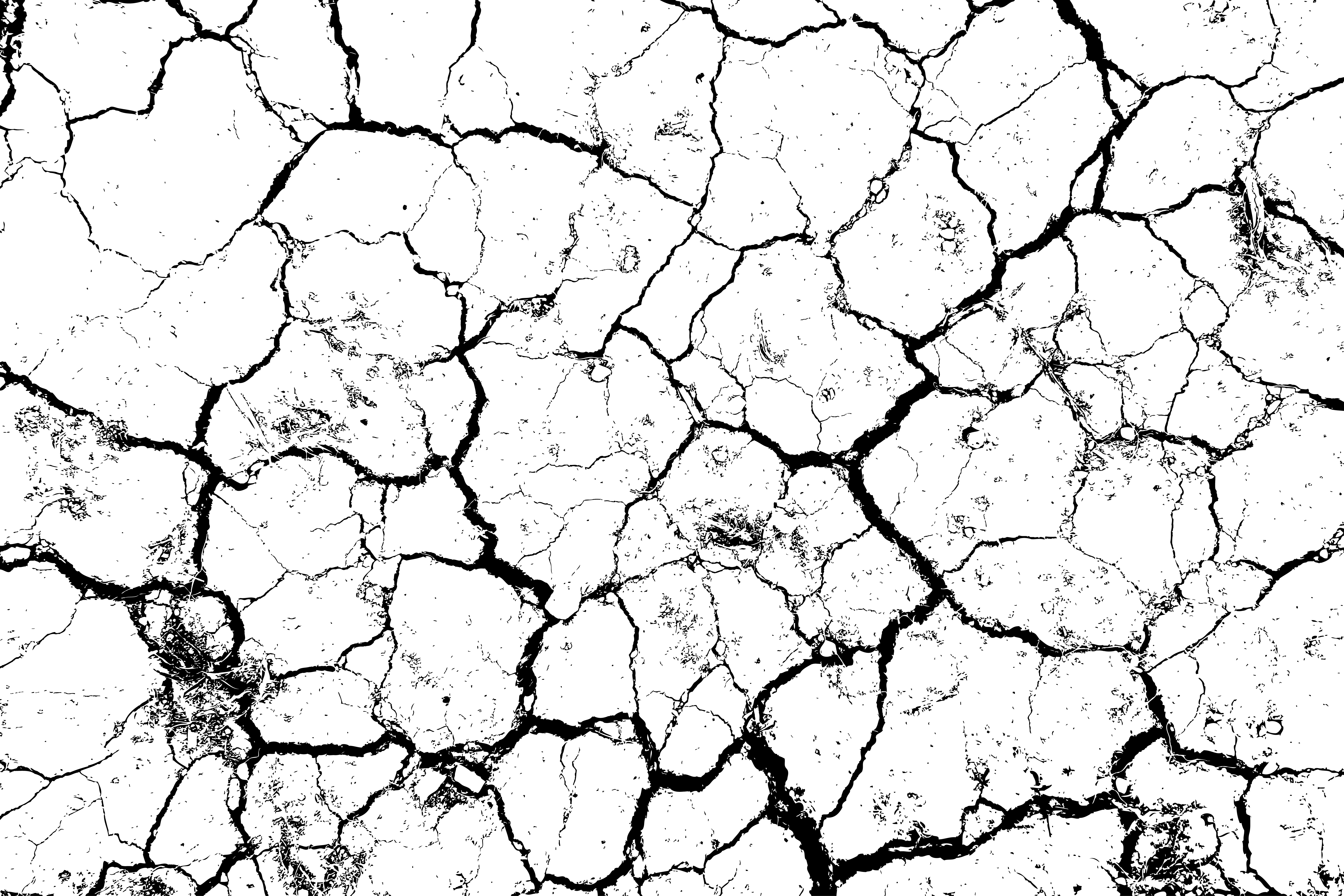
(Image: Shutterstock)

In a paper published in Nature Physics, Northeastern University Department of Physics Arts and Sciences Distinguished Professor Alain Karma, in collaboration with his postdoctoral research associate Chih-Hung Chen and Professor Eran Bouchbinder of the Weizmann Institute of Science’s Chemical Physics Department, discovered the mechanism that causes cracks to behave strangely when they spread very rapidly in brittle materials. The results of this study will help researchers better understand how fragile materials, such as glass, ceramic, polymers, and bone break–often catastrophically — and how to better design materials to avoid failure.

Karma’s goal was to understand how things break, since a primary way materials fail is through crack propagation, which has long been an issue in materials science, construction, and product development. More specifically, the collaborative research team wanted to understand how the mechanical properties of the region of high stress concentration around the edge of a crack affects the crack dynamics.

“While straight cracks can, in principle, race through a material as fast as the speed of sound, they never reach that speed for reasons that have remained elusive,” said Karma. “We have shown that this is because cracks become inherently unstable when their speed is sufficiently high. Instability causes the crack tip to wobble from side to side and trace out a wavy path through the material. This instability has been completely missed by conventional theories of fracture, which all assume that the relationship between stretch and force inside a material is linear, meaning that doubling the force doubles the amount of stretch. Our work shows that this assumption breaks down near the crack tip and explains how the nonlinear relationship between stretch and force produces oscillations with a well-defined period that can be related to materials properties.”

Through this research, Karma and his colleagues developed a novel theory to help researchers predict, through large-scale computer simulations, the dynamics of a crack under varying conditions, which has the potential to help understand why and how certain materials fail.

With success in this research, Karma hopes to continue on to more related work. “This study used very thin sheets of quasi-2D materials. We plan to extend this study to 3D bulk materials. In bulk, the instability that prevents cracks from breaking at the speed of sound happens at a lower crack velocity than in 2D but the mechanism is not understood,” he said.

To elucidate this mechanism, the team plans to investigate the 3D phenomenon of micro-branching, when the main crack splits into many micro-cracks, to understand its origins in bulk samples of brittle materials. “We believe that the non-linear relationship between force and deformation is at the root of micro-branching instabilities, and we think we can crack that problem,” Karma said.
Related Articles Read More >

Overcoming the 100-nanometer barrier: New microbottle resonators scale up optical trapping
R&D 100 winner LLNL achieves 1,000x speed boost in 3D nanofabrication
CEA-Leti achieves 400°C CMOS fabrication milestone for 3D chip stacking
The 2025 R&D 100 Finalists are here
rd newsletter
EXPAND YOUR KNOWLEDGE AND STAY CONNECTED
Get the latest info on technologies, trends, and strategies in Research & Development.

R&D World Digital Issues

Fall 2025 issue

Browse the most current issue of R&D World and back issues in an easy to use high quality format. Clip, share and download with the leading R&D magazine today.

R&D 100 Awards
Research & Development World
  • Subscribe to R&D World Magazine
  • Sign up for R&D World’s newsletter
  • Contact Us
  • About Us
  • Drug Discovery & Development
  • Pharmaceutical Processing
  • Global Funding Forecast

Copyright © 2026 WTWH Media LLC. All Rights Reserved. The material on this site may not be reproduced, distributed, transmitted, cached or otherwise used, except with the prior written permission of WTWH Media
Privacy Policy | Advertising | About Us

Search R&D World

  • R&D World Home
  • Topics
    • Aerospace
    • Automotive
    • Biotech
    • Careers
    • Chemistry
    • Environment
    • Energy
    • Life Science
    • Material Science
    • R&D Management
    • Physics
  • Technology
    • 3D Printing
    • A.I./Robotics
    • Software
    • Battery Technology
    • Controlled Environments
      • Cleanrooms
      • Graphene
      • Lasers
      • Regulations/Standards
      • Sensors
    • Imaging
    • Nanotechnology
    • Scientific Computing
      • Big Data
      • HPC/Supercomputing
      • Informatics
      • Security
    • Semiconductors
  • R&D Market Pulse
  • R&D 100
    • 2025 R&D 100 Award Winners
    • 2025 Professional Award Winners
    • 2025 Special Recognition Winners
    • R&D 100 Awards Event
    • R&D 100 Submissions
    • Winner Archive
  • Resources
    • Research Reports
    • Digital Issues
    • Educational Assets
    • Subscribe
    • Video
    • Webinars
    • Content submission guidelines for R&D World
  • Global Funding Forecast
  • Top Labs
  • Advertise
  • SUBSCRIBE