 The cell and gene therapy industry has a measurement problem sometimes gets overlooked: companies can engineer viral vectors carrying therapeutic genes, manufacture them at scale and push them toward the clinic. But characterizing what they produced at the intact molecular level has remained stubbornly difficult.
Conventional mass spectrometry can reach into the megadalton range. Thermo Fisher Scientific’s Q Exactive UHMR,, a leading platform for native MS, has demonstrated analysis of 3 MDa and 4 MDa hepatitis B virus capsids and detects ions up to 80,000 m/z. But AAV-based gene therapies present a harder problem than raw mass alone. A typical production batch contains a heterogeneous mixture of empty capsids, partially filled capsids, and fully loaded particles, all clustered in roughly the 3.7 to 6 MDa range. In conventional ensemble measurements, that heterogeneity can blur charge-state resolution, making mass assignment by deconvolution difficult or impossible. As a result, developers often still rely on slower methods such as sedimentation velocity analytical ultracentrifugation for empty-full characterization.
What the Xevo CDMS does differently
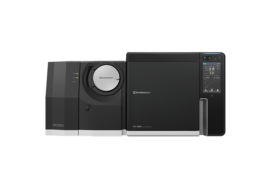
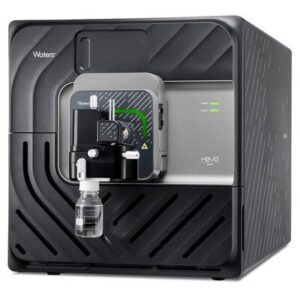
Waters Corporation’s Xevo CDMS, launched October 13, 2025 and set to be showcased at Analytica 2026 in Munich, takes a fundamentally different approach. At its core is an Electrostatic Linear Ion Trap (ELIT) that isolates and measures individual ions, capturing both mass-to-charge ratio and charge simultaneously. This lets the instrument calculate true molecular mass for intact biomolecules up to 150+ megadaltons, measuring individual ions rather than inferring mass from ensemble charge-state distributions.
The system can distinguish empty, partially filled, full, and overfull AAV capsids in a single run. Waters says it requires roughly 100-fold less sample volume than analytical ultracentrifugation (AUC), and delivers results in under 10 minutes at concentrations as low as approximately 10^10 viral particles per milliliter.
“We’re realizing we can ask entirely new questions with this technique, things we didn’t even think were testable before,” said Timothy Fenn, Ph.D., VP of Analytical Development at Lexeo Therapeutics, in Waters’ launch materials.
The instrument runs on Waters’ GxP-ready waters_connect platform. If gene therapy developers adopt CDMS during development, the same instrument and data format can follow a candidate from research bench through GMP manufacturing without a method transfer.
The BD merger context
The Xevo CDMS launch takes on additional significance in light of Waters’ completion of its approximately $18.8 billion combination with BD’s Biosciences & Diagnostic Solutions businesses in February 2026. Waters is now a roughly $6.5 billion revenue company organized into four divisions: Waters Analytical Sciences, Waters Biosciences, Waters Advanced Diagnostics, and Waters Materials Sciences.
The Xevo CDMS sits within Waters Analytical Sciences alongside the company’s established LC and MS portfolio. But the BD deal brought flow cytometry, clinical diagnostics, and single-cell multiomics into the fold. Waters can now offer instruments that follow a biotherapeutic from early characterization (Xevo CDMS) through cell-based assays (BD Biosciences flow cytometry) to clinical diagnostic testing (Advanced Diagnostics).