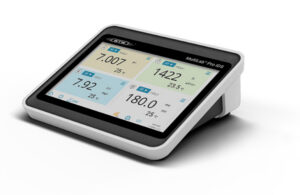
MultiLab Pro IDS multi-parameter benchtop meter from WTW (Xylem Lab Solutions), shown with touchscreen interface for simultaneous measurement of pH, conductivity, dissolved oxygen and ORP.
Xylem Lab Solutions, a division of Xylem Inc., used its Pittcon 2026 press briefing to showcase how its latest products can help clients do more with less. “Labs are being asked to do more: more parameters, more data, more compliance. And they’re being asked to do that with less experience, less space and less capital,” said Michelle Kuzio, product manager for Xylem North America. “For workflow innovation, you must deeply, deeply understand the measurement itself,” she said.
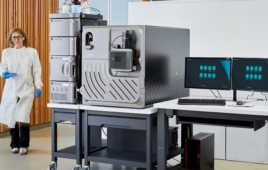
The company presented four instruments spanning electrochemistry, combustion analysis, biochemistry and VOC detection. Xylem Lab Solutions markets products under multiple brands including WTW, YSI, OI Analytical, SI Analytics and Bellingham + Stanley, and serves as the exclusive North American distributor for Gerhardt. Collectively, the company services a range of markets, including pharmaceutical, environmental, chemical, food and beverage and life sciences.
1. MultiLab Pro IDS: Multi-parameter benchtop meter
Brand: WTW (Europe) / YSI (North America)
Markets: Pharma, environmental, food and beverage, chemical
The headline launch and the focus of the bulk of the briefing. Xylem positioned Pittcon 2026 as the North American commercial launch event, with the instrument expected to begin shipping in late April. The product had been presented in European webinars and distributor channels since mid-2024. The MultiLab Pro IDS is a benchtop multi-parameter instrument with up to four galvanically isolated measurement channels supporting pH, ORP/mV, conductivity, dissolved oxygen and turbidity. ISE support is listed as coming soon on some regional product pages, while North American YSI pages currently list it alongside BOD as supported parameters — a discrepancy Xylem has not publicly clarified. Each probe is single-parameter: four simultaneous measurements require four separate sensors purchased to match the parameters of interest.
Xylem describes the system as a shift from “instrument thinking to system-level architecture thinking,” a shared data structure, scalable workflows and flexible connectivity built around the Intelligent Digital Sensor (IDS) platform. “Our customers didn’t ask us for another meter,” Kuzio said. “They really asked for a meter that keeps up with how they operate today.” Kuzio said environmental laboratories and food and beverage labs drove the most design input: environmental for compliance pressure, F&B specifically for 21 CFR Part 11 requirements. The company spent over a year gathering customer feedback before finalizing design principles.
IDS sensor architecture
The IDS sensors store their own identity and calibration data at the sensor level. When a probe moves between instruments, its measurement history travels with it, reducing setup errors and training time. Sensors can connect via wired or wireless (Bluetooth LE) connections. Kuzio described this as enabling scenarios where the measurement hub sits inside a fume hood with the display interface mounted outside, eliminating long cable runs.
Compliance and data
Compliance is built into the instrument rather than managed through external software. “Compliance was built in by the design, not layered on afterward,” Kuzio said. The system includes integrated audit trails, user and role management, tamper-proof data storage, and workflows designed to support 21 CFR Part 11 expectations. Data exports in PDF/A, JSON, and CSV formats. The system is LIMS-ready with secure export via LAN, no intermediary PC required, which Xylem says reduces IT complexity and validation burden. Kuzio positioned this as particularly important for regulated pharma labs and for organizations trying to standardize across multiple sites.
Design and usability
Compact footprint (197 x 161 x 70 mm), VESA-mountable, 7-inch touchscreen with glove-friendly glass resistant to alcohol and disinfectants. Built-in methods, automated documentation, on-device manual. Manufactured in Germany with modular design for component-level servicing.
2. N-Realyzer: Combustion analyzer for nitrogen/protein determination
Brand: Gerhardt (Xylem exclusive distributor in North America)
Markets: Food and feed, agriculture, pharma, environmental
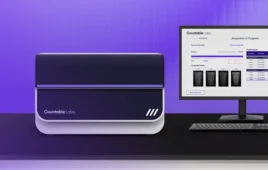
The N-Realyzer performs nitrogen and protein analysis via the Dumas combustion method, positioned as a faster, smaller, and more environmentally friendly alternative to Kjeldahl. Xylem says it is the only instrument provider offering both Dumas and Kjeldahl technologies under one vendor umbrella. The dual-method portfolio allows labs to select or combine approaches based on sample matrix and throughput needs.
Key Specifications
Detection limits down to 0.003 mg nitrogen. Up to 100 solid or liquid samples in approximately five hours via automated processing. The system uses roughly 50% less helium than competing analyzers, according to Xylem, with sample-optimized oxygen addition to extend cylinder life. A patented autosampler prevents sample mix-ups and allows priority samples to be inserted mid-sequence. Two-stage water separation enables reliable series analysis of aqueous samples. The compact, closed-system design eliminates the need for a fume hood, freeing lab bench space. Workflows designed to support 21 CFR Part 11 compliance and documentation aligned with ISO 17025. Tool-free sealing concept for fast consumable replacement. The N-Realyzer won a Pittcon award the previous year, which Kuzio noted during the briefing.
3. YSI 2900C: Biochemistry analyzer
Brand: YSI
Markets: Clinical research, bioprocessing, food and beverage, biofuels
The YSI 2900C is an FDA-cleared 510(k) biochemistry analyzer (clearance K210933) specifically designed for blood glucose (D-Glucose) analysis. Kuzio noted that the FDA clearance is specifically required because the instrument is used for validating glucose testing in diabetic diagnostics. It uses YSI’s patented Immobilized Enzyme Technology (IET), delivering results in 60 seconds or less. Xylem’s published materials emphasize the technology’s analyte specificity and minimal interference, though the comparison to HPLC-level accuracy made during the briefing does not appear in the company’s primary product documentation. The instrument also measures a range of sugars applicable to food and beverage labs.
The instrument features a smaller footprint than previous YSI analyzers, accommodates a range of sample containers including 96-well plates, and includes an icon-driven interface with built-in training videos. Built-in sample-handling eliminates the need for a separate autosampler. For labs requiring broader analyte coverage (glucose, lactate, choline, and other metabolites), Xylem points to the companion 2900D model.
4. THM 1000: Selective VOC analyzer
Brand: YSI / OI Analytical
Market: Municipal drinking water
The THM 1000 is a dedicated on-site trihalomethane analyzer for drinking water designed to provide rapid screening results that complement off-site GC/MS testing. The system combines integrated purge-and-trap sample preparation with a surface acoustic wave (SAW) detector developed in collaboration with Sandia National Laboratories. It delivers THM results in approximately 30 minutes with sensitivity to roughly one part per billion.
Trihalomethanes form when chlorine disinfectants react with naturally occurring organic matter and bromide in source water. Regulatory agencies including the EPA, WHO, and the UK’s Drinking Water Inspectorate have established drinking-water standards for THMs; the EPA’s maximum contaminant level for total trihalomethanes is 80 ppb as a running annual average. The THM 1000 is designed for push-button simplicity, targeting water treatment operators who may not have analytical chemistry backgrounds.