 A neutron detector built around abundant lithium instead of scarce helium-3, a battery made of heated sand, and software that spots the faint electrical arcing that starts wildfires. The three winners of the 2026 R&D 100 Special Recognition: Market Disruptor award, announced today by R&D World.
Each listing includes the primary submitting organization, followed by any co-developing organizations, as provided to R&D World.
All Finalist, Winner, and additional logos are available for download here.
Announcements coming soon:
- R&D 100 Winners: August 6
- R&D Technician of the Year: August 10
- R&D Researcher of the Year: August 11
- R&D Leader of the Year: August 12
The 2026 R&D 100 gala banquet will be held at the Grand Hyatt Scottsdale Resort in Arizona on November 19, 2026.
Special Recognition: Market Disruptor Winners of 2026
Note: Special Recognition categories do not have “Finalists,” so winners are announced directly.
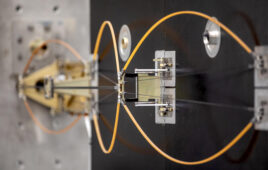
ICONS novel neutron detection technology accurately measures neutrons in both low- and high-flux environments, even in the presence of strong gamma radiation. ICONS responds rapidly, enabling real-time measurements of short neutron bursts or high-rate neutron sources. ICONS overcomes supply-chain constraints using naturally abundant, commercially available lithium-6 rather than scarce helium-3.
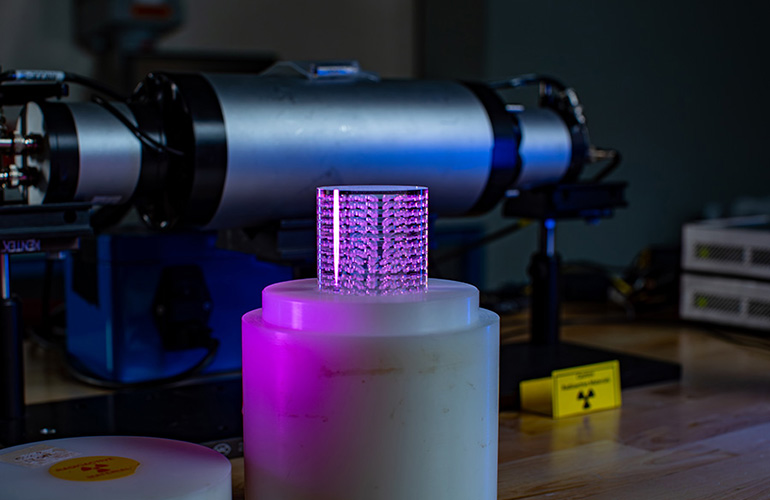
Prototype of the Integrated Composite Optical Neutron Sensor (ICONS), a solid-state, helium-3-free neutron detector developed at Los Alamos National Laboratory. [Image: Los Alamos National Laboratory]
ENDURING is a low-cost, long-duration thermal energy storage technology that uses heated sand to provide hours to days of energy supply for power or heating, reducing energy costs and improving electric grid resilience. ENDURING surpasses competitors thanks to its versatile design, cost-effective scaling, and innovative system configuration.
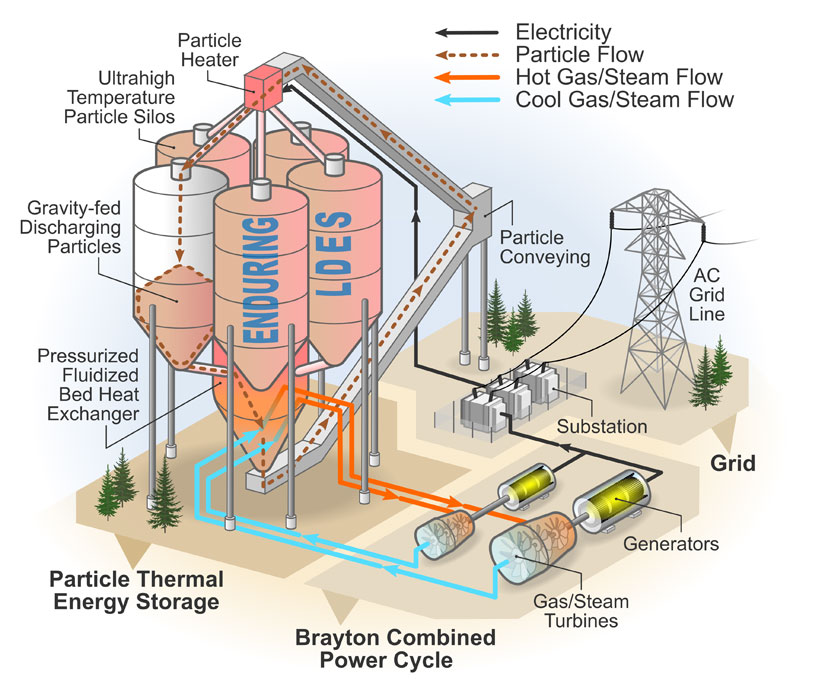
In a new NREL-developed particle thermal energy storage system, silica particles are gravity-fed through electric resistive heating elements. The heated particles are stored in insulated concrete silos. When energy is needed, the heated particles are fed through a heat exchanger to create electricity for the grid. The system discharges during periods of high electricity demand and recharges when electricity is cheaper. Image by Patrick Davenport and Al Hicks, NREL
Multi-Event Grid Intelligence Platform for Wildfire Prevention and Resilience (AWARE) detects, classifies, and reports multiple power-grid anomalies within a single waveform, including low-current arcing. It provides utilities with early warning of hidden faults to help prevent wildfires, reduce outages, and improve grid resilience, reliability, and operational decision-making.
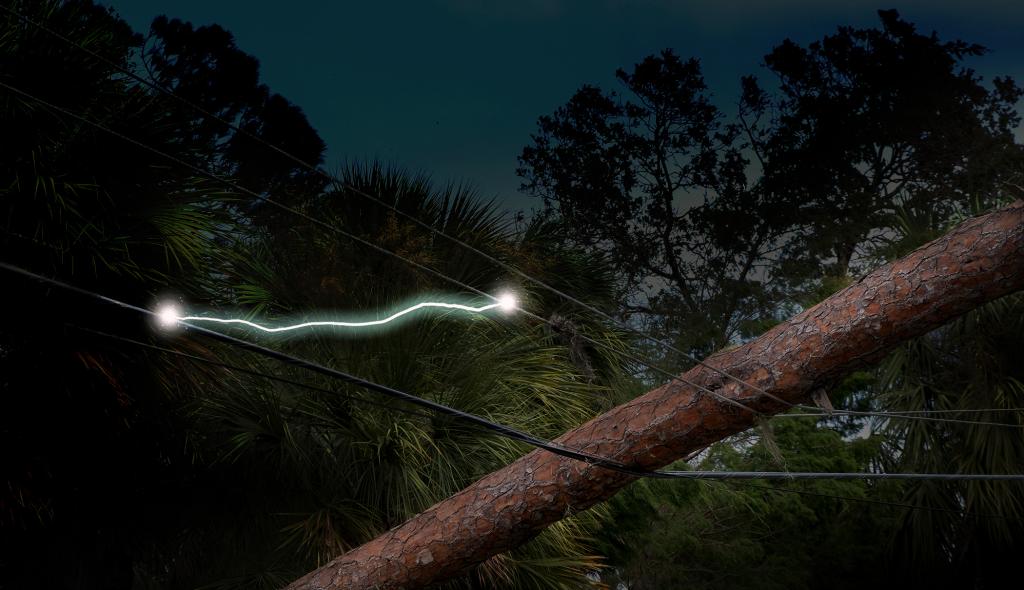
ORNL’s arcing detection platform offers utilities new capabilities to rapidly recognize electrical arcing that can cause wildfires and blackouts. Credit: Morgan Manning/ORNL, U.S. Dept. of Energy
Congratulations to all of the 2026 R&D 100 Special Recognition: Market Disruptor winners.