 A carbon converter that projects formic acid at $0.60 per kilogram, a freight rail simulator released for free, and a sensor that can tell how much of a plastic bottle used to be a plastic bottle. The three winners of the 2026 R&D 100 Special Recognition: Corporate Social Responsibility award, announced today by R&D World, target the economics of sustainability rather than its optics.
Winners are listed below in order. Each listing includes the official entry name, the primary submitting organization, and any co-developing organizations, as provided to R&D World. Product descriptions are drawn from the submitted entries and reflect the claims of the submitting organizations.
All Finalist, Winner, and additional logos are available for download here.
Announcements coming soon:
- Special Recognition: Market Disruptor Winners: August 5
- R&D 100 Winners: August 6
- R&D Technician of the Year: August 10
- R&D Researcher of the Year: August 11
- R&D Leader of the Year: August 12
The 2026 R&D 100 gala banquet will be held at the Grand Hyatt Scottsdale Resort in Arizona on November 19, 2026.
Special Recognition: Corporate Social Responsibility winners of 2026
Note: Special Recognition categories do not have “Finalists,” so winners are announced directly.
The perforated bipolar membrane electrochemical conversion system turns waste CO2 into high-value chemicals using electricity, with formic acid production costs projected as low as $0.60 per kilogram. The laboratory describes it as the only electrochemical CO2 conversion technology to reach commercial viability, and says industries can use it today to cut energy consumption and costs while tapping multibillion-dollar chemical markets.
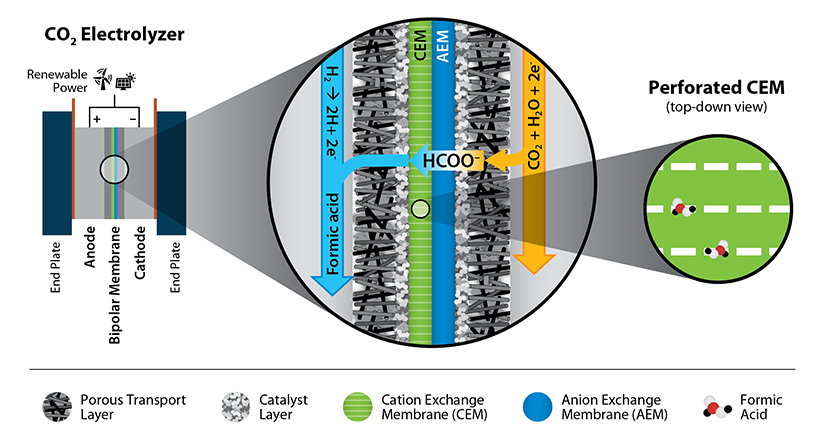
The perforated cation exchange membrane architecture in a CO₂ electrolyzer, designed to make formic acid production more energy efficient and durable. Illustration by Elizabeth Stone, NRL
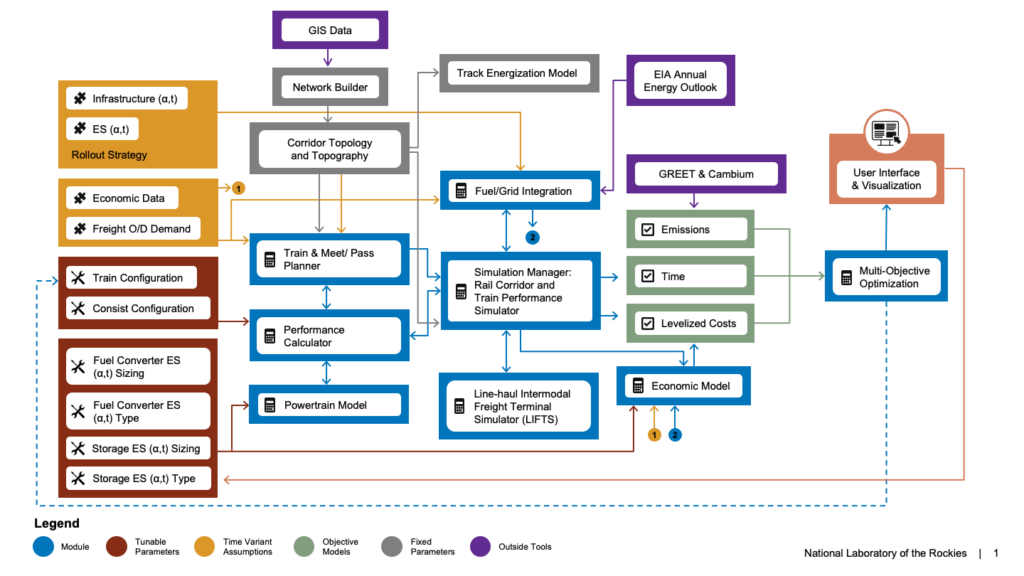
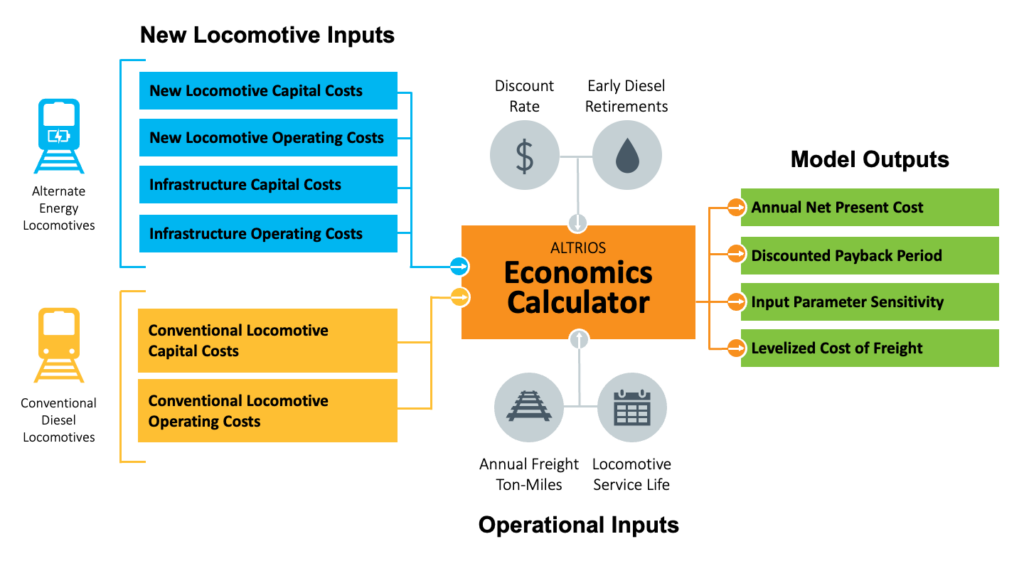
ALTRIOS is a validated, freely available open-source digital twin for the freight rail system. It replaces siloed legacy tools with unified simulations of train components, locomotives, fleets, rail networks, and freight terminals, plus energy use and costs over decades, to de-risk long-term, capital-intensive deployments.
The ALTRIOS Economics Calculator compares capital and operating costs for alternate-energy and conventional diesel locomotives, then returns net present cost, payback period, and levelized cost of freight. Image courtesy of National Laboratory of the Rockies
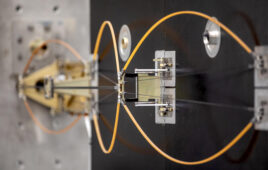
The multi-modal, non-destructive sensing technique combines triboelectric analysis, dielectric and impedance spectroscopy, capacitance measurement, and mid-infrared spectroscopy with machine learning to quantify recycled content in plastics. The team reports better than 97% classification accuracy on PET samples ranging from 0% to 50% recycled content, the range regulators are expected to mandate. The work was published in Communications Engineering in March 2026.
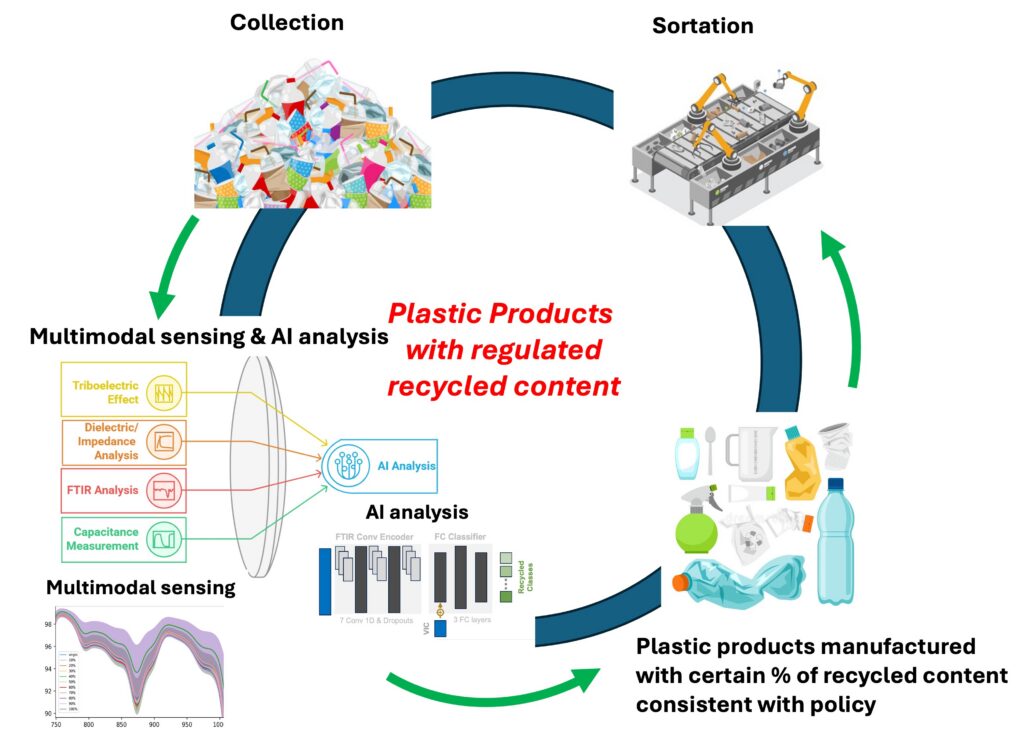
Four sensing modes feed a machine learning classifier that estimates how much recycled material a plastic product contains, closing the verification loop between collection, sorting, and manufacture. Image courtesy of University at Buffalo
Congratulations to all of the 2026 R&D 100 Special Recognition: Corporate Social Responsibility winners.