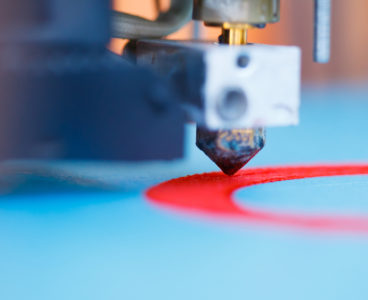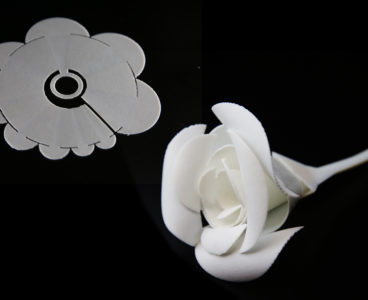
Researchers at Carnegie Mellon University have used an inexpensive 3-D printer to produce flat plastic items that, when heated, fold themselves into predetermined shapes, such as a rose, boat or even a bunny. Lining Yao, assistant professor in the Human-Computer Interaction Instituteand director of the Morphing Matter Lab, said these self-folding plastic objects represent a first step…
Scientists 3D Print Self-Folding Materials Using New, Inexpensive Technique
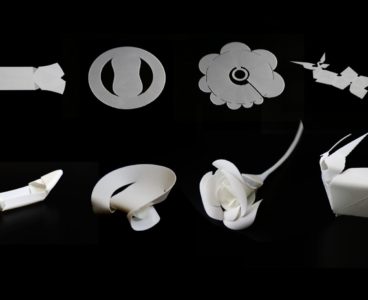
Researchers from Carnegie Mellon University have developed a new technique that allows them to 3D print flat plastic items that fold themselves into predetermined shapes when heated. The technique, known as Thermorph, could be the first step towards products like flat-pack furniture that assumes its final shape with the assistance of a heat gun, or…
3D Printed Active Materials Could Yield Flexible Robots for the Military

Smart Inks Bring 3D Printing to the Next Level
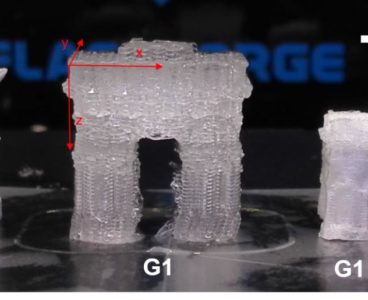
Newly developed “smart” inks could allow 3D printed objects to change both shape and color. A team from Dartmouth College has created the novel smart ink, which could lead to a new generation of printed materials and provide a low-cost alternative to printing precision parts for uses in biomedicine, energy and other applications. The innovation…
Knit Happens, Thanks to Innovative 3-D Technology
Carnegie Mellon University computer scientists have developed a system that can translate a wide variety of 3-D shapes into stitch-by-stitch instructions that enable a computer-controlled knitting machine to automatically produce those shapes. Researchers in the Carnegie Mellon Textiles Lab have used the system to produce a variety of plush toys and garments. What’s more, James…
Scientists 3D Print Liquid Materials

Researchers Print All-Liquid 3-D Structures
Scientists from the Department of Energy’s Lawrence Berkeley National Laboratory (Berkeley Lab) have developed a way to print 3-D structures composed entirely of liquids. Using a modified 3-D printer, they injected threads of water into silicone oil — sculpting tubes made of one liquid within another liquid. They envision their all-liquid material could be used…
Amputees Find Cheaper Alternative in 3D-Printed Robot Hand
Students at The University of Manchester have designed and built a 3D printed, low-cost robotic prosthetic hand that could provide a much cheaper alternative for amputees. The hand’s joints are all fully posable with each individual finger and the thumb being able to move as well as make a fist. The functionality of the hand…
3D Printer Helps Make Metallic Glass Alloys in Bulk

Scientists have developed a new method to produce amorphous metal or metallic glass alloys in bulk, which could be used in a number of industries. A research team from North Carolina State University has demonstrated the ability to the alloys with a 3D printer, which have a bevy of applications including for electric motors that…
What Plants Can Teach Us About Oil Spill Clean-Up, Microfluidics
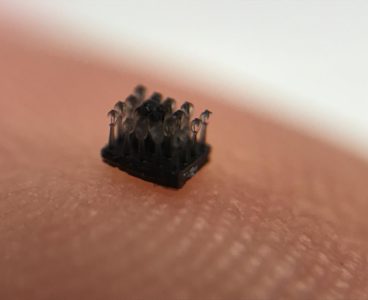
For years, scientists have been inspired by nature to innovate solutions to tricky problems, even oil spills — manmade disasters with devastating environmental and economic consequences. A new USC study takes a cue from leaf structure to fabricate material that can separate oil and water, which could lead to safer and more efficient oil spill…
Lawrence Livermore’s Laser Facility Aims for Pinpoint Accuracy in Parts
Call it large meets small. Scientists and engineers at Lawrence Livermore National Laboratory recently turned to Protolabs’ digital manufacturing services to rapidly produce highly precise parts and components for the lab’s National Ignition Facility (NIF), which houses the largest laser facility in the world. The NIF is the “large” in this story. How big? Think…
3D Printing: A Look at Hype, Success, and Possibility
New Gallium Alloy Could Yield Advances in 3D Printed, Stretchable Electronics
Sensing Capabilities Embedded in Robots with New 3D Printing Technique
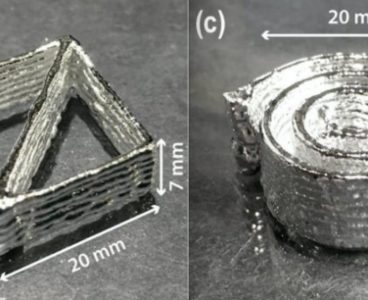
Researchers at Harvard University have built soft robots inspired by nature that can crawl, swim, grasp delicate objects, and even assist a beating heart, but none of these devices has been able to sense and respond to the world around them. That’s about to change. Inspired by our bodies’ sensory capabilities, researchers at the Harvard…
Smartphone Transforms into Microscope with 3D-Printed Clip-On
Australian researchers from the ARC Centre of Excellence for Nanoscale BioPhotonics (CNBP) have developed a 3D printable “clip-on” that can turn any smartphone into a fully functional microscope. Reported in the research journal Scientific Reports, the smartphone microscope is powerful enough to visualize specimens as small as 1/200th of a millimeter, including microscopic organisms, animal…
Achieving Printed Power Electronics Means Going Beyond Silver Nanoparticles

New Technique Permits 3-D Printing of Nanoscale Metal Structures

For the first time, it is possible to create complex nanoscale metal structures using 3-D printing, thanks to a new technique developed at Caltech. The process, once scaled up, could be used in a wide variety of applications, from building tiny medical implants to creating 3-D logic circuits on computer chips to engineering ultralightweight aircraft…
Astronaut Track their Health in Space with 3-D Printable Tools

If humans are destined for deep space, they need to understand the space environment changes health, including aging and antibiotic resistance. A new NASA project could help. It aims to develop technology used to study “omics” — fields of microbiology that are important to human health. Omics includes research into genomes, microbiomes, and proteomes. The…
Submarines Dive Deeper Thanks to 3D Printing

A team of materials scientists at the NYU Tandon School of Engineering has developed the first process to 3D print components of syntactic foam — extremely strong and lightweight composites used in vehicles, airplanes, and ships. Their breakthrough holds particular promise for submarines because it will enable manufacturers to print components with complex shapes capable…
3D Printing Yields Shape-Shifting Smart Gel

Scientists Create Color-Changing 3D Printed Objects

3D printing has come a long way since the first “rapid prototyping” patent was rejected in 1980. We’ve evolved from basic designs to a wide range of highly-customizable objects. Still, there’s a big issue: once objects are printed, they’re final. If you need a change, you’ll need a reprint. But imagine if that weren’t the…
Human Skin Pigmentation Manufactured Using 3D Bioprinter
A new method for controlling pigmentation in fabricated human skin has been developed by researchers from A*STAR’s Singapore Institute of Manufacturing Technology (SIMTech) and the Singapore Centre for 3D Printing (SC3DP) at Nanyang Technological University. In their paper, published in Biofabrication, the team show how they utilize 3D bioprinting to control the distribution of melanin-producing…
Ultra-Thin Optical Fibers Lay Groundwork for Tissue Repair Using 3D Printer

Ultra-thin optical fibers could make it possible to use 3D printers to repair damaged tissues in humans. A team of researchers have developed an optical fiber as thin as a human hair that can be used to create microscopic structures with laser-based 3D printing and an endoscope to fabric tiny biocompatible structures directly into tissue…
New Approach Uses 3D Printing to Repair Human Tissue
For the first time, researchers have shown that an optical fiber as thin as a human hair can be used to create microscopic structures with laser-based 3D printing. The innovative approach might one day be used with an endoscope to fabricate tiny biocompatible structures directly into tissue inside the body. This capability could enable new…