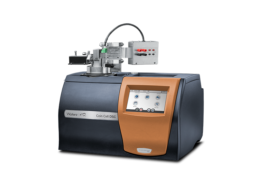
ZEISS has released ZEISS Mineralogic 3D software for automated quantitative mineralogy that achieves increased productivity and efficiency for the mining industry. By understanding composition, mineral relationships and fabric of the geological materials under scrutiny, including locked grains, miners are able to respond faster to critical production questions.
Maximizing recovery requires improvements in efficiency
The process of crushing rock to separate valuable commodities uses a significant amount of energy, reportedly greater than 3% of the world’s total generated electric power. Increasing demand on resources leads to the evaluation of more complex, lower grade, ores. Maximizing recovery requires improvements in efficiency that involve detailed knowledge of the ore body and of the mineralogy that influences behavior during the beneficiation process. When time is of the essence, ZEISS Mineralogic 3D produces the actionable data needed for decision making, from comminution improvements, through process enhancements, to assessing the quality of the final concentrate.
Recognizing individual particles
Built on the industry-leading ZEISS Xradia 3D X-ray microscope and microCT platforms using ZEISS DeepRecon Pro, ZEISS Mineralogic 3D software incorporates advanced and flexible machine learning protocols that recognize individual particles even when they are in contact with other particles. Particles are then automatically analyzed individually to provide a series of key outputs such as modal mineralogy, volume, porosity, feret dimensional measurements, associations and liberation.
With ZEISS Mineralogic 3D, little to no sample preparation is required, stereological assumptions are eliminated as every grain is viewed in full in three dimensions, and time to actionable data is significantly reduced. Additionally, precious samples, for example meteorites and sample-return missions, are preserved due to the non-destructive nature of X-ray, .
“ZEISS Mineralogic 3D has the potential to be a game-changer for our customers, especially as requirements for new energy production and storage will ultimately require even higher yields from commodities. Greater efficiency and a faster time to results will be paramount. The intelligence built into these platforms enables the automation that has the potential to liberate individuals and organizations from arduous, time-consuming tasks, freeing them to be more strategic and productive. ZEISS Mineralogic 3D was developed by ZEISS Solutions Lab, and is a great example of our ability to rapidly respond to dynamic market requirements,” said Allister McBride, head of Materials Research Marketing at Zeiss Research Microscopy Solutions.
“The arrival of a rapid scanning 3D system for mining and metallurgical applications opens the next chapter in process mineralogy. For our critical and precious metals projects, which are absolutely vital in the shift to low carbon, this will be a step change, as they are typically hosted in low grade ores. It has been notoriously difficult to get robust datasets from traditional techniques. ZEISS Mineralogic 3D is going to make those issues a thing of the past,” said James Strongman, technical director of Petrolab, U.K., a service lab that has been providing geometallurgical results to the mining industry using ZEISS Mineralogic 2D since 2015.
ZEISS Mineralogic 3D is available for ZEISS Xradia Context microCT or Crystal CT and ZEISS Xradia Versa X-ray microscopes. It integrates ZEISS DeepRecon Pro for deep learning image processing, and ZEISS ZEN Intellesis for machine learning-assisted segmentation.
Also available is ZEISS Mineralogic 2D on ZEISS scanning electron microscope platforms and incorporating EDS detectors.