
Los Angeles is thinking outside of the box in planning for the 2028 Olympic and Paralympic Games. The idea? Use electric air taxis to address its notorious traffic. L.A.’s mayor, Karen Bass, has even mused about an (almost) car-free Games. The company making the craft, Archer Aviation, hopes to enable 10–20 minute flights between vertiports.…
U.S. Space Force invests $13.7 billion in next-gen launch vehicles from SpaceX, ULA, and Blue Origin
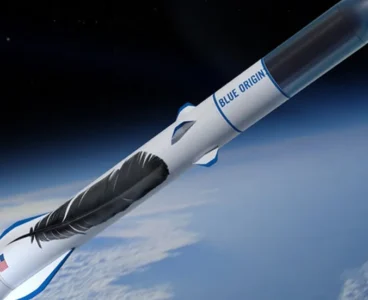
Blue Origin broke into the military’s most critical space launch market Friday, securing a multi-billion dollar share alongside SpaceX and United Launch Alliance in new U.S. Space Force contracts worth up to $13.7 billion designed to ensure access to orbit for national security missions through 2032. The contract awards are a significant expansion of the…
8 major R&D moves this week: HHS cuts 10,000 jobs while Anthropic & DataBricks form $100M pact
This past week, Boeing secured a multi-billion dollar contract for the Next Generation Air Dominance fighter program last week, while tech rivals Anthropic and DataBricks formed a $100 million partnership as R&D stocks broadly declined amid market uncertainty. Meanwhile, there were mixed signals for the AI market, and the R&D World Index (RDWI) for the…
Breathing easier on the moon: NASA and Corscience team up to monitor spacesuit safety

As NASA prepares for astronauts’ return to the Moon through the Artemis program, even the most minor details inside a spacesuit can make a big difference. The top priority is ensuring astronauts can breathe safely and efficiently during long hours on the lunar surface. In pursuit of that goal, NASA has teamed up with German…
New podcast from ISS National Lab brings space research down to Earth
If you’ve ever wondered what’s happening aboard the International Space Station — beyond the amazing views and zero-gravity stunts — a new podcast is ready to take you inside the science. The ISS National Laboratory has launched Between a Rocket and a Hard Space, a fascinating podcast that gives listeners a behind-the-scenes look at the discoveries,…
NASA eliminates Chief Scientist role and shuts down key offices amid broader federal cuts

NASA has announced the elimination of its chief scientist position and the closure of several internal offices, including the Office of Technology Policy and Strategy and the agency’s Diversity, Equity, Inclusion, and Accessibility (DEIA) branch. According to Reuters, the move, which affects at least 23 employees, is part of a broader reorganization aligned with federal…
Penn State student cracks 100-year-old wind energy equation, potentially paving the way for more efficient turbines
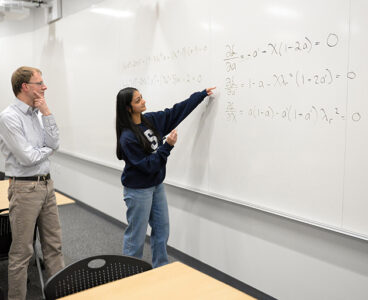
In 1926, British aerodynamicist Hermann Glauert introduced an equation that shaped a century of wind turbine development — a third-order polynomial that determines the optimum axial induction factor. Yet, at Penn State nearly one hundred years later, Divya Tyagi, an engineering student revisited and improved this classical result by deriving missing analytical approaches for rotor…
This week in research: A space launch, breathing eyes, glaciers melting, and more
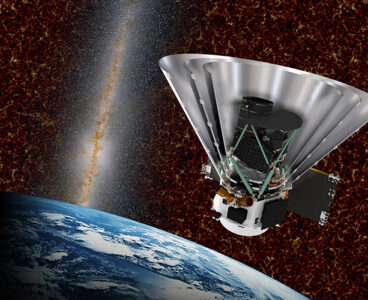
Could a new telescope unearth cosmic recipes for life? Can a cell patch rescue fading eyesight? And what’s with bubbles “galloping” in a lab? This week’s research roundup probes the surprising frontiers of astronomy, medicine, archaeology, and more — raising as many questions as it answers. Read on for highlights that challenge familiar assumptions and…
SwRI’s PUNCH mission to join NASA’s SPHEREx launch, offering unique views of the Sun and Solar Wind

As NASA prepares to launch SPHEREx, another groundbreaking mission led by the Southwest Research Institute (SwRI) is set to hitch a ride. The Polarimeter to Unify the Corona and Heliosphere, or PUNCH, mission consists of four small, suitcase-sized spacecraft designed and built by SwRI. While SPHEREx embarks on a quest to map the universe and…
NASA’s SPHEREx mission: A bold leap towards unveiling cosmic mysteries
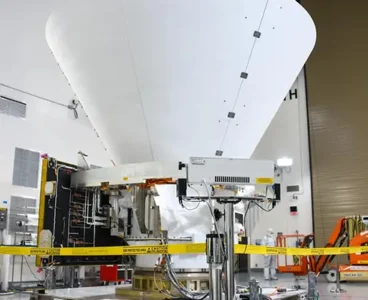
NASA is poised to embark on an ambitious mission by launching the Spectro-Photometer for the History of the Universe, Epoch of Reionization, and Ices Explorer, better known as SPHEREx. This high-tech space telescope is designed to conduct an unprecedented sky survey, offering a comprehensive look into the universe’s evolution and the potential for life beyond…
Musk’s Starlink wins new FAA contract

SpaceX’s satellite internet system, Starlink, just scored a major win with the FAA. The mission? Deploy 4,000 terminals over the next 12 to 18 months to upgrade the agency’s IT networks. This rollout—part of the FAA’s “TDM X” program—goes beyond enhancing network capacity. By integrating Starlink’s phased array antennas and laser-linked satellite mesh into remote…
U.S. Space Force releases first public orbital photo of the X-37B spaceplane
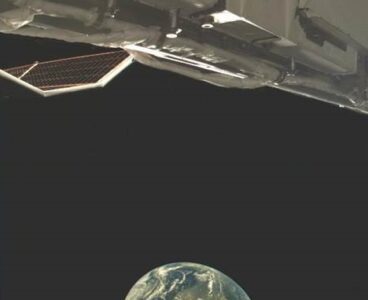
The Boeing X‑37B Orbital Test Vehicle—a highly secretive, unmanned and reusable spaceplane from the United States Space Force—made an appearance today in an official photo circulating on social media. This image, captured via an onboard camera typically used for vehicle health monitoring during its seventh mission (OTV‑7), offers a glimpse of Earth from the X‑37B’s…
Nokia and Intuitive Machines to test 4G network on the Moon’s South Pole

When cell phones first became ubiquitous, they allowed people to call from previously inconceivable places — the park, the swimming pool, the car, and everywhere else — but calling on the Moon? That remained firmly in the realm of sci-fi fantasy… until now. Because while you were busy doomscrolling, something truly astronomical was happening. Nokia…
Fire at SPS Technologies facility highlights safety challenges, spurs R&D questions

A substantial fire disrupted operations at SPS Technologies’ manufacturing facility in Abington Township, Montgomery County, Pennsylvania, on Feb. 17, 2025. SPS, a notable producer of aerospace fasteners—including Space Shuttle components—employs high-temperature forging, fine metal powder milling, and chemical electroplating to craft superalloy-based products. These hazardous-material processes had faced prior EPA citations for waste management lapses.…
As wildfires worsen, NASA turns to drones for real-time weather insights
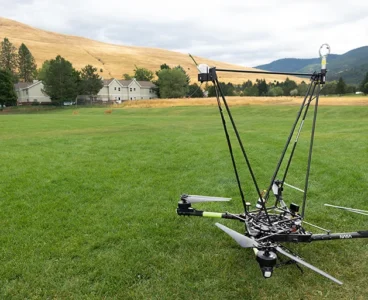
As wildfire threats grow globally, NASA is tapping decades of aeronautics and Earth science expertise to support firefighters. Through its FireSense project — part of the Wildland Fires program — the agency is testing unmanned aerial systems (UAS) that gather real-time weather data over fire-prone areas. A recent field campaign in Missoula, Montana, demonstrated the…
Blue Origin’s 10% cut part of a pattern as aerospace players race to streamline as space race heats up
[Blue Origin][/caption> Blue Origin‘s announcement of a 10% workforce reduction is not an isolated incident, but the latest sign of a significant belt-tightening across the aerospace sector. Joining companies like Boeing, Airbus, and Pratt & Whitney which have recently announced cuts, Blue Origin’s layoffs reflect a broader industry-wide push for efficiency as space companies race…
NASA’s nuclear-powered engine promises 3x efficiency boost in Mars missions
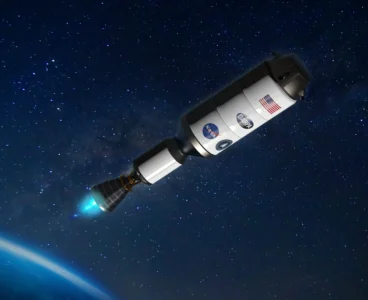
NASA and DARPA have unveiled plans to test a novel nuclear thermal rocket engine—a technology capable of tripling propulsion efficiency compared to conventional chemical rockets. The project, dubbed DRACO, hinges on recent advances in nuclear fuel, with General Atomics reporting significant progress in testing fuel elements capable of withstanding the extreme conditions of an Nuclear…
R&D 100 winner of the day: Frontier-X
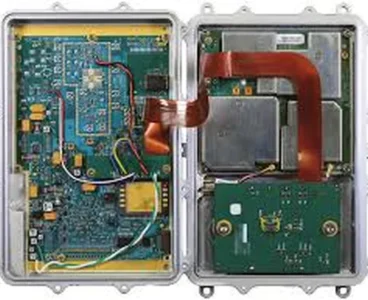
NASA missions with limited mass and power budgets have long demanded innovative communication systems. In response, the Johns Hopkins Applied Physics Laboratory (APL) developed Frontier Radio, which first flew in 2012 on the twin Van Allen Probes. This compact, radiation-tolerant radio became a critical component on several near- and deep-space missions, including Parker Solar Probe,…
Dark energy camera captures the glittering galaxies of the Antlia Cluster
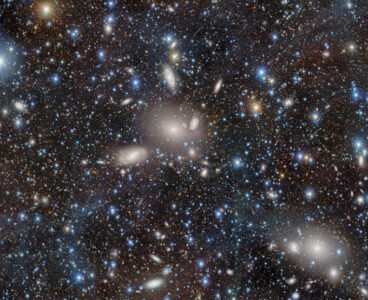
Galaxy clusters rank among the most significant known structures in the Universe. Current models suggest they form when clumps of dark matter pull galaxies together, merging smaller groups into vast clusters containing hundreds or even thousands of galaxies. One such group is the Antlia Cluster (Abell S636), located roughly 130 million light-years away in the…
UAH Electric Propulsion Club showcases ion thruster at International Astronautical Congress in Italy

The Electric Propulsion Club (EPC) at the University of Alabama in Huntsville (UAH) recently showcased its experimental gridded ion thruster, STARGATE, at the 75th International Astronautical Congress (IAC) in Milan, Italy. The group, comprised of undergraduate students, presented its proprietary plasma production technology for small satellite propulsion in low Earth and geostationary orbits. To provide…
ISS National Lab publication showcases pioneering physical science research in space

A paper published in Gravitational and Space Research reveals insights from research sponsored by the International Space Station (ISS) National Laboratory on transport phenomena. Transport phenomena are fundamental physical processes involving momentum, energy, and mass transfer. They describe how heat and matter move through their surroundings, such as how heat radiates from a stove or how a…
CfA and NSF NRAO partner to propel black hole imaging into space
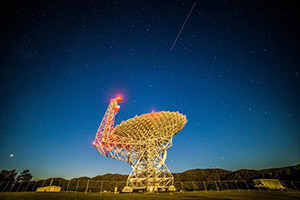
The Center for Astrophysics | Harvard & Smithsonian (CfA) and the U.S. National Science Foundation’s National Radio Astronomy Observatory (NSF NRAO) have announced a new collaboration to advance the Event Horizon Telescope (EHT) into space. This next-generation effort, called the Black Hole Explorer (BHEX) mission, aims to improve black hole imaging by combining ground-based radio…
US and China sign five-year amended Science and Technology Agreement

The State Department has announced that the United States and China have amended and extended their bilateral Science and Technology Agreement (STA) for five years. Initially signed in 1979 by President Jimmy Carter and Chinese leader Deng Xiaoping, the deal was designed to foster cooperation in agriculture, energy, space, health, and the environment. U.S. officials…
Northwestern University joins global partnership to build Giant Magellan Telescope
Northwestern University has joined the international consortium constructing the Giant Magellan Telescope, a $2.54 billion observatory poised to become one of the world’s most powerful astronomical instruments. The consortium now includes 15 leading research institutions from the United States, Australia, Brazil, Chile, Israel, South Korea, and Taiwan. Northwestern brings expertise in astrophysics and artificial intelligence…
Space Station research returns, advancing cancer and neurodegenerative therapies
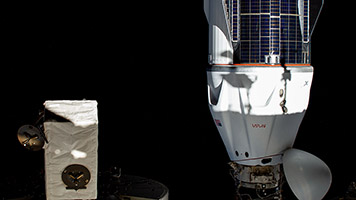
Dozens of ambitious scientific investigations — including projects aiming to improve cancer detection, advance treatments for neurodegenerative diseases, and enhance respiratory therapy — have safely returned to Earth from the International Space Station (ISS). The nearly 50 experiments, sponsored by the ISS National Laboratory, were transported back on SpaceX’s 31st Commercial Resupply Services (CRS) mission…