Majorana particles are very peculiar members of the family of elementary particles. First predicted in 1937 by the Italian physicist Ettore Majorana, these particles belong to the group of so-called fermions, a group that also includes electrons, neutrons and protons. Majorana fermions are electrically neutral and also their own anti-particles. These exotic particles can, for…
Researchers Take a Step Toward Light-based, Brain-like Computing Chip
A technology that functions like a brain? In these times of artificial intelligence, this no longer seems so far-fetched—for example, when a mobile phone can recognize faces or languages. With more complex applications, however, computers still quickly come up against their own limitations. One of the reasons for this is that a computer traditionally has…
New Research Will Serve ORNL’s Mission in Computing, Materials R&D

Energy Secretary Rick Perry, Congressman Chuck Fleischmann and lab officials this week broke ground on a multipurpose research facility that will provide state-of-the-art laboratory space for expanding scientific activities at the Department of Energy’s Oak Ridge National Laboratory. The new Translational Research Capability, or TRC, will be purpose-built for world-leading research in computing and materials…
Shaping the Future of Finance With HPC

NCSA Faculty Fellow and Assistant Professor at the Gies College of Business at the University of Illinois Mao Ye’s research lies at the intersection of big data, high-performance computing and the economics, and finance realm. Using computing resources, Ye tackles large amounts of data currently being collected by companies and finance institutions. “The high-performance computing is more like…
Berkeley Lab Highlights ‘the Little Computer Cluster That Could’
Decades before “big data” and “the cloud” were a part of our everyday lives and conversations, a custom computer cluster based at the Department of Energy’s Lawrence Berkeley National Laboratory (Berkeley Lab) enabled physicists around the world to remotely and simultaneously analyze and visualize data. The Parallel Distributed Systems Facility (PDSF) cluster, which had served…
Scientists Develop Software to Balance Data Processing Load in Supercomputers
XSEDE Supercomputer Simulations Help Combat Tuberculosis Granulomas
Physicists Set a New Record of Quantum Memory Efficiency
Like memory in conventional computers, quantum memory components are essential for quantum computers—a new generation of data processors that exploit quantum mechanics and can overcome the limitations of classical computers. With their potent computational power, quantum computers may push the boundaries of fundamental science to create new drugs, explain cosmological mysteries or enhance accuracy of forecasts…
Developing a Model Critical in Creating Better Devices
Water is everywhere. Understanding how it behaves at an intersection with another material and how it affects the performance of that material is helpful when trying to develop better products and devices. An undergraduate researcher at Virginia Tech is leading the way. Chemical engineering junior Preeya Achari has now developed and recently published as first author a…
New Robust Device May Scale up Quantum Tech, Researchers Say
Researchers have been trying for many years to build a quantum computer that industry could scale up, but the building blocks of quantum computing, qubits, still aren’t robust enough to handle the noisy environment of what would be a quantum computer. A theory developed only two years ago proposed a way to make qubits more…
Determining the Importance of Connections in Unstructured Data

Discovering information in unstructured data is a major research topic today because it underlies everything from web-search engines to finding recommendations for movies and restaurants. At the University of Texas at Austin, Dr. Keshav Pingali, the W.A. “Tex” Moncrief Chair of Grid and Distributed Computing, leads a team of scientists who use supercomputers at the…
Artificial Intelligence and Deep Learning Accelerate Efforts to Develop Clean, Virtually Limitless Fusion Energy

The Science On Earth, the most widely used devices for capturing the clean and virtually limitless fusion energy that powers the sun and stars must avoid disruptions. These devices are bagel-shaped tokamaks. Massive disruptions can halt fusion reactions and potentially damage the fusion reactors. By applying deep learning—a powerful version of the machine learning form…
Scientists Create First Billion-atom Biomolecular Simulation
Researchers at Los Alamos National Laboratory have created the largest simulation to date of an entire gene of DNA, a feat that required one billion atoms to model and will help researchers to better understand and develop cures for diseases like cancer. “It is important to understand DNA at this level of detail because we…
World-record Quantum Computing Result for Sydney Teams
A world-record result in reducing errors in semiconductor “spin qubits,” a type of building block for quantum computers, has been achieved using the theoretical work of quantum physicists at the University of Sydney Nano Institute and School of Physics. The experimental result by University of New South Wales engineers demonstrated error rates as low as 0.043…
Using Supercomputers to Identify Synthesizeable Photocatalysts for Greenhouse CO2 Gas Reduction
Testing nearly 69,000 materials for specific properties was the challenge faced by scientists conducting extensive research on using photocatalytic conversion to reduce the greenhouse gas CO2. The main goal is to find a way to reduce CO2 into chemicals that can provide a source of clean, low-cost renewable energy. But researchers have located very few…
Researchers Use Noise Data to Increase Reliability of Quantum Computers
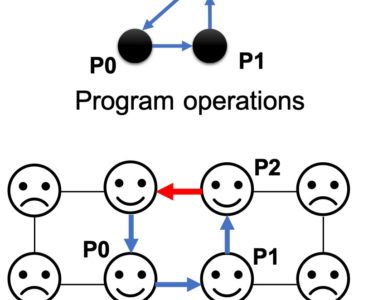
A new technique by researchers at Princeton University, University of Chicago and IBM significantly improves the reliability of quantum computers by harnessing data about the noisiness of operations on real hardware. In a paper presented this week, researchers describe a novel compilation method that boosts the ability of resource-constrained and “noisy” quantum computers to produce…
Research Provides Speed Boost to Quantum Computers
A new finding by researchers at the University of Chicago promises to improve the speed and reliability of current and next generation quantum computers by as much as 10 times. By combining principles from physics and computer science, the researchers developed a new scalable compiler that makes software aware of the underlying quantum hardware, offering…
Singapore and Australian Scientists Build a Machine to See All Possible Futures
In the 2018 movie Infinity War, a scene featured Dr. Strange looking into 14 million possible futures to search for a single timeline where the heroes would be victorious. Perhaps he would have had an easier time with help from a quantum computer. A team of researchers from Nanyang Technological University, Singapore (NTU Singapore) and…
Getting to the Root of Plant Simulations

If you’ve ever tended a garden or potted a plant, you know a few simple truths about green things—they require water and nutrients to survive and their roots are good indicators of their overall health. So we water on a regular schedule, provide for root growth and add nutrient-rich soils to ensure a balanced diet.…
New Algorithm Optimizes Quantum Computing Problem-solving

Tohoku University researchers have developed an algorithm that enhances the ability of a Canadian-designed quantum computer to more efficiently find the best solution for complicated problems, according to a study published in the journal Scientific Reports. Quantum computing takes advantage of the ability of subatomic particles to exist in more than one state at the same…
Supercomputers Aid Our Understanding of Complex Brain Waves

Even though electroencephalography (EEG) has been used for almost 100 years, this safe and painless test of brain activity remains an efficient method for recording aspects of rapid brain activity patterns supporting our thoughts and actions. Leveraging the power of the Comet supercomputer at the San Diego Supercomputer Center (SDSC) at UC San Diego, campus researchers have…
Scientists Discover How RNA Pol II Maintains Accurate Transcription With Supercomputer
The message of life is encoded in our genomic DNA through transcription of messenger RNAs and translation of proteins to perform cellular functions. To ensure accurate transcription—a process that transcribes genomic DNA into messenger RNA by adding nucleotides one by one like letters in the alphabet, an enzyme called RNA polymerase II would synthesize and…
Supercomputers Help Supercharge Protein Assembly
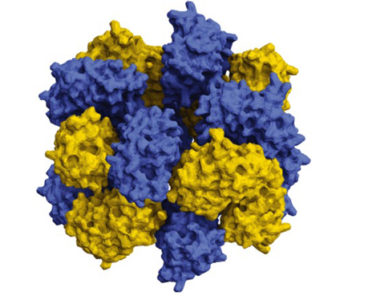
Red blood cells are amazing. They pick up oxygen from our lungs and carry it all over our body to keep us alive. The hemoglobin molecule in red blood cells transports oxygen by changing its shape in an all-or-nothing fashion. Four copies of the same protein in hemoglobin open and close like flower petals, structurally coupled to…
Modified Deep-learning Algorithms Unveil Features of Shape-shifting Proteins
Using artificial neural networks designed to emulate the inner workings of the human brain, deep-learning algorithms deftly peruse and analyze large quantities of data. Applying this technique to science problems can help unearth historically elusive solutions. One such challenge involves a biophysical phenomenon known as protein folding. Although researchers know that proteins must morph into…
Extremely Accurate Measurements of Atom States for Quantum Computing
A new method allows the quantum state of atomic “qubits”—the basic unit of information in quantum computers—to be measured with 20 times less error than was previously possible, without losing any atoms. Accurately measuring qubit states, which are analogous to the one or zero states of bits in traditional computing, is a vital step in…