
What Novo Nordisk’s job openings say about its direction Snapshot of 342 open roles on novonordisk.com, April 15, 2026. Top 5 countries China: 96 United States: 75 Denmark: 46 India: 29 France: 28 Top 5 job categories (global) Sales: 111 Commercial Marketing: 29 Engineering & Technical: 23 Education: 17 Clinical Development: 17 China (96 roles…
Anthropic and industry leaders debut Project Glasswing to preempt AI-driven cyberattacks

Anthropic last week announced Project Glasswing, in partnership with Amazon Web Services, Anthropic, Apple, Broadcom, Cisco, CrowdStrike, Google, JPMorganChase, the Linux Foundation, Microsoft, NVIDIA, and Palo Alto Networks. Claude Mythos Preview revealed that “AI models have reached a level of coding capability where they can surpass all but the most skilled humans at finding and…
Anthropic’s oversight trust just hit majority control. The tipping-point was adding Novartis CEO Vas Narasimhan to its board
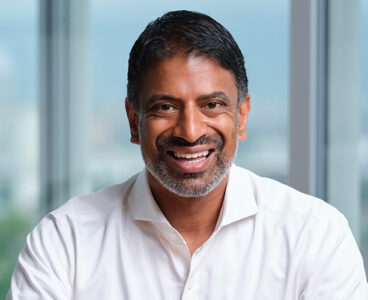
Anthropic added Novartis CEO Vas Narasimhan to its board on April 14, 2026. With his appointment, directors chosen by the company’s Long-Term Benefit Trust now hold a majority of board seats. Narasimhan is a physician-scientist who has overseen the development and approval of more than 35 novel medicines and vaccines, and he joins the board…
Muse Spark put Meta back in the AI race. The bigger story is what Meta wants from users.
Meta’s latest AI model, Muse Spark, has put the company back in frontier AI territor after its prior model, Llama 4 series became a credibility headache for Meta thanks to allegations of benchmark manipulation. While Meta initially denied the claims after the model was launched in April 2025, the former Meta exec Yann LeCun told…
Ginkgo’s CEO says biotech needs its Waymo moment
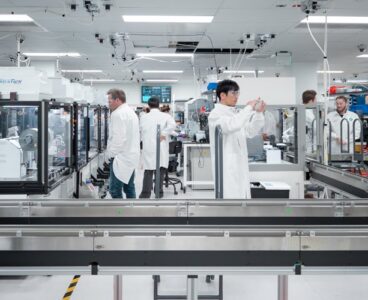
With late-stage R&D costs averaging over $2 billion per asset for large biopharma companies, according to Deloitte’s ongoing analysis, and more pressure to reduce those costs, something has got to give. Jason Kelly, CEO of Ginkgo Bioworks, observes that one common answer has been outsourcing, especially to lower-cost markets. But he warns that this is…
Stanford HAI 2026 AI Index: AI posts gains in science and medicine while often struggling to read a clock

Stanford HAI’s 2026 AI Index paints a split-screen picture for R&D. In the report’s science chapter, “frontier models outperform human chemists on average on ChemBench,” yet “score below 20% on replication in astrophysics and 33% on Earth observation questions.” In medicine, the report reaches a similarly mixed conclusion, saying AI is transforming clinical care, but…
Decades before OpenAI conceived of AI “innovators,” Stephen Thaler, Ph.D. was filing patents that said his AI did the inventing

On October 13, 1994, the physicist Stephen Thaler, Ph.D. filed a U.S. patent application titled “Device for the Autonomous Generation of Useful Information.” Its claims covered “the totally autonomous generation of new concepts, designs, music, processes, discovery, and problem solving.” Eleven months later, he filed the same invention in Australia, Canada, Germany, the European Patent…
Claude Mythos leads 17 of 18 benchmarks Anthropic measured. Muse Spark put Meta back in the frontier club, and OpenAI’s ‘Spud’ model is reportedly near launch

Anthropic is not planning on publicly releasing it, but its Mythos model leads in 17 of 18 benchmarks, according to data in Anthropic’s model’s system card. The lone outlier is Measuring Massive Multitask Language Understanding (MMMLU), where Gemini 3.1 Pro’s 92.6–93.6 overlaps with Mythos’ score of 92.7. One day later, on April 8, Meta Superintelligence…
Three Ways AI and Automation Are Reshaping Drug Safety
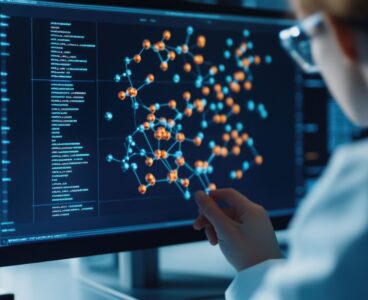
As clinical trials expand globally, their complexity has intensified, with a recent study indicating average complexity scores have risen by more than 10 percentage points in the last decade. This growing intricacy, compounded by exponential data growth and rapidly evolving regulations, reveals the limitations of traditional, manual pharmacovigilance systems and the urgent need for innovation.…
U.S. and Korea solidify AI-energy pact: Genesis Mission and K-Moonshot join forces
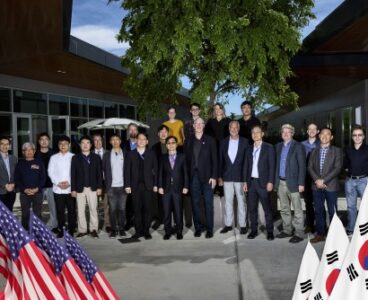
The Korea Institute of Energy Research (KIER) and top U.S. National Laboratories formalize a roadmap to integrate AI into the global energy transition. The KIER, Korea’s only government-funded energy research institute, held workshops from March 23 to 30 with leading U.S. Department of Energy (DOE) national laboratories—the Lawrence Livermore National Laboratory (LLNL) and the National…
How Thermo Fisher’s Glacios 3 aims to broaden access to cryo-EM
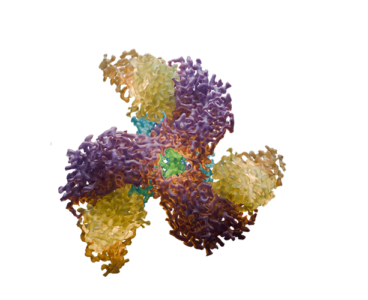
Cryo-electron microscopy has helped illuminate the molecular architecture behind some of the most commercially important therapies of the past decade. Cryo-EM helped guide the development of Pfizer-BioNTech’s Comirnaty COVID-19 vaccine, for instance, which at its peak in 2022 drove $37.8 billion for Pfizer alone. Separately, cryo-EM helped shed light on how the megablockbusters tirzepatide (Lilly)…
Bioengineers utilize AI-driven protein modeling to reconstruct dinosaur leather
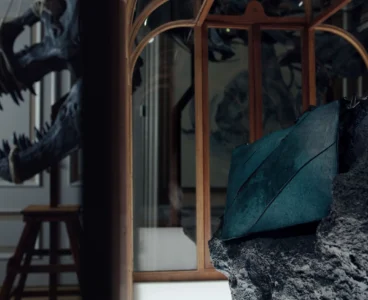
Bioengineers have successfully utilized AI-driven protein modeling to reconstruct Type I collagen from the Tyrannosaurus rex genome. Scientists and designers unveiled the world’s first handbag made from T-Rex Leather last week. The leather was engineered using reconstructed dinosaur collagen. The handbag will be on display beside a life-sized T. rex statue in Amsterdam. VML, a…
Anthropic’s $400M acquisition of Coefficient Bio signals a deeper push into drug discovery
Anthropic is now a biotech company. At least of sorts. The San Francisco–based frontier AI lab has acquired Coefficient Bio, a stealth New York-based biotech AI startup, in a stock deal valued at just over $400 million, according to reporting from Newcomer and The Information. The deal brings a team of fewer than 10 people,…
ChatGPT, mRNA and a dog named Rosie: Torigen CEO on what the viral cancer story reveals about pet immunotherapy
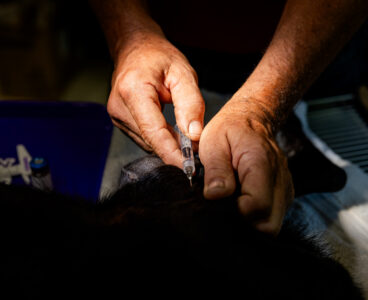
In mid-March 2026, Paul Conyngham’s story went viral: a Sydney-based AI consultant with no medical training reported using ChatGPT, Grok, Gemini and AlphaFold to help design a personalized mRNA cancer vaccine for his dying dog. The coverage spread fast with at times hyperbolic claim: CBS, Fortune, Newsweek and dozens more. OpenAI CEO Sam Altman called…
Machine learning rewrites the rules for measuring scientific disruption
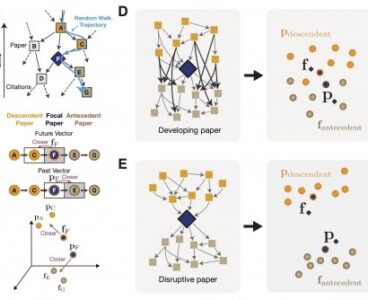
A study in Science Advances maps the landscape of innovation to identify disruptive studies and patents that challenge existing paradigms and inspire waves of follow-up research. The most widely used metric for tracking progress in science, the CD index, focuses on a paper’s local citation patterns, meaning it looks at whether papers citing a focal…
OpenAI says 70% to 80% we’re to AGI. A prominent cognitive scientist says we’re nowhere close
Depending on who you ask in Silicon Valley or beyond, AGI, artificial general intelligence, is either a finished product, a work in progress, or a total misunderstanding of what intelligence actually is. “I’d say I’m basically 70 to 80% there,” OpenAI co-founder and president Greg Brockman said this week, describing how close he believes we…
Pictor Labs launches NVIDIA-powered on-prem AI staining at USCAP 2026, boasting 99-100% stain equivalence
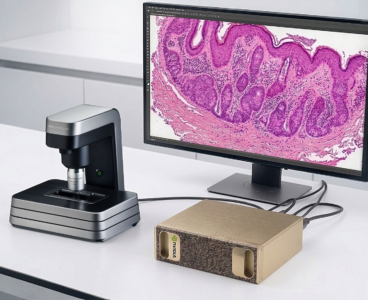
Pictor Labs, the UCLA spinout behind a suite of AI-powered virtual staining tools, used USCAP 2026, the annual pathology meeting in Los Angeles, to debut a dedicated on-premises hardware system that runs its full product line, including ClearStain, ReStain and DeepStain, entirely within a lab’s own walls. Pictor Labs has offered cloud-based virtual staining since…
A surgeon and Intuitive exec explain what da Vinci 5’s 10,000x computing leap actually looks like, inside and outside the OR
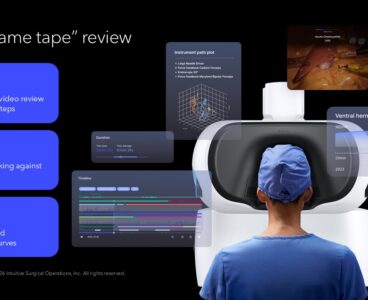
Minutes after stepping off a Southwest flight in San Jose, the surgeon Douglas Stoddard, Director of Surgery and Robotics, CHRISTUS Health, was in an operating room in San Marcos, Texas. His colleague had an elderly woman on the table with a perforated gastric ulcer, a case he had always done open, meaning a large incision,…
UniteLabs is building the software layer for automated labs
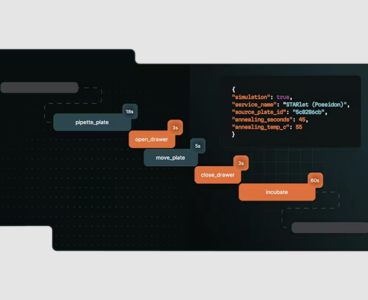
The idea of autonomous labs may be in the air, but most labs are still mostly manual. In fact, self-driving labs today are roughly where self-driving cars were a decade ago: a handful work impressively in controlled conditions, but the infrastructure to make them general-purpose, which from instrument connectivity to data standards and workflow…
The self-driving lab: a new roadmap for automation in synthetic biology
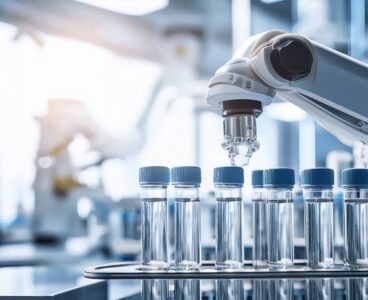
Imagine this: a biology lab at 2 a.m. No researchers are present, but the lab is far from stalled. Robots are hard at work pipetting, incubating and running assays. An AI model is analyzing the results of the last experimental cycle as it queues up the next round. When the team arrives in the morning,…
Bioptimus launches massive patient data atlas to train its biology AI
Bioptimus, a global AI company building models for biology, announced the launch of its Spatial Tissue Embedding Learning Atlas (STELA), a multinational spatial data generation initiative in partnership with 10x Genomics and Broad Clinical Labs. The company aims to solve issues in drug discovery and development, improving efficiency and decreasing costs. Building foundation models for…
Trump’s first science advisors have a financial stake in AI. Five alone have a net worth $874 billion.

A financial stake in AI. That is the single common thread linking all 13 members of the President’s Council of Advisors on Science and Technology. Seven are current or former tech company CEOs or co-founders whose revenues depend directly on AI growth. Jensen Huang leads NVIDIA, which posted $216 billion in revenue last year, nearly…
7 of 13: How one corner of Silicon Valley captured Trump’s science and tech council
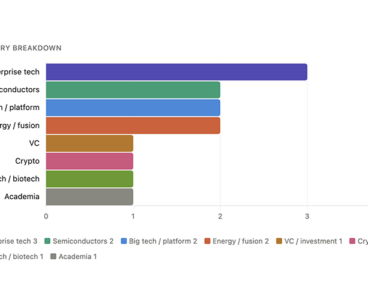
In August 2024, Trump wrote that Meta CEO Mark Zuckerberg could “spend the rest of his life in prison” for allegedly plotting against him in the 2020 election. Eighteen months later, Zuckerberg is on the President’s Council of Advisors on Science and Technology (PCAST), the body charged with advising the White House on science and…
Roughly 10% of drugs that enter clinical trials get approved. Owkin believes agentic AI can help fix that
Roughly 90% of clinical development fails. Decades of investment in genomics, precision medicine, and computational biology have barely moved the needle as drugs themselves have become more complex and the proverbial low-hanging fruit dries up. Even for successful drugs, the process of successful drug development often costs billions of dollars and takes more than a…
New AI satellite framework detects disasters in near real-time
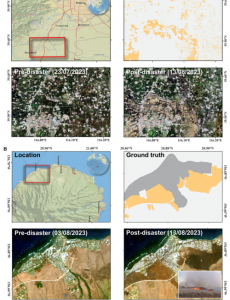
Researchers from Beijing Normal University and East China Normal University have developed a new disaster detection framework called Single-temportal High-spatial resolution image Individual unsupervised change Detection (Shield). They published their research in the Journal of Remote Sensing. The system allows satellites to detect disaster-affected areas directly in orbit. By combining change detection and anomaly detection,…