One of the most unknown phenomena in modern physics is gravity. Its measurement and laws remain somewhat of an enigma. Researchers at Tohoku University have revealed important information about a new aspect of the nature of gravity by probing the smallest mass-scale. Professor Nobuyuki Matsumoto has led a team of researchers to develop a gravity…
Energy-free Superfast Computing with Light Pulses
Superfast data processing using light pulses instead of electricity has been created by scientists. The invention uses magnets to record computer data which consume virtually zero energy, solving the dilemma of how to create faster data processing speeds without the accompanying high energy costs. Today’s data center servers consume between 2 to 5 percent of…
Next-gen Core Semiconductor Technology Based on Graphene

The DGIST (Daegu Gyeongbuk Institute of Science and Technology) Department of Information and Communication Engineering has developed a graphene-based high-performance transmission line with an improved operating speed of electrons than using the existing metal in high-frequency. This is expected to contribute greatly to next generation’s high-speed semiconductor and communication device with much faster processing speed…
Blood and Sweat Enhance Training App
The 20,000 entrants who ran the Stockholm Marathon in 2018 may remember what a warm day it was, and how many of them were forced to quit due to the hot weather. KTH Royal Institute of Technology researcher Gaston Crespo and his colleagues have developed a multifaceted measuring technology that is able to detect a…
Smartphones Sniff Out Disease

Gastric cancer, also known as stomach cancer, is the fifth most common cause of cancer-related deaths in Europe. Because of the lack of early signs specifically related to the disease, it’s usually only detected at an advanced stage—when treatment is for the most part ineffective. Driven to improve stomach and other cancer survival rates, for…
Nitrogen-vacancy Centers Created by Ultrafast Laser Pulses
“Quantum technologies” utilize the unique phenomena of quantum superposition and entanglement to encode and process information, with potentially profound benefits to a wide range of information technologies from communications to sensing and computing. However, a major challenge in developing these technologies is that the quantum phenomena are very fragile, and only a handful of physical…
Innovative New Sensor Reacts to Light, Heat, Touch
Inspired by the behavior of natural skin, researchers at the Laboratory of Organic Electronics have developed a sensor that will be suitable for use with electronic skin. It can measure changes in body temperature, and react to both sunlight and warm touch. Robotics, prostheses that react to touch, and health monitoring are three fields in…
Laser-propelled Spacecraft Could Shorten Journey to Mars
These are the journeys of the “StarChip Wafersize.” UC Santa Barbara students sent up, via balloon, a prototype miniature spacecraft that might eventually become the “wafercraft” that researchers posit could be propelled by lasers to achieve space travel at relativistic speeds to reach nearby star systems and exoplanets. So begins a journey, funded by NASA…
Graphene Flakes Control Neuron Activity
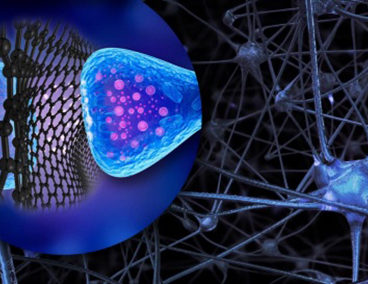
Chemical Industry Bottleneck Gets a Colorful Solution

The nanoscale water channels that nature has evolved to rapidly shuttle water molecules into and out of cells could inspire new materials to clean up chemical and pharmaceutical production. KAUST researchers have tailored the structure of graphene-oxide layers to mimic the hourglass shape of these biological channels, creating ultrathin membranes to rapidly separate chemical mixtures.…
Giant Lasers Crystallize Water Using Shockwaves
Scientists from Lawrence Livermore National Laboratory (LLNL) used giant lasers to flash-freeze water into its exotic superionic phase and record X-ray diffraction patterns to identify its atomic structure for the very first time—all in just a few billionths of a second. The findings are reported in Nature. In 1988, scientists first predicted that water would…
Perfect Material for Lasers Proposed by Researchers

Weyl semimetals are a recently discovered class of materials, in which charge carriers behave the way electrons and positrons do in particle accelerators. Researchers from the Moscow Institute of Physics and Technology and Ioffe Institute in St. Petersburg have shown that these materials represent perfect gain media for lasers. The research findings were published in…
Graphene and Hydrogen Bind in Just 10 Femtoseconds
Graphene is celebrated as an extraordinary material. It consists of pure carbon, only a single atomic layer thick. Nevertheless, it is extremely stable, strong, and even conductive. For electronics, however, graphene still has crucial disadvantages. It cannot be used as a semiconductor, since it has no bandgap. By sticking hydrogen atoms to graphene such a…
Researchers Develop New Power Supply for Synthetic Skins
Sensor Sniffs out Spoiled Milk Prior to Opening
Expiration dates on milk could eventually become a thing of the past with new sensor technology from Washington State University scientists. Researchers from the Department of Biological Systems Engineering (BSE), the WSU/UI School of Food Science and other departments have developed a sensor that can “smell” if milk is still good or has gone bad.…
Ink Not Required for Graphene Art Work
When you read about electrifying art, “electrifying” isn’t usually a verb. But an artist working with a Rice University lab is in fact making artwork that can deliver a jolt. The Rice lab of chemist James Tour introduced laser-induced graphene (LIG) to the world in 2014, and now the researchers are making art with the…
Graphene Plasmons Used for Quantum Computing
A novel material that consists of a single sheet of carbon atoms could lead to new designs for optical quantum computers. Physicists from the University of Vienna and the Institute of Photonic Sciences in Barcelona have shown that tailored graphene structures enable single photons to interact with each other. The proposed new architecture for quantum…
A New Look at 2D Magnets using Diamond Quantum Sensors
For the first time, physicists at the University of Basel have succeeded in measuring the magnetic properties of atomically thin van der Waals materials on the nanoscale. They used diamond quantum sensors to determine the strength of the magnetization of individual atomic layers of the material chromium triiodide. In addition, they found a long-sought explanation…
Researchers Achieve Breakthrough in Laser, Plasma Interactions
A new 3-D particle-in-cell (PIC) simulation tool developed by researchers from Lawrence Berkeley National Laboratory and CEA Saclay is enabling cutting-edge simulations of laser/plasma coupling mechanisms that were previously out of reach of standard PIC codes used in plasma research. More detailed understanding of these mechanisms is critical to the development of ultra-compact particle accelerators…
Innovative New Nanomaterial Could Replace Mercury
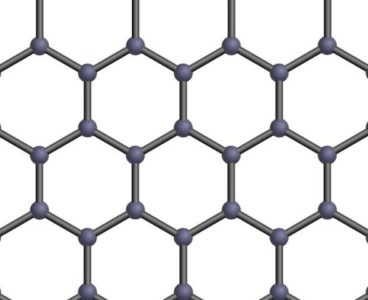
The nano research team led by professors Helge Weman and Bjørn-Ove Fimland at the Norwegian University of Science and Technology’s (NTNU) Department of Electronic Systems has succeeded in creating light-emitting diodes, or LEDs, from a nanomaterial that emits ultraviolet light. It is the first time anyone has created ultraviolet light on a graphene surface. “We’ve…
Researchers Develop the First Laser Radio Transmitter
You’ve never heard Dean Martin like this. This recording of Martin’s classic “Volare” was transmitted wirelessly via a semiconductor laser—the first time a laser has been used as a radio frequency transmitter. In a paper published in the Proceedings of the National Academy of Sciences, researchers from the Harvard John A. Paulson School of Engineering…
Sensor Finds Rare Metals Used in Smartphones
A more efficient and cost-effective way to detect lanthanides, the rare earth metals used in smartphones and other technologies, could be possible with a new protein-based sensor that changes its fluorescence when it binds to these metals. A team of researchers from Penn State developed the sensor from a protein they recently described and subsequently…
Lasers Allow for Smart Tattoos without Needles

A tattoo that could warn you for too many hours of sunlight exposure, or is alerting you for taking your medication? Next to their cosmetic role, tattoos could get new functionality using intelligent ink. However, that would require a more precise and less invasive injection technique. Researchers of the University of Twente have developed a…
A New Path to Achieving Invisibility without the Use of Metamaterials
A pair of researchers at Tokyo Institute of Technology (Tokyo Tech) describes a way of making a submicron-sized cylinder disappear without using any specialized coating. Their findings could enable invisibility of natural materials at optical frequency and eventually lead to a simpler way of enhancing optoelectronic devices, including sensing and communication technologies. Making objects invisible…
Mars 2020 Spacecraft Prepped for Launch in NASA Cleanroom
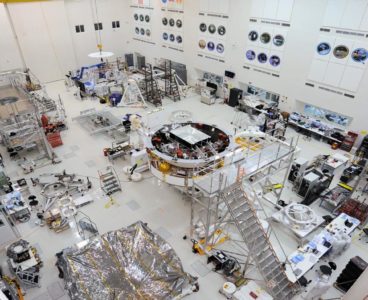
For the past few months, the cleanroom floor in High Bay 1 at NASA’s Jet Propulsion Laboratory in Pasadena, California, has been covered in parts, components and test equipment for the Mars 2020 spacecraft, scheduled for launch toward the Red Planet in July of 2020. But over the past few weeks, some of these components—the…