Threading a needle is hard, but at least you can see it. Think about how challenging it must be to thread a screw through a rod inside a bone in someone’s leg. Rice University seniors at the Brown School of Engineering set out to help doctors simplify the process of repairing fractured long bones in…
Lasers Cause Magnets to Act Like Fluids

For years, researchers have pursued a strange phenomenon: When you hit an ultra-thin magnet with a laser, it suddenly de-magnetizes. Imagine the magnet on your refrigerator falling off. Now, scientists at CU Boulder are digging into how magnets recover from that change, regaining their properties in a fraction of a second. According to a study…
Novel Laser Experiment Dives into Quantum Physics in a Liquid
For the first time, Yale University physicists have directly observed quantum behavior in the vibrations of a liquid body. A great deal of ongoing research is currently devoted to discovering and exploiting quantum effects in the motion of macroscopic objects made of solids and gases. This new experiment opens a potentially rich area of further…
Lasers Transform Carbon Black Powder into Multicolor Fluorescence Displays
National University of Singapore (NUS) physicists have discovered that recovered carbon black powder can be transformed by laser treatment to give a wide range of colors for potential display applications. Recovered carbon black powder is a common pigment produced from scrap rubber tires. There is a growing demand to use it as an environmentally friendly…
New Technique Allows Ultrafast 3D Images of Nanostructures
Custom-made Materials Display Ultrafast Connections
Through magic twist angles and unique energy states, it is possible to design tailor-made, atomically thin materials that could be invaluable for future electronics. Now, researchers at Chalmers University of Technology, Sweden, and Regensburg University in Germany have shed light on the ultrafast dynamics in these novel materials. The results were recently published in the…
Graphene Could Aid Future Terahertz Cameras
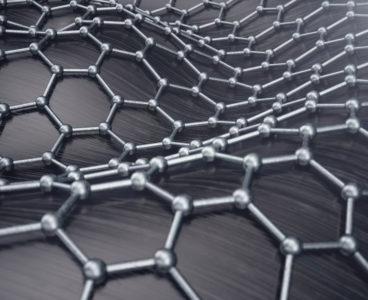
A study in Nano Letters reports on the development of a graphene-enabled detector for terahertz light that is faster and more sensitive than existing room-temperature technologies. Detecting terahertz (THz) light is extremely useful for two main reasons. Firstly, THz technology is becoming a key element in applications regarding security (such as airport scanners), wireless data…
Handheld Device Quickly Monitors Quality of Drinking Water
Scientists from Nanyang Technological University, Singapore (NTU Singapore) have developed a portable device, inspired by the ability of the human body, to detect trace levels of heavy metals in drinking water in just five minutes. The secret lies in an organic substance within the circulating human bloodstream, called a chelating agent, which can detect and…
New Laser Processing Method Increases Efficiency of Optoelectronic Devices
Scientists at the U.S. Naval Research Laboratory (NRL) discovered a new method to passivate defects in next generation optical materials to improve optical quality and enable the miniaturization of light emitting diodes and other optical elements. “From a chemistry standpoint, we have discovered a new photocatalytic reaction using laser light and water molecules, which is…
Researchers Develop New Form of Laser for Sound
The optical laser has grown to a $10 billion global technology market since it was invented in 1960, and has led to Nobel prizes for Art Ashkin for developing optical tweezing and Gerard Mourou and Donna Strickland for work with pulsed lasers. Now a Rochester Institute of Technology researcher has teamed up with experts at…
‘Deep Learning’ Agents Give Insight into Novel 2D Materials
Scientists are discovering new two-dimensional materials at a rapid pace, but they don’t always immediately know what those materials can do. Researchers at Rice University’s Brown School of Engineering say they can find out fast by feeding basic details of their structures to “deep learning” agents that have the power to map the materials’ properties.…
Researchers Create Artificial Atoms that Work at Room Temperature
Ultra-secure online communications, completely indecipherable if intercepted, are one step closer with the help of a recently published discovery by University of Oregon physicist Ben Alemán. Alemán, a member of the UO’s Center for Optical, Molecular, and Quantum Science, has made artificial atoms that work in ambient conditions. The research, published in the journal Nano…
Graphene Hybrid Energy Method Could Be Utilized by Rockets
Graphene, a new material with applications in biomedical technology, electronics, composites, energy and sensors, may soon help send rockets to space. A new propellant formulation method to use graphene foams—material used in electronics, optics and energy devices—to power spacecraft is being developed in Purdue University’s Maurice J. Zucrow Laboratories, which is the largest academic propulsion…
Pin-sized Sensors Embedded in Smartphones Could ID Chemicals
Imagine pointing your smartphone at a salty snack you found at the back of your pantry and immediately knowing if its ingredients had turned rancid. Devices called spectrometers can detect dangerous chemicals based on a unique “fingerprint” of absorbed and emitted light. But these light-splitting instruments have long been both bulky and expensive, preventing their…
Off-the-shelf Smart Fabric Aids Athletes, Physical Therapy Patients
A computer science research team at Dartmouth College has produced a smart fabric that can help athletes and physical therapy patients correct arm angles to optimize performance, reduce injury and accelerate recovery. The proposed fabric-sensing system is a flexible, motion-capture textile that monitors joint rotation. The wearable is lightweight, low-cost, washable and comfortable, making it…
Precision Sensor Delves Deep into Fingerprints
A fingerprint can serve as identification to access locked doors and more, but current scanners can be duped with fake or even similar fingerprints. That may change soon, thanks to a collaborative research team based in Japan. The group has developed a new proximity capacitance imaging sensor that has such high sensitivity and resolution, a…
Threads Can Detect Gases When Woven into Clothing
Tufts University engineers have developed a novel fabrication method to create dyed threads that change color when they detect a variety of gases. The researchers demonstrated that the threads can be read visually, or even more precisely by use of a smartphone camera, to detect changes of color due to analytes as low as 50…
Predicting the Shape of Squeezed Nanocrystals When Blanketed Under Graphene
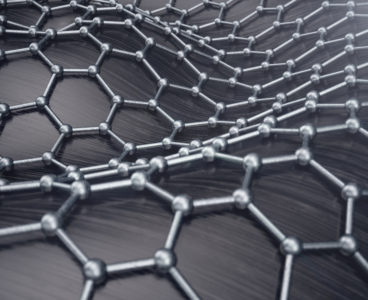
In a collaboration between the U.S. Department of Energy’s Ames Laboratory and Northeastern University, scientists have developed a model for predicting the shape of metal nanocrystals or “islands” sandwiched between or below two-dimensional (2D) materials such as graphene. The advance moves 2D quantum materials a step closer to applications in electronics. Ames Laboratory scientist are…
New Technique Improves Laser-material Interaction
Using ultrashort laser pulses lasting a few picoseconds (trillionths of a second), Lawrence Livermore National Laboratory (LLNL) researchers have discovered an efficient mechanism for laser ablation (material removal) that could help pave the way to the use of lower-energy, less costly lasers in many industrial laser processing applications. The new method, reported in a Journal…
Spin Lasers Enable Rapid Data Transfer
So-called spin lasers may potentially accelerate data transfer in optical fiber cables to a considerable extent, while reducing energy consumption at the same time. Engineers at Ruhr-Universität Bochum have developed a novel concept for rapid data transfer via optical fiber cables. In current systems, a laser transmits light signals through the cables and information is…
Researchers Explore Record Growth of Graphene Single Crystals
Graphene, especially the graphene single crystal, is a star material for future photonics and electronics due to its unique properties, such as giant intrinsic charge carrier mobility, record thermal conductivity, super stiffness and excellent light transmission. However, whether graphene can live up to the expectation depends on reliable, high-quality synthesis with high efficiency. Recently, one…
Cancer Cells Scrutinized with Laser Technology

Devising the best treatment for a patient with cancer requires doctors to know something about the traits of the cancer from which the patient is suffering. But one of the greatest difficulties in treating cancer is that cancer cells are not all the same. Even within the same tumor, cancer cells can differ in their…
Graphene Oxide Technology Provides Alternative to Biopsy
A prototype wearable device, tested in animal models, can continuously collect live cancer cells directly from a patient’s blood. Developed by a team of engineers and doctors at the University of Michigan, it could help doctors diagnose and treat cancer more effectively. “Nobody wants to have a biopsy. If we could get enough cancer cells…
Innovative Polymer Mixture Creates Ultra-sensitive Heat Sensor
Scientists at the Laboratory of Organic Electronics at Linköping University have developed an ultra-sensitive heat sensor that is flexible, transparent and printable. The results have potential for a wide range of applications—from wound healing and electronic skin to smart buildings. The ultra-sensitive heat sensor is based on the fact that certain materials are thermoelectric. The…
Home of Graphene Unveils Revolutionary Graduation Gowns
The University of Manchester graduates of summer 2019 will be the first graduates in the world to wear gowns made entirely from graphene. Following the success of creating the first ever sports shoes to utilize graphene in June 2018, physicists from The University of Manchester have utilized the properties of graphene again to create graduation…