
Views from pharma execs J&J’s Duato: tariffs “can create disruptions in the supply chain, leading to shortages” and tax policy is a better tool to grow U.S. capacity. Healthcare Brew AstraZeneca’s chair: “medicines should be exempted from any kind of tariffs” because they harm patients and restrict health equity. Bloomberg Policy backdrop: Commerce launched a…
2025 R&D layoffs tracker: hardware and chips lead the year’s biggest cuts while biopharma pares pipelines
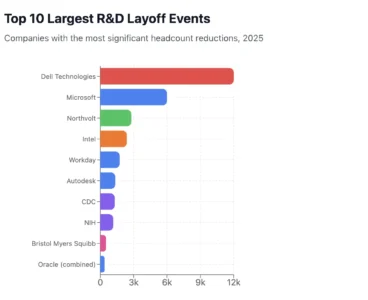
Last updated: October 3, 2025 The heaviest R&D job losses this year cluster in hardware and semiconductors, with sizeable single events at Dell, Microsoft and Intel’s Oregon sites, while biopharma cuts are smaller per event but frequent as firms triage pipelines. Federal labs have also reduced staff amid budget uncertainty, including the CDC, NIH and…
Skin’s built-in “stretch sensor” helps tissue grow in mouse study
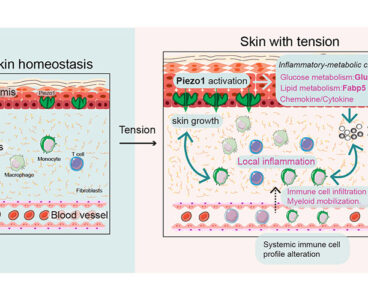
A stretch-sensing protein called Piezo1 (a membrane ion channel that lets calcium into skin cells when they are pulled) appears to coordinate the immune and metabolic programs that let skin grow under tension, Johns Hopkins researchers report in Nature Communications. In mice, chemically activating Piezo1 during tissue expansion significantly increased skin surface area and epidermal…
Meissner launches rotary impeller mixing solutions (RMS) portfolio for biocontainer mixing
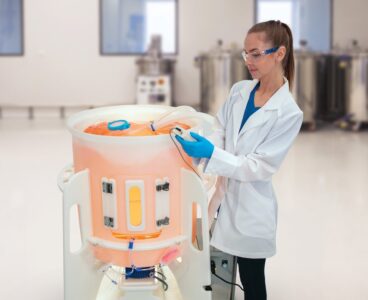
Meissner has launched its RMS (Rotary Impeller Mixing Solutions) portfolio, a line of biocontainer mixing assemblies designed for drop-in compatibility with existing bioprocessing equipment. The product line is designed to provide mixing assemblies compatible with industry-standard tanks and existing drive units, without requiring additional hardware or modifications. RMS assemblies use Meissner’s TepoFlex® polyethylene (PE) multi-layer…
Quantum computing edges closer to biotech reality in Moderna-IBM pact

In 2022, Moderna brought in approximately $19.26 billion in revenue, largely thanks to its groundbreaking Spikevax COVID-19 vaccine. In January 2025, the company is projecting revenue of $1.5 billion to $2.5 billion. To reverse this downturn, the company is pushing to broaden mRNA’s applications into cancer, rare diseases and other areas, but that requires cracking…
New nanopore sensor paves the way for fast, accurate, low-cost DNA sequencing
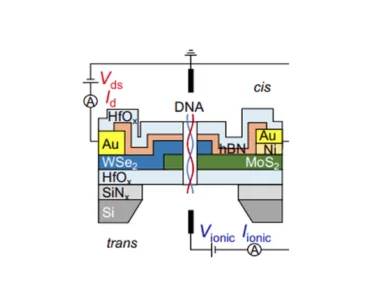
Researchers from the Grainger College of Engineering at the University of Illinois Urbana-Champaign have created a new nanopore sensor for single-biomolecule detection. Their findings were published in the journal PNAS. Nanopore sensors detect and analyze individual molecules by measuring ionic changes as the molecules pass through openings in the device. Nanopore sensors can be made…
E. coli makes Tylenol from plastic waste
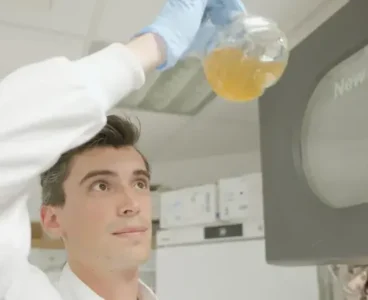
Researchers at the University of Edinburgh genetically reprogrammed E. coli to convert plastic into paracetamol, which is also known as acetaminophen (Tylenol). They published their findings in Nature Chemistry. The process could cut down on plastic waste while reducing emissions from traditional methods of creating paracetamol. Using bacteria to recycle plastic Polyethylene terephthalate (PET) is…
Probiotics power a bioresorbable battery that can run from 4 to 100+ minutes
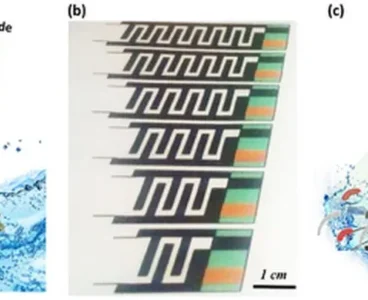
A research team at Binghamton University, led by Professor Seokheun Choi, has developed a battery that dissolves safely in low pH environments. They published their findings in the journal Small. About the battery The battery is powered by a 15-strain probiotic blend, which is harmless to humans and the environment. It is constructed with biodegradable…
Health-related innovation in Morocco highlighted by resident inventor patenting activity

The continents of Europe, Asia, and the Americas are widely recognized as sources of innovation, but Africa is less known for its R&D efforts. Yet, despite certain economic challenges, Africa is beginning to take its place on the world stage for invention. Recent patenting activity can identify the seeds of such nascent creativity. Patent protection…
ARPA-H funds $29M Ginkgo-led project to reshore pharma supply chains using wheat germ tech

In a bid to decentralize and secure pharma supply chains, Ginkgo Bioworks and a consortium of partners have been awarded a $29 million contract by the Advanced Research Projects Agency for Health (ARPA-H). The two-year project, WHEAT, aims to develop a novel manufacturing platform using wheat germ cell-free expression systems (CFPS). The goal is to…
DNA microscope offers new 3D view of organisms from the inside out

Scientists at the University of Chicago have introduced “volumetric DNA microscopy,” which has the potential to transform our understanding of biology by producing detailed, three-dimensional images of organisms at the molecular level. For the first time, this technology can provide a spatial map of gene expression for an entire organism. Traditional genetic sequencing provides valuable…
Engineered mice with human telomeres could hold anti-aging clues
Washington State University scientists have reported an advance in anti-aging research by creating what they call “the first mouse model with truly humanized telomeres,” as reported in Nature Communications. Telomeres—protective chromosome caps—naturally shorten with each cell division, eventually contributing to cellular aging or death. While traditional lab mice have exceptionally long telomeres and readily express…
The Cultivated B announces low-cost small molecules for stable, scalable cell growth

The Cultivated B has discovered a chemical class of FGFR1 agonists intended to mimic the effects of basic fibroblast growth factors (bFGF) on cell proliferation, a critical component of cell-culture media. According to the company, these small molecules provide a stable, cost-effective alternative that could have wide-ranging implications for cultivated meat, biopharmaceuticals, regenerative medicine, and…
Researchers create electricity-generating “slime” for medical, energy, and robotics uses
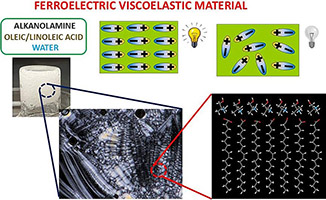
Picture a high-tech version of Silly Putty that generates electricity. It would be capable of speeding up wound healing, delivering medication through the skin, or even producing clean energy, among other inventive uses. Researchers at the University of Guelph (U of G) have developed a slime-like material that generates electricity when compressed. The material is…
FAU researchers develop promising solution to combat harmful algal blooms

Researchers at Florida Atlantic University’s College of Engineering and Computer Science have developed a promising method to address harmful algal blooms (HABs), a growing global environmental concern. The team has created an inventive tool for extracting phosphorus from water — a key contributor to HABs—by converting cyanobacterial biomass, often deemed hazardous waste, into specialized adsorbent…
Paralyzed man flies virtual drone with thought-controlled finger movements

In a demonstration of “mind over matter,” a 69-year-old man with C4 AIS C spinal cord injury — whose remaining movement was largely restricted to low-amplitude muscle twitching — has piloted a virtual quadcopter merely by thinking about moving his paralyzed fingers. This achievement stems from an intracortical brain-computer interface (iBCI) primarily developed and tested…
Engineered wastewater bacteria could break down microplastics
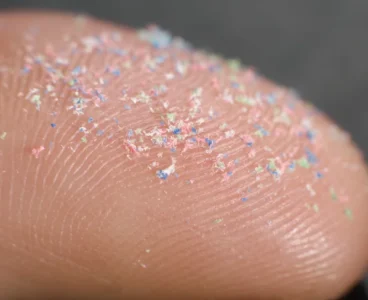
Recent scientific evidence has brought increasing attention to microplastics—plastic particles less than 5 millimeters in diameter—and their pervasive presence in our environment. While their ubiquity raises legitimate concerns, our 2024 analysis “Microplastics are bad—but ignoring science is worse” reveals that commonly cited statistics about human plastic consumption often lack rigorous scientific validation. Emerging research continues…
The battery that eats itself: Fungal power with a built-in cleanup crew
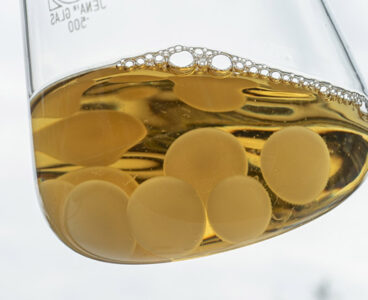
Batteries have recently come in various configurations: stretchable, as discussed in R&D World’s article “Stretchable batteries and body-conformable electronics poised to advance in 2025,” and batteries using alternative chemistries, including lithium-iron-phosphate (LFP) and sodium-ion (SIBs), among others. One battery material that might not have been on your bingo card is fungi. Researchers at Empa have…
UC Irvine researchers develop bioluminescent RNA for real-time tracking

Scientists at the University of California, Irvine, have developed a method for tagging RNA with a bioluminescent molecule, which enables real-time tracking of RNA as it moves throughout the body. This research, published in Nature Communications, could provide new insights into cellular processes, viral propagation, and memory formation in the brain. RNA is critical in…
ISS National Lab publication showcases pioneering physical science research in space
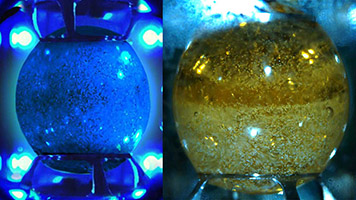
A paper published in Gravitational and Space Research reveals insights from research sponsored by the International Space Station (ISS) National Laboratory on transport phenomena. Transport phenomena are fundamental physical processes involving momentum, energy, and mass transfer. They describe how heat and matter move through their surroundings, such as how heat radiates from a stove or how a…
Color-changing, power-free sensor could boost health monitoring and improve infrastructure safety
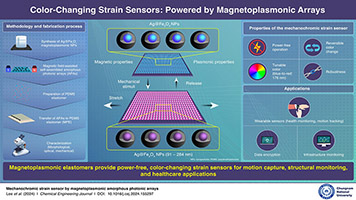
Researchers at Chungnam National University, Daejeon, South Korea, have developed a mechanochromic strain sensor that indicates mechanical stress through changing colors — without needing an external power source. The device, described in a study published on October 15, 2024, in the journal Chemical Engineering Journal, uses magnetic nanoparticles and elastic materials to detect stretching, bending,…
25 landmark R&D-heavy tech funding rounds of 2024

[Updated December 18, 2024 with new details on Databricks] In 2024, AI-focused startups continued to dominate the funding landscape with industry leaders like OpenAI ($6.6B), xAI ($6B), and Anthropic ($4B) leading the pack. Adding to this trend, MLflow and data lakehouse pioneer Databricks recently secured a $10 billion funding round that was primarily equity-based, at…
Space Station research returns, advancing cancer and neurodegenerative therapies
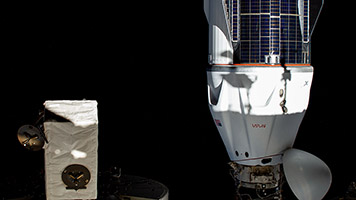
Dozens of ambitious scientific investigations — including projects aiming to improve cancer detection, advance treatments for neurodegenerative diseases, and enhance respiratory therapy — have safely returned to Earth from the International Space Station (ISS). The nearly 50 experiments, sponsored by the ISS National Laboratory, were transported back on SpaceX’s 31st Commercial Resupply Services (CRS) mission…
A new study shows how fluid flow and chemicals team up to halt harmful bacteria
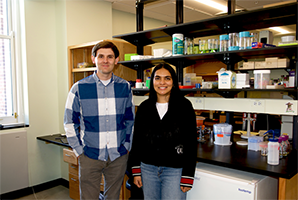
A new study reveals that two stressors may be better than one in preventing certain harmful bacteria from thriving in the human body. Researchers at the University of Illinois Urbana-Champaign report that physical fluid flow and the chemical presence of hydrogen peroxide can work together to halt the spread and growth of dangerous pathogens. The…
24 R&D trends that redefined 2024
In many respects, 2024 was a year of building upon the foundations laid by previous technological and scientific advances. While AI continued to evolve at a rapid clip, progress was in many ways more incremental than last year when GPT-4 redefined expectations for genAI. But AI continues to make definable improvements across a range of…