
Using two novel techniques, researchers at the National Institute of Standards and Technology (NIST) have for the first time examined, with nanometer-scale precision, the variations in chemical composition and defects of widely used solar cells. The new techniques, which investigated a common type of solar cell made of the semiconductor material cadmium telluride, promise to…
Graphene Offers New Functionalities in Molecular Electronics
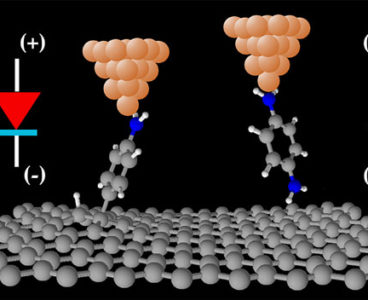
An international team of researchers led by the National Physical Laboratory (NPL) and the University of Bern has revealed a new way to tune the functionality of next-generation molecular electronic devices using graphene. The results could be exploited to develop smaller, higher-performance devices for use in a range of applications including molecular sensing, flexible electronics, and energy…
Nanotechnology Reveals Hidden Depths of Bacterial ‘Machines’
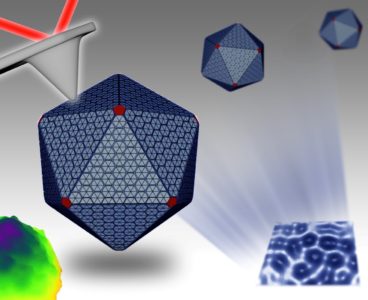
New research from the University of Liverpool, published in the journal Nanoscale, has probed the structure and material properties of protein machines in bacteria, which have the capacity to convert carbon dioxide into sugar through photosynthesis. Cyanobacteria are a phylum of bacteria that produce oxygen and energy during photosynthesis, similar to green plants. They are…
Graphene Enhancing Our Vision of the Infinitely Small

Developing new scientific devices pushing the limits of what we can observe and measure does not occur overnight. There are typically baby steps involved, small and continuous improvements to counter the numerous technical hurdles arising on the way. The new state-of-the-art electron microscope developed by Prof. Tsumoru Shintake at the Okinawa Institute of Science and…
NSF Announces 2017 Winners for Generation Nano: Small Science, Superheroes

On June 6, the National Science Foundation (NSF), in partnership with the National Nanotechnology Initiative (NNI), named the first- and second-place winners, as well as the People’s Choice winner, for the second annual Generation Nano competition. Generation Nano challenges high school students to imagine novel superheroes who use the power of nanotechnology — technology on…
Scientists Discover a 2D Magnet

Magnetic materials form the basis of technologies that play increasingly pivotal roles in our lives today, including sensing and hard-disk data storage. But as our innovative dreams conjure wishes for ever-smaller and faster devices, researchers are seeking new magnetic materials that are more compact, more efficient and can be controlled using precise, reliable methods. A…
Ceramic Nanofiber ‘Sponges’ Could be Used for Flexible Insulation, Water Purification
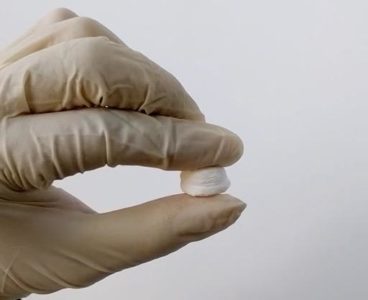
Researchers have found a way to make ultralight sponge-like materials from nanoscale ceramic fibers. The highly porous, compressible and heat-resistant sponges could have numerous uses, from water purification devices to flexible insulating materials. “The basic science question we tried to answer is how can we make a material that’s highly deformable but resistant to high…
Researchers Develops Skin-Like Triboelectric Nanogenerator
A team of researchers with the National Center for Nanoscience and Technology in China has developed what it is calling a skin-like triboelectric nanogenerator (STENG). In their paper published in the journal Science Advances, the group describes the nanogenerator they built and offer suggestions for its use. Prior research led to the construction of TENG…
Nature of Optics Changes in Just One Step
Optical lenses that can see features smaller than the wavelength of light cannot be made from conventional materials. Creating “hyperlenses” that can take ultra-sharp images needs both designer materials (that is, metamaterials) and innovative optics to be developed. Current methods for fabricating such synthetic metamaterials are complicated and involve assembling artificial cells and patterning processes. …
New Nanocenter to Revolutionize Sensing Technology

In anticipation of the official opening of the new MIT.nano building — which will house some of the world’s leading facilities supporting research in nanoscience and nanotechnology — MIT last week officially launched a new “center of excellence” called SENSE.nano, which is dedicated to pushing the frontiers of research in sensing technologies. Like the new…
R&D Special Focus: Graphene

Diamond Quantum Probe Detects Electricity in Graphene

For the first time ever, scientists were able to peek inside of graphene and view electronic currents. Lloyd Hollenberg, deputy director of the Centre for Quantum Computation and Communication Technology (CQC2T) at the University of Melbourne, led a team to develop a special quantum probe— based on an atomic sized color center found only in…
Nanomaterials Hold Promise of Eco-Friendly Hydrogen Production
In an article in the journal Energy and Environmental Science, researchers from Uppsala University, Sweden, present a type of low-cost and environmental-friendly organic polymer nano-material as photocatalysts for hydrogen generation, and propose the working mechanism of the photocatalytic reactive site. Development of photocatalysts for light driven hydrogen generation from water is an ideal way to…
Electronics Get a New Spin
A University of Utah-led team has discovered that a class of “miracle materials” called organic-inorganic hybrid perovskites could be a game changer for future spintronic devices. Spintronics uses the direction of the electron spin — either up or down — to carry information in ones and zeros. A spintronic device can process exponentially more data…
Optical Tweezers Control 3D Behavior of Biological Cells
A research team led by Professor YongKeun Park of the Physics Department at KAIST has developed an optical manipulation technique that can freely control the position, orientation, and shape of microscopic samples having complex shapes. The study has been published online in Nature Communications. Conventional optical manipulation techniques called “optical tweezers” have been used as…
Graphene City: Research Hub Accelerates Innovation

A Nanoscale Peek at Living Cell Membranes
A research team from the Department of Energy’s Oak Ridge National Laboratory has performed the first-ever direct nanoscale examination of a living cell membrane. In doing so, it also resolved a long-standing debate by identifying tiny groupings of lipid molecules that are likely key to the cell’s functioning. The methods developed provide a new experimental…
Neutrons Provide First Nanoscale Look at a Living Cell Membrane

A research team from the Department of Energy’s Oak Ridge National Laboratory has performed the first-ever direct nanoscale examination of a living cell membrane. In doing so, it also resolved a long-standing debate by identifying tiny groupings of lipid molecules that are likely key to the cell’s functioning. The methods developed provide a new experimental…
How Graphene Could Help Auto Manufacturers

An experiment conducted at the University of Alabama (UA) indicates graphene could be beneficial for car companies. A student team at UA taking part in a national competition called EcoCar3, developed a fully functional hybrid car that simultaneously uses less energy and emits less pollution without sacrificing factors like performance, safety, and consumer appeal. As…
Graphene Sensor Could Help Predict Asthma Attacks

Graphene Membrane Withstands Ultrahigh Pressure, Shows Desalination Potential

For the first time, a graphene membrane has been designed that can withstand up to 100 bars of pressure. Rohit Karnik, an associate professor at the Massachusetts Institute of Technology’s Department of Engineering, said the discovery could open graphene to a number of new applications, including desalination, where filtration membranes that can withstand high-pressure flows…
Nanotechnology Used to Improve Catalyst

Researchers have used nanotechnology to boost the catalytic performance of cerium oxide. In a new study led by scientists from Stanford University and SLAC National Accelerator Laboratory, researchers have improved cerium oxide or ceria—a spongy material commonly used in catalytic converters, self-cleaning ovens and various green applications including fuel cells and solar water splitters. “Ceria…
Understanding Graphene’s Potential Audio Applications

Nano-Fiber Feels Forces and Hears Sounds Made by Cells

Engineers at the University of California San Diego have developed a miniature device that’s sensitive enough to feel the forces generated by swimming bacteria and hear the beating of heart muscle cells. The device is a nano-sized optical fiber that’s about 100 times thinner than a human hair. It can detect forces down to 160…
Microdevice Provides Novel Method of Measuring Cell Mechanical Properties

The mechanical properties of cells have an impact on biological processes ranging from wound healing and disease to cellular aging and differentiation. Currently, the most popular method of measuring the mechanical properties of a cell is by atomic-force microscopy (AFM). Very simply, AFM works by moving a very fine needle attached to a cantilever beam…