
According to the November 2024 TOP500 rankings, Lawrence Livermore’s El Capitan is the most powerful supercomputer. In this list, derived from the TOP500 supercomputer ranking, Frontier and Aurora round out the top three slots. These systems range from newly installed exascale powerhouses to long-established machines that are continuously evolving. All performance results come from the Linpack…
Stretchable batteries and body-conformable electronics poised to advance in 2025
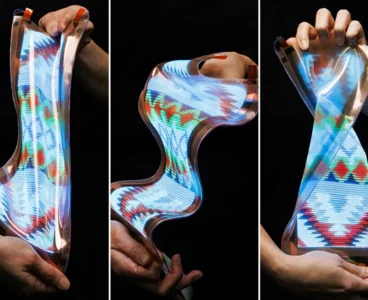
Stretchable, wearable gadgets took a significant stride in 2024, thanks to a flurry of breakthroughs that could make soft, body-conformable electronics and power sources a reality. Researchers worldwide have unveiled improvements in flexible, high-precision sensors and displays, while engineers in China revealed a self-healing, stretchable lithium-ion battery that could power next-generation wearables. Meanwhile, LG Display…
PPPL leading two CHIPS and Science Act projects

The U.S. Department of Energy (DOE) has awarded two grants to the Princeton Plasma Physics Laboratory (PPPL) as part of a significant effort to advance microelectronics and sensors. Each project will receive $3 million per year for four years, recognizing PPPL’s expertise in plasma processes, which are crucial for the continued development of semiconductor manufacturing…
New material could transform carbon capture at much lower cost

In collaboration with the University of Edinburgh, researchers at Teesside University are developing a novel material called CalyChar that could significantly reduce atmospheric carbon dioxide at a fraction of the cost of current technologies. This material can potentially capture 3.5–5 million tons of CO2 annually in the U.K. and nearly 30 million tons globally by…
Ames National Lab researchers tackle material challenges to commercialize fusion power
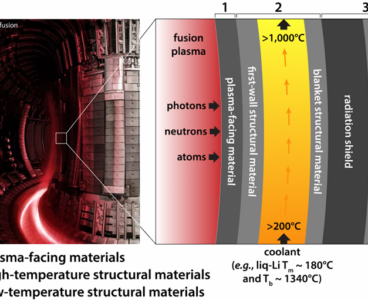
Researchers from Ames National Laboratory and Iowa State University, funded through ARPA-E’s CHADWICK program, are developing materials for the “first wall” in fusion reactors. This wall faces extreme temperatures, radiation, and magnetic environments and must efficiently transfer heat for electricity production. Two layers are required: a tungsten-based refractory material facing the plasma and a structural…
This week in semiconductors: Google’s quantum chip achieves computation milestone

Semiconductor-based quantum processors are driving rapid advancements in computational power, with companies like Google and IBM leading the charge. Recent reports highlight increasing interest in quantum computing as a transformative force in finance, energy, and other sectors. Several key developments underscore the importance of cutting-edge semiconductor fabrication and design in enabling these next-generation devices: 1.…
Gene variant linked to high-altitude adaptation shows promise in predicting blood cancer outcomes

In an advancement that may change how doctors predict and treat certain blood cancers, researchers at Huntsman Cancer Institute at the University of Utah have identified a gene variant commonly found in high-altitude Andean populations that appears to influence disease severity and treatment response. The findings, presented during the late-breaking abstract sessions at the 66th…
Researchers report significant advancements in semiconductor device technology
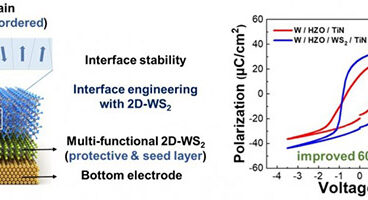
The Korea Institute of Materials Science (KIMS) has announced an advancement in semiconductor technology. Researchers from KIMS, in collaboration with Professor Hyun-Sang Hwang’s team at POSTECH, have developed a new heterojunction technology that combines tungsten disulfide (WS₂), a two-dimensional (2D) material with hafnium zirconium oxide (HZO), a ferroelectric material. The breakthrough addresses interfacial stability and…
Unveiling the structure of a photosynthetic catalyst that turns light into hydrogen fuel
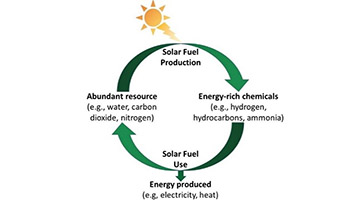
Argonne National Laboratory and Yale University researchers have used cryo-electron microscopy (cryo-EM) to obtain a high-resolution structural view of a photosystem I (PSI)-platinum nanoparticle biohybrid catalyst. This finding provides critical insights into the design of efficient systems for solar-driven hydrogen production. Background and context Photosystem I (PSI) is a protein complex integral to the photosynthetic…
Sandia National Laboratories sees surge in R&D agreements
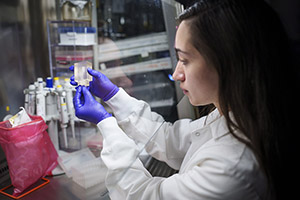
Sandia National Laboratories executed 72 new Cooperative Research and Development Agreements (CRADAs) in fiscal year 2024, the second-highest number in its history. Sandia last reached similar levels in the early 1990s when the World Wide Web was introduced. CRADAs are collaborative agreements that allow federal laboratories and external organizations to jointly develop new technologies by…
Alice & Bob outlines roadmap to 100 logical qubits by 2030
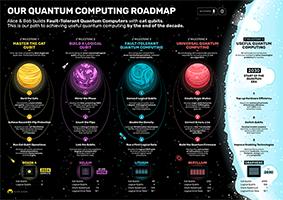
Alice & Bob, a company specializing in quantum computing, has released its first white paper and accompanying five-year roadmap. The document highlights the company’s strategy to develop practical quantum computing using its proprietary cat qubit technology. This technology aims to achieve high-fidelity logical qubits with lower hardware and energy demands than other approaches. The roadmap…
Researchers explore synthetic production of snail mucus protein for biomedical applications
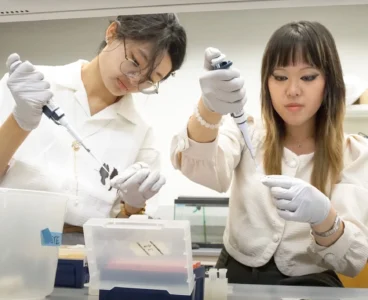
Two Johns Hopkins University researchers have initiated preliminary work on synthesizing epiphragmin, a key protein found in snail mucus, with potential biomedical applications. The project aims to develop laboratory-based protein synthesis protocols as an alternative to traditional snail mucus extraction methods, as a press release noted. Marie Wei, studying molecular and cellular biology and classics,…
New data shows robotic and AR navigation systems achieve 98%+ accuracy in spine procedures

A Hospital for Special Surgery (HSS) study examining 1,211 pedicle screw placements across 212 patients has documented comparable accuracy rates between robotic-assisted navigation (RAN) and augmented reality (AR) guidance systems in spinal procedures. This single-center prospective clinical and radiographic analysis reportedly represents the first direct comparative analysis of these surgical guidance technologies. “Compared to conventional…
Researchers report enhanced seawater evaporation using modified clay-hydrogel system

Researchers from the University of South Australia, in collaboration with Chinese colleagues, have documented an 18.8% increase in seawater evaporation rates compared to pure water through the integration of mineral materials into photothermal hydrogel evaporators. The study, published in Advanced Materials, demonstrates a new approach to interfacial solar-powered desalination that addresses both surface salt accumulation…
Johns Hopkins APL demonstrates temperature-responsive antenna using 3D-printed shape memory alloys
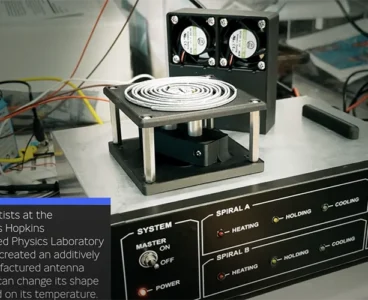
Researchers at Johns Hopkins Applied Physics Laboratory have documented the successful fabrication of a shape-morphing antenna using additive manufacturing of modified nitinol, demonstrating temperature-controlled transformation between flat spiral and conical configurations. The researchers describe the work, published in ACS Applied Engineering Materials, as an empirical validation of shape memory alloy (SMA) application in reconfigurable RF…
Korean researchers report development of magnetic 3D printing process for motor manufacturing
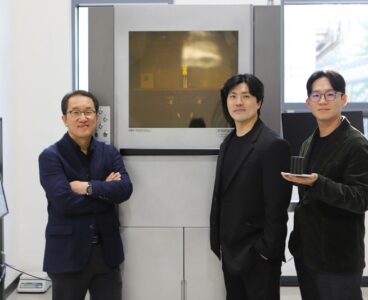
Researchers at the Korea Institute of Machinery & Materials (KIMM) say they have developed a magnetic 3D printing system for motor fabrication that eliminates the need for traditional molds. While the team claims successful performance validation, the results to date are only shared in a press release, which notes the development of an “all-encompassing technological…
Argonne National Laboratory joins New Energy Frontier Research Center to advance next-generation electronics

Ten centers across nine states will receive a share of $118 million in funding to advance fundamental energy research. Argonne National Laboratory scientists will contribute to a new Energy Frontier Research Center (EFRC), which will be funded by the DOE Office of Science’s Basic Energy Sciences. Ten new and some renewed centers will receive a…
4 DNA and genomics advances recognized in R&D 100 Awards in 2024

DNA analysis has undergone a quiet revolution in recent years thanks to next-generation sequencing (NGS) advances. In addition to its potential in medicine, NGS is taking off in forensic science. This technology allows for more detailed and accurate genetic analysis, improving the resolution of criminal cases and helping solve cold cases that have remained unsolved…
University of Arizona taps Díaz de la Rubia for research VP

Tomás Díaz de la Rubia, an accomplished scientist and executive, has been selected as the new senior vice president for research and innovation at the University of Arizona. He is expected to begin his role on November 11th. In this position, Díaz de la Rubia will oversee the university’s vast research portfolio, managing an estimated…
New architecture aims to bring AI to edge IoT devices

Researchers in Japan have developed an inventive approach to address the challenge of implementing artificial intelligence (AI) on resource-constrained edge devices, paving the way for more sophisticated and efficient Internet of Things (IoT) systems. The team, led by Professor Takayuki Kawahara and Mr. Yuya Fujiwara from the Tokyo University of Science, focused on a type…
AI in science: How large language models are reshaping research

In a world rapidly adapting to artificial intelligence (AI), large language models (LLMs) like ChatGPT and DALL-E are changing the landscape of creativity and communication. Instead of relying on code, users can now interact with these “chatbot” models by asking questions in plain language and receiving instant responses. Yet, while LLMs have already altered how…
Fall 2024 Issue: 2024 R&D 100 Awards – Game Changing Tech

The 2024 R&D 100 Awards Highlights The Power Of Convergence Since 1963, the R&D 100 Awards have celebrated the world’s most groundbreaking technologies, often recognizing those born from a convergence of disciplines. The 2024 awards continue this legacy, featuring innovations from 16 countries and regions, spanning fields from materials science to AI. For instance, there…
WHOI scientists discover fastest degrading bioplastic in seawater

Scientists from the Woods Hole Oceanographic Institution (WHOI) have identified cellulose diacetate (CDA) foam as the fastest-degrading bioplastic tested in seawater, offering a promising alternative to traditional plastics like Styrofoam. The study, led by Collin Ward and his team, was published in ACS Sustainable Chemistry & Engineering. It revealed that foamed CDA degrades 15 times…
New research points to manganese as a critical step forward for lithium-ion batteries
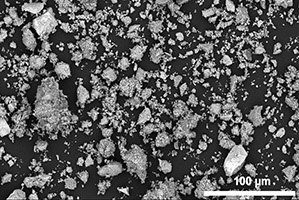
In a breakthrough for rechargeable lithium-ion batteries, scientists at Lawrence Berkeley National Laboratory (Berkeley Lab) have identified manganese as a promising alternative to traditional materials used in battery cathodes. Smartphones, electric vehicles, and energy storage systems have spurred demand for lithium-ion batteries, but essential elements such as nickel and cobalt pose challenges to procure. However,…
New offering from Labviva streamlines research procurement workflows

It’s long been a fact of life: Procurement tasks are a persistent burden for researchers, often demanding hours of manual effort each week and prone to errors. To counter that, the research-oriented procurement software company Labviva is launching an AI-enabled Inventory Management System (IMS) designed to automate tasks such as reordering and real-time stock monitoring.…