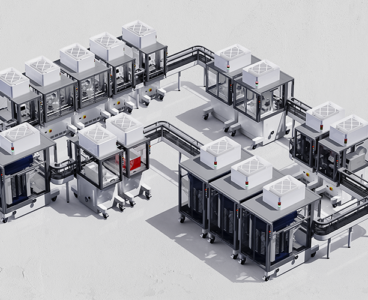
Ginkgo Bioworks started in a Cambridge apartment in 2008. Five MIT scientists: Shetty, Jason Kelly, Barry Canton, Austin Che and their adviser Tom Knight, set out to make biology easier to engineer. Tom Knight, originally trained in computer science and engineering, shifted into biology before co-founding Ginkgo Bioworks with four MIT colleagues. The team’s founding…
A team of scientists and GPT-5 beat a protein cost benchmark. Here’s who did what.
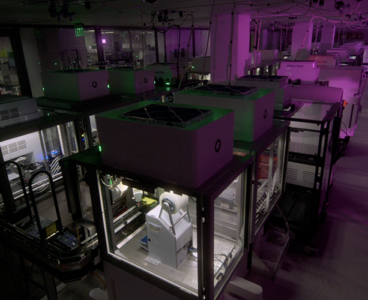
“Will self-driving ‘robot labs’ replace biologists?” That was the headline Nature ran on February 18, reporting on a preprint from Ginkgo Bioworks and OpenAI that used GPT-5 to help design and execute more than 36,000 cell-free protein synthesis experiments. The authors report that the experiment beat the prior state of the art by 40%, but…
Open season: OpenAI, OpenClaw and Moltbook testing the limits of autonomy
OpenAI’s latest hire built the fastest-growing GitHub project in history, and one that Gartner classified as an “unacceptable cybersecurity risk.” That hire, Peter Steinberger, was the brainchild behind OpenClaw (formerly ClawdBot, then Moltbot), an open-source AI agent framework that amassed 196,000 GitHub stars and 2 million weekly users before CEO Sam Altman tapped him to…
How Duke’s Amanda Randles is using digital twins to transform heart care
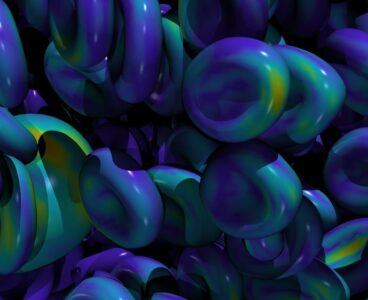
Amanda Randles, director of Duke University’s Center for Computational and Digital Health Innovation, simulates blood flow at the level of individual red blood cells, sometimes hundreds of millions of them across simulations spanning roughly 700,000 heartbeats. The data volumes are so large that results have to be visualized while still in the memory of a…
The gunslinger’s dilemma: A trillion-dollar R&D arms race where collateral damage risk is unpriced

Hyperscalers plan to spend around $700 billion in 2026 on capex. Of that, roughly $490 billion to $520 billion has been explicitly guided by Amazon ($200B), Alphabet ($175B–$185B), and Meta ($115B–$135B) for AI. The remainder reflects analyst estimates for Microsoft, which reported $37.5 billion in a single quarter. Alphabet is financing its spending with a…
Sapio survey finds 45% of scientists using unauthorized AI tools, view ELNs as ‘glorified filing cabinets’
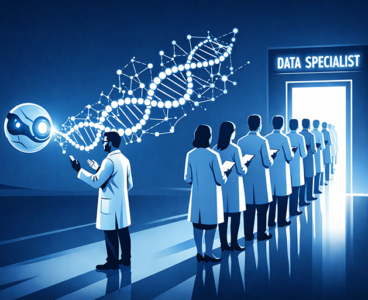
The initial reaction across IP-sensitive industries was to slam the door. In early 2024, a ZoomRx survey found that 65% of the top 20 Big Pharmas had banned employees from using ChatGPT, largely relating to concerns that sensitive internal data could be leaked to competitors. That same year, some 83% of life sciences professionals surveyed…
Biosero launches GoSimple pre-validated workcells, adds assistive AI to Green Button Go
Biosero, part of the BICO Group and a provider of lab automation software and integration services, brought two announcements to SLAS 2026: a standardized workcell product line called GoSimple, and an assistive AI layer for its Green Button Go scheduling software. GoSimple is a pre-configured, automation-ready benchtop workcell designed to cut deployment time for common…
ABB brings GoFa cobots to the lab bench, demos multi-vendor workflows at SLAS
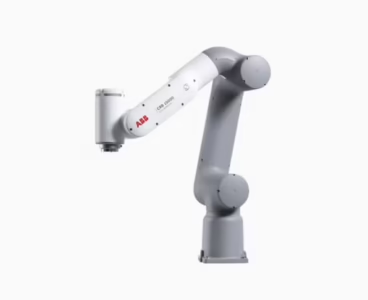
ABB Robotics used SLAS 2026 to make its case that industrial collaborative robots belong in the laboratory. The company demonstrated three GoFa cobot workcells running end-to-end analytical workflows alongside instruments from Agilent and Mettler Toledo, a deliberate show of multi-vendor interoperability. The demos covered real bench work: pipetting, solid dispensing, weighing, titration, UV-Vis analysis, filtration…
Cenevo launches two AI agents for lab protocol conversion and workflow automation
Cenevo, the Battery Ventures–backed lab software company formed last July from the merger of Titian Software and Labguru, announced two AI agents at SLAS 2026 aimed at reducing manual overhead in lab operations. The first, an AI Protocol Conversion agent, transforms paper-based or static document protocols into structured, reusable formats within Labguru’s ELN/LIMS platform. It…
Atinary launches its first self-driving lab in Boston
Atinary this week announced the launch of its new AI-powered laboratory in Boston, MA. The new lab will enable faster, more reliable discovery across chemistry, materials and pharmaceutical R&D. By moving beyond software into the physical execution of science, the facility is designed to catalyze faster, more reliable breakthroughs in chemistry, materials science and pharmaceuticals.…
Automata raises $45M to scale lab automation platform, adds Danaher as strategic investor
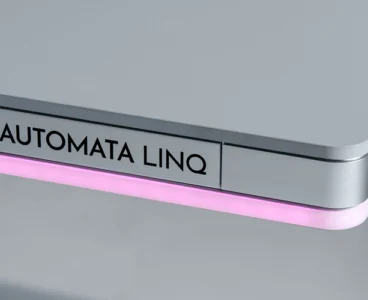
London-based Automata, a SLAS exhibitor, has closed a $45 million Series C round led by Dimension, with participation from Danaher Ventures and a strategic investment partnership with Danaher Corporation. The funding will accelerate deployment of the company’s LINQ lab automation platform, which combines modular robotics with orchestration software designed to make wet labs programmable and…
OpenAI’s GPT-5 autonomously ran 36,000 protein synthesis experiments in Ginkgo Bioworks’ cloud lab
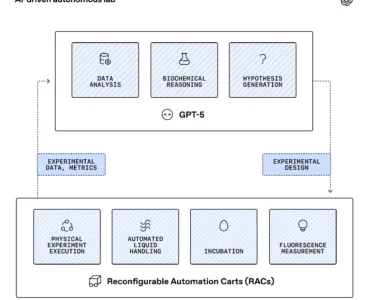
A collaboration between Ginkgo Bioworks and OpenAI has produced what may one of the most concrete demonstrations yet of AI-driven autonomous science: a closed-loop system in which OpenAI’s GPT-5 designed, executed, analyzed and iteratively refined 36,000 cell-free protein synthesis experiments over six months, with minimal human intervention. The system reduced the cost of producing superfolder…
Claude Opus 4.6 targets research workflows with 1M-token context window, improved scientific reasoning
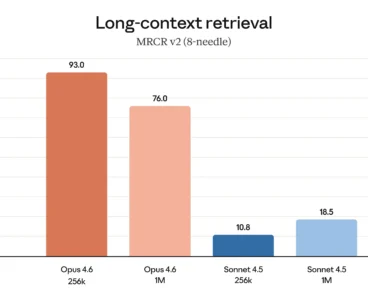
Anthropic has dropped a new model. Opus 4.6, which can now ingest roughly 750,000 words of text in a single session and, more importantly, actually use that context without the performance degradation that has plagued earlier models. Claude Opus 4.6, released February 5, scored 76% on a long-context retrieval benchmark where its predecessor managed just…
OpenAI exec envisions 25 years of science in 5. Meanwhile, Anthropic crashes software stocks.
At Cisco’s AI Summit yesterday, OpenAI’s VP for AI and Science Kevin Weil made an extraordinary claim: AI could compress scientific progress by roughly 5x. “If we can truly accelerate science, if we can do the next 25 years of science in the next five years instead… we will be sitting there in 2030 with…
NVIDIA, Dassault Systèmes target materials discovery, drug development and more with industrial AI platform
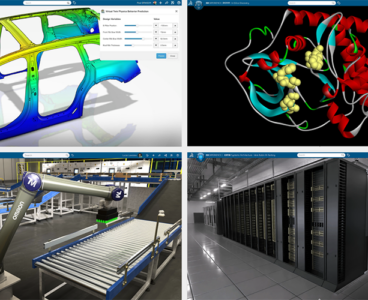
NVIDIA and Dassault Systèmes are building an industrial AI platform that combines NVIDIA’s AI infrastructure with Dassault’s virtual twin software. The partnership aims to speed materials discovery and drug development. The companies argue their “industry world models,” grounded in decades of engineering and scientific workflows rather than internet-scale text and video, can help predict real-world…
The 12-year quest behind the SpaceX-xAI merger: From a 2012 warning about AI destroying Mars colonies to a $1.25 trillion deal
Visions of multi-planetary civilization accompanied Musk’s 12-year quest that led to the the SpaceX-xAI merge. Six weeks before announcing the SpaceX-xAI merger, Elon Musk sat in his Austin Gigafactory and explained why he’d reversed course on AI. “I finally came to the conclusion I can either be a spectator or a participant but I can’t…
How Radical AI is building a self-driving materials lab
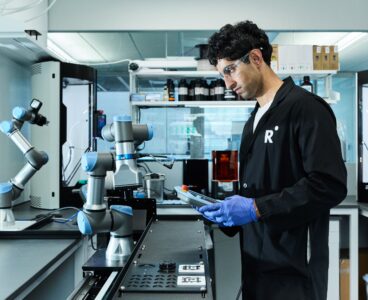
New York City–based autonomous material-science discovery firm Radical AI, founded in 2024, aims to accelerate materials R&D with the integration of AI, engineering and materials science in its self-driving lab. Its lab can create and characterize more than 25 alloys in a single day. The company’s AI system screens billions of material compositions to predict…
Facing $14B losses in 2026, OpenAI is now seeking $100B in funding. But can it ever turn a profit?

Nvidia, Microsoft, and Amazon are reportedly in talks to inject as much as $60 billion into OpenAI as part of a potential up to $100 billion funding round, according to The Information. The deal could be among the largest private capital raises ever attempted, valuing OpenAI at up to $830 billion, according to the Wall…
Lawrence Livermore’s “Science on Saturday” returns, linking computing research with classroom learning
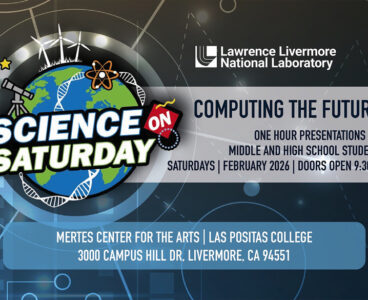
Lawrence Livermore National Laboratory’s free public lecture series returns February 7–28 at Las Positas College in Livermore, Calif., with four Saturday sessions for middle and high school students. This year’s theme is “Computing the Future.” The series opens Feb. 7 with “Cosmic Treasure Hunt: Finding Stardust in Meteorites.” That session will dig into how ancient…
Lilly’s Chief AI Officer on the NVIDIA alliance behind a Bay Area lab and pharma’s biggest supercomputer
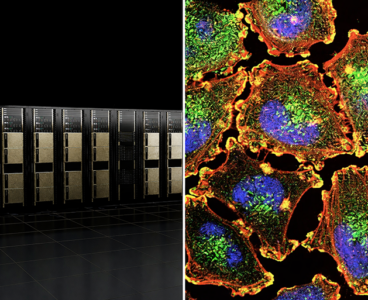
At the J.P. Morgan Healthcare Conference, NVIDIA and Eli Lilly announced a co-innovation AI lab in South San Francisco, with the two companies planning to invest up to $1 billion over five years in talent, infrastructure and compute to support the effort. Separately, Lilly is building what it calls pharma’s most powerful AI supercomputer, announced…
First memristor-based cellular neural network cuts power demands
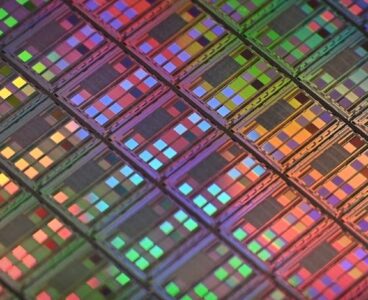
A research team led by the University of Massachusetts Amherst aims to address the massive volumes of digital information that drain energy and slow data transmission speeds with a new technology that uses old-school analog computing: an electrical component called a memristor. The name memristor is a combination of “memory” and “resistor.” A memristor is…
Why experts don’t trust AI, even as nearly everyone uses it: Trust in LLMs is—lacking

Andrej Karpathy helped build OpenAI. He led Tesla’s Autopilot Vision team. He coined the term “vibe coding.” And in late December, he posted to X that he’s never felt more behind as a programmer. “I have a sense that I could be 10X more powerful if I just properly string together what has become available…
Advanced Manufacturing and Process Innovation Special Report: When you can’t hire, you automate
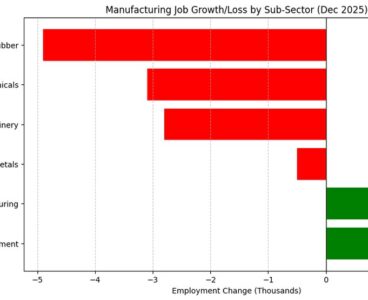
The revolution will not be televised. The revolution will not feature protests at the factory gates or workers marching against the machines. The revolution will not be debated on cable news or hashtagged into a culture war. The revolution will arrive on a Tuesday at a facility short of 47 technicians, and it will clock…
AI in 2026: everyone is partners, everyone is suing: A timeline shows how we got here
Consider what happened in a single week: OpenAI, the nonprofit founded to be a “counterweight” to Google, whose CEO said he “kinda hates” ads, announced it will serve targeted ads based on your ChatGPT conversations. The same day, OpenAI published a blog post titled “The Truth Elon Left Out,” responding to Musk’s fraud lawsuit not…
AI tool used to detect pancreatic cancer in routine CT scans in China
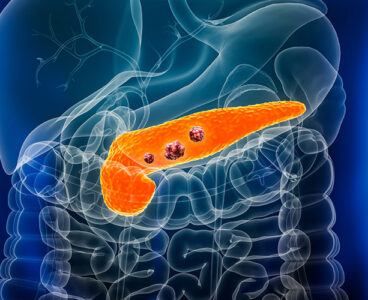
A clinical trial of an AI system at the Affiliated People’s Hospital of Ningbo University in Ningbo, China, has detected more than 20 cases of pancreatic cancer, 14 of which were in early stages, since the trial started in November 2024. Early detection is essential for the treatment of pancreatic cancer, which has a five-year…