
Isomorphic Labs raised $5 billion in a Series C led by Greenoaks and Sequoia. Its AI-designed drugs remain preclinical ahead of a year-end trial target.
Pharma is pouring billions into AI. The biggest returns may take years to prove.

McKinsey’s Guang Yang and the Pistoia Alliance’s Christian Baber on why pharma’s AI bets face slow feedback, trust gaps and hard culture change.
As AI bubble talk grows, Dwarkesh Patel predicts recursive self-improvement will set off an AI research explosion

Dwarkesh Patel says recursive self-improvement in AI has begun. His median year for AI that matches the best human AI researchers is 2028.
NVIDIA’s R&D spending more than doubled in two years. Its customers’ borrowing will help decide what happens next.
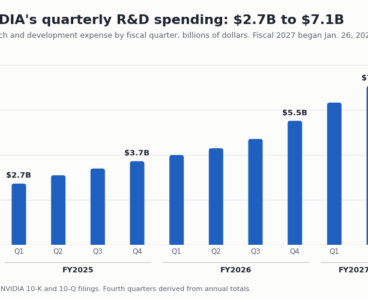
NVIDIA’s R&D expense more than doubled in two years. Interim CEO Colette Kress inherits that budget as the customers buying its chips borrow heavily.
Elsevier survey: 63% of corporate R&D staff say a key decision rested on flawed data
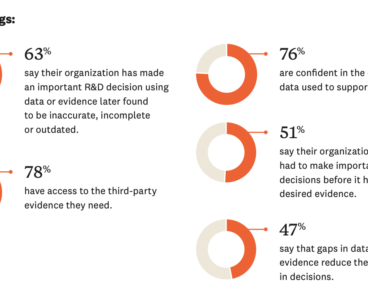
Elsevier surveyed 1,038 corporate R&D staff: 76% trust their data, yet 63% say their organization made an important decision on flawed evidence.
Isomorphic Labs president says all drugs will be AI-designed as first trials near a year-end target

Isomorphic Labs president Max Jaderberg says AI will design all future drugs. Its programs are preclinical, with first trials targeted by the end of 2026.
10x Genomics CTO expects AI to leave some of biomedical R&D ‘painfully slow’ while other parts are ‘massively accelerated’

10x Genomics CTO Michael Schnall-Levin expects AI to leave parts of biomedical R&D painfully slow, with lab automation still ‘extremely niche.’
NIH proposes one safety-monitoring standard for all its clinical research

NIH proposes risk-based safety monitoring for all its clinical research, including observational studies. Public comments close Jan. 6, 2027.
Sam Altman says a machine for scientific discovery is closer than he expected

Sam Altman told Raj Shamani that OpenAI’s math results, including the Navier-Stokes claim, put a machine for scientific discovery closer than he expected.
DOE’s fusion voucher program opens to consortia and pilot-plant reviews
After $8.5 million for 28 projects, DOE’s INFUSE fusion voucher program opens to lab consortia and pilot-plant design reviews. Applications close Dec. 13.
After spending tens of billions on R&D, Anthropic sees reasons to slow its pursuit of self-improving AI
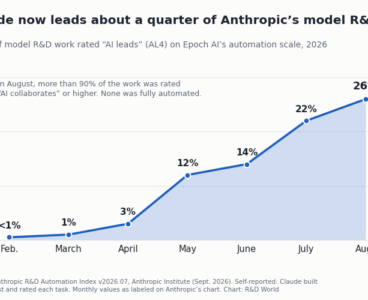
Anthropic spent nearly $28 billion on R&D from 2024 through September 2026. Its amended IPO filing says safety measures could slow it relative to rivals.
Palantir wants to dominate AI. Anthropic spent 43 times as much on R&D in Q3.
Palantir revenue rose 96% in Q3 as Alex Karp claimed a “moral imperative” to dominate AI. Anthropic spent about $9.5 billion on R&D, 43 times as much.
Anthropic’s R&D spending passed Microsoft’s last quarter
Anthropic spent about $9.5 billion on R&D in Q3, more than Microsoft, per its amended IPO filing. Four large companies that report R&D spent more.
Altman bets OpenAI could redo its $10 million Navier–Stokes proof at 1/100th the cost by September 2027

Sam Altman told Stripe’s Cheeky Pint that OpenAI’s Navier-Stokes proof cost about $10 million and bet the same work will cost 1/100th as much within a year.
NIH awarded more new grants in fiscal 2026, even as total awards fell
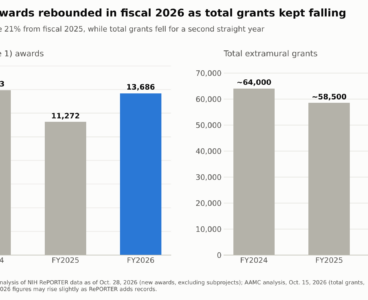
NIH made 13,686 new awards in fiscal 2026, up 21% from 2025, while total grants fell as annual payments on existing projects declined.
DOE will end single-investigator grants in accelerator basic research
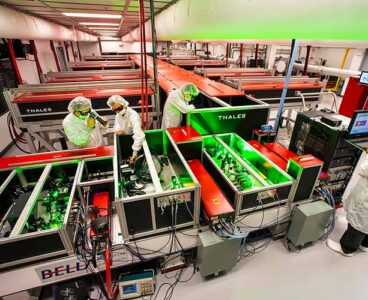
DOE to fund only multi-university teams in fiscal 2027 for basic accelerator research, ending single-PI awards, as it picks 14 projects for $15 million.
Jellyfish: Claude Code bills hit $252 a month per developer as software factories automate code production among early adopters
Jellyfish data from 1,300 companies: agents touch 27.7% of pull requests at the median company, while software factories open 0.0% at nine in 10.
Nearly 9 in 10 organizational comments opposed OMB’s grant overhaul, analysis finds
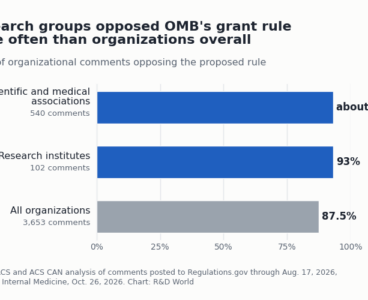
An Annals of Internal Medicine analysis found 87.5% of organizational comments opposed OMB’s grant rule, with research groups opposed at about 93%.
Anthropic’s R&D budget now rivals Eli Lilly’s
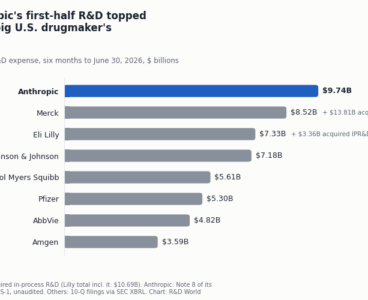
Anthropic’s S-1 shows $9.74B of first-half R&D, more than any big U.S. drugmaker’s ongoing R&D, and $14.2B over 12 months, near Eli Lilly’s.
Anthropic co-founder Jack Clark says a billion virtual scientists are coming. Or 10 billion.

Anthropic co-founder Jack Clark told the IMF the singularity has begun and AI could put a billion virtual scientists to work if labs can test the results.
NSF commits $76 million to near-market wireless projects, more than double its target

NSF funded 17 near-market VINES wireless projects, about $76 million against a $33 million target, while its basic research track came in under target.
DOE adds 12 Phase II Genesis Mission projects and six more Phase I awards

The Department of Energy (DOE) has announced 12 new Phase II and six Phase I projects for the Genesis Mission. These cap the first-year cohort at 297 projects, the department said in a press release. President Trump launched the Genesis Mission in November 2025, and DOE runs it. The plan connects DOE’s supercomputers, scientific data…
NSF looks to UK experiments as it plans to test how it awards research grants
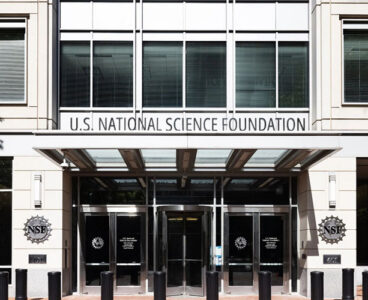
The National Science Foundation (NSF) and UK Research and Innovation (UKRI) said Oct. 8 they will collaborate on metascience, the use of scientific methods to study how research is funded and conducted. The agencies said they will explore cooperation, including on data analysis and coordinated experiments. The UKRI has already trialed new ways of reviewing…
Rethinking surgeon feedback in surgical R&D

In ophthalmic surgery, surgeons are often clear about what they want from a new technology. But in my experience, what they ask for is not always the same as what they need. A surgeon may come with a proposed feature, an instrument modification or a different way for a surgical system to behave. That input…
Taiwan on track to overtake France as four countries climb the global R&D ranks by 2028
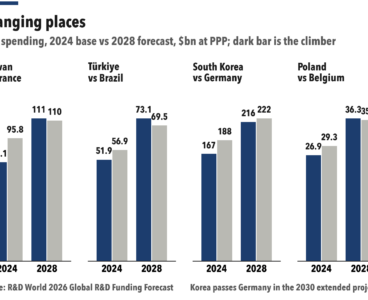
The global pecking order of countries spending the most on research was once relatively stable. In the previous order, the U.S. spent the most, China the second and countries like Germany, Japan and South Korea rounded out the next tier. But the order is shifting. Now, China is on top based on purchasing power parity…