
According to the Quantum Economic Development Consortium’s (QED-C) “2025 State of the Global Quantum Industry” report, the global quantum technology industry is experiencing unprecedented growth and investment. The report reveals a rapidly expanding market driven by advancements in quantum computing, sensing, and communication technologies, fueled by significant public and private funding. The following is a…
Mission accomplished: NVIDIA CEO’s quantum mea culpa brings Microsoft and AWS to GTC table after market-rattling comments
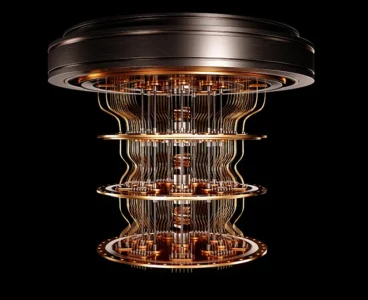
NVIDIA CEO Jensen Huang hosted the company’s first-ever “Quantum Day” at its GTC conference on Thursday, bringing together executives from across the quantum computing industry just two months after dismissing the technology as something that won’t be useful for “15 to 30 years.” In the immediate aftermath of Huang’s skepticism, shares of IonQ, Rigetti Computing,…
Quantinuum joins NVIDIA’s Accelerated Quantum Research Center as founding collaborator

Quantinuum has been chosen as a founding collaborator in the upcoming NVIDIA Accelerated Quantum Research Center (NVAQC), an initiative to advance hybrid quantum-classical computing. Set to open later this year, the center will integrate Quantinuum’s System Model H2 — one of the highest-performing quantum systems—with NVIDIA’s CUDA-Q platform and the GB200 NVL72 supercomputer to enhance…
D-Wave’s quantum processors perform physics simulations that would take Frontier supercomputer millions of years
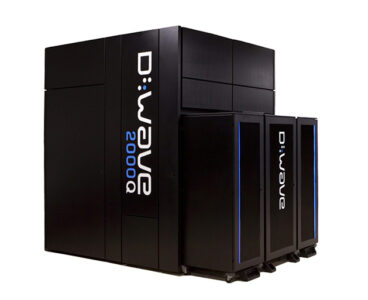
Late last year, Google announced that its “Willow” quantum chip hammered through a calculation under minutes that would take one of the world’s fastest supercomputers 10 septillion years to handle. Now, D-Wave has shown that its superconducting quantum annealing processors can simulate the complex dynamics of quantum materials in moments what would take the Frontier…
Universe’s unexpected twist: JWST data hints at black hole universe theory
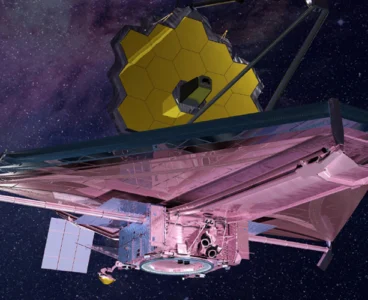
One might assume that galaxies in our universe would have no favored spin, rotating randomly either clockwise or counterclockwise. Yet a recent discovery from the James Webb Space Telescope (JWST) challenges this fundamental notion. JWST’s Advanced Deep Extragalactic Survey (JADES) analyzed 263 galaxies from the early universe and revealed a significant asymmetry: roughly 66% spin…
Nanodots enable fine-tuned light emission for sharper displays and faster quantum devices

Penn State and Université Paris-Saclay researchers report a new way to control light by embedding “nanodots” in ultra-thin, two-dimensional (2D) materials. The team says this precision could lead to higher-resolution screens and advances in quantum computing technologies. In a study published in ACS Photonics, the scientists demonstrated how these nanodots — tiny islands of a…
Alice & Bob reports 160-fold improvement in cat qubit error protection
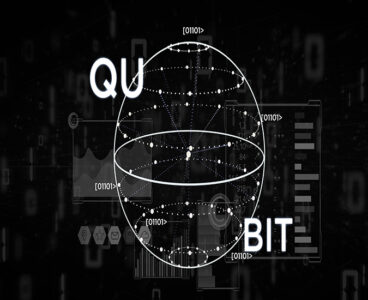
The quantum computing company Alice & Bob has announced a new method for stabilizing its cat qubits. Cat qubits are a type of multi-qubit superposition that mimics the macroscopic superposition idea of Schrödinger’s cat. The company says this method can achieve up to 160 times better bit-flip error protection. The approach involves “squeezing” cat qubits…
Quantum Brilliance, Pawsey integrate room-temp quantum with HPC on NVIDIA GH200
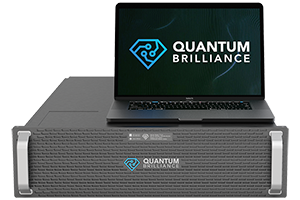
Imagine no longer needing to stand next to a giant supercomputer to dive into quantum research. Thanks to Quantum Brilliance’s virtual Quantum Processing Unit (vQPU), you can now explore quantum computing applications from wherever you are — whether that’s a standard workstation, a remote HPC cluster, or the cloud. This advancement emulates the experience of…
Frontier supercomputer reveals new detail in nuclear structure
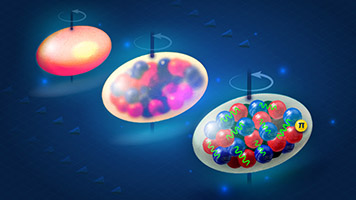
A team of researchers at the Department of Energy’s Oak Ridge National Laboratory has unveiled a new technique to predict nuclear properties with unprecedented precision. By harnessing the Frontier supercomputer, the world’s first exascale system, the scientists modeled how subatomic particles bind and shape an atomic nucleus — work that could open new frontiers in…
Microsoft’s Majorana 1 is ‘world’s first quantum processor powered by topological qubits’

Microsoft has unveiled Majorana 1, a new quantum chip built on what the company calls its Topological Core architecture. Engineers say the design could lead to quantum machines with up to one million qubits, a size necessary to tackle complex problems in fields like chemistry, manufacturing, and environmental sustainability. Moving beyond conventional qubits At the…
RIKEN partners with Quantinuum to develop quantum-supercomputing hybrid platform

RIKEN, Japan’s largest comprehensive research institution, has selected Quantinuum’s H1-Series ion-trap quantum computing technology for its new quantum-supercomputing hybrid platform. The collaboration will see Quantinuum install its hardware at RIKEN’s campus in Wako, Saitama, as part of a project to integrate quantum computers with high-performance computing (HPC) systems like the supercomputer Fugaku. The initiative, commissioned…
BYD and DeepSeek plan to bring “God’s Eye” autonomous driving features to sub-$10k vehicles

The Chinese EV giant BYD is shaking up the automotive market by breaking cost barriers in advanced driver-assistance systems (ADAS). Its new “God’s Eye” technology — known technically as the DiPilot system — brings Level-2 autonomous features as standard equipment on EVs priced under $10,000. While Level 2 autonomy (SAE-defined) requires driver supervision (For context,…
Students use machine learning to predict crime at Thunderbird Hackathon
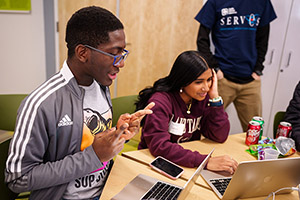
High school students dove into the world of coding and artificial intelligence (AI) at the second annual Thunderbird Hackathon, held earlier this month. Sponsored by Sandia National Laboratories and Explora’s X Studio, the event challenged teams to create machine learning models predicting crime incidents using real data from Albuquerque’s open-data initiative. “At Thunderbird Hacks, we…
This week in AI research: U.S. lawmakers push to ban a Chinese AI disruptor’s app from government devices

The global AI landscape continues to heat up: U.S. lawmakers are zeroing in on Chinese AI disruptor DeepSeek with a possible government-device ban, while open-source challenger Hugging Face fires back at proprietary tools. OpenAI is targeting education and the public sector—both in the U.S. and through a newly forged partnership with SoftBank in Japan—just as…
Satellite data sheds light on wetland health in cloud-covered regions
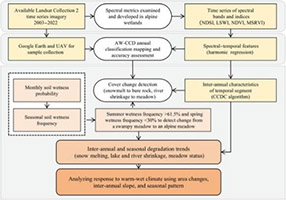
The Qinghai-Tibet Plateau, commonly referred to as the “Third Pole,” is undergoing significant environmental changes. Its alpine wetlands, crucial for regional biodiversity and water regulation, exhibit signs of distress, including diminishing water resources and degradation of meadows. However, persistent cloud and snow cover complicate consistent, long-term monitoring of these ecosystems. Researchers from South China Normal…
R&D under siege: QuantHealth’s cyber head on how AI is lowering the bar for cyberattacks in pharma and beyond

Think of the damage sophisticated cybercriminals—“hackers”—have caused in recent years. The pharmaceutical sector offers a sobering example, having weathered a steady barrage of cyberattacks over the past decade. More than ten years ago, the Dragonfly (aka “Energetic Bear”) espionage campaign targeted smaller pharma suppliers to steal intellectual property. By 2017, the NotPetya outbreak crippled Merck…
This week in AI research: OpenAI eyes $340B valuation, partners with national labs

Here’s the scoop: AI is still on fire, despite bubble talk, and OpenAI’s rumored $40B capital raise—driving its valuation up to $340B—could be one of the biggest bets yet. But this isn’t happening in a vacuum. Competition from China’s DeepSeek, fresh AI model launches by Alibaba, and rumored next-gen offerings from Google and others mean…
AI takes center stage at ORNL, where potential meets risk

In the early 1990s, the internet seemed poised to improve our lives by democratizing knowledge, publishing, and communication. While it did achieve many of these goals, it also introduced security risks ranging from malware to phishing. The online world of 2024 feels more like a war zone than a digital playground, “If you connect a…
R&D winner of the day: QUIC-DEPDOSE
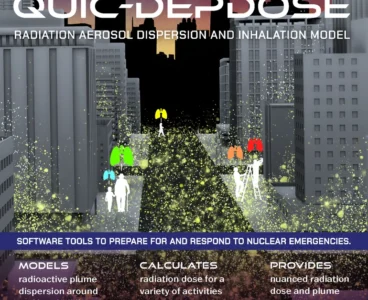
All unexpected radiological releases affect public health, economic stability, and global security. Los Alamos National Laboratory’s QUIC-DEPDOSE is a software application that calculates individualized radiation doses for people downwind from a radioactive plume by combining two key models: QUIC (for atmospheric dispersion) and DEPDOSE (for respiratory tract deposition and dose calculations). It leverages real topography…
Paralyzed man flies virtual drone with thought-controlled finger movements
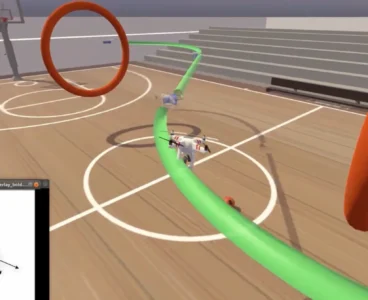
In a demonstration of “mind over matter,” a 69-year-old man with C4 AIS C spinal cord injury — whose remaining movement was largely restricted to low-amplitude muscle twitching — has piloted a virtual quadcopter merely by thinking about moving his paralyzed fingers. This achievement stems from an intracortical brain-computer interface (iBCI) primarily developed and tested…
This week in AI research: Latest Insilico Medicine drug enters the clinic, a $0.55/M token model R1 rivals OpenAI’s $60 flagship, and more

While OpenAI charges $60 per million tokens for its flagship reasoning model, a Chinese startup just open-sourced an alternative that matches its performance—at 95% less cost. Meet DeepSeek-R1, the RL-trained model that’s not just competing with Silicon Valley’s AI giants, but in some cases running on consumer laptops in some configurations rather than in data…
R&D 100 winner of the day: MAVERICK, first turn-key device to use Raman spectroscopy for bioprocess control
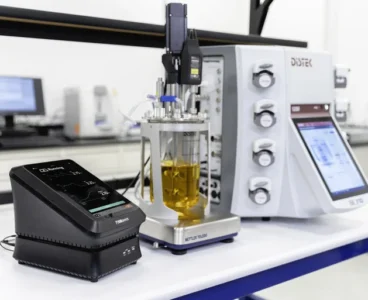
MAVERICK is a platform designed specifically for biologists, using Raman spectroscopy to streamline bioprocess development and optimization. It offers out-of-the-box capabilities for real-time monitoring of variables like glucose, lactate, and biomass, all through an intuitive touchscreen interface. This platform supports automation, remote access, and compliance with cGMP standards for pharmaceutical industry applications. While Raman spectroscopy…
New software offers realistic cell-signaling simulations
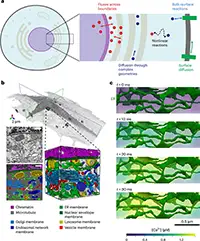
Researchers at the University of California San Diego have created and evaluated Spatial Modeling Algorithms for Reactions and Transport (SMART), a software package designed to simulate cell-signaling networks — complex molecular interactions that enable cells to respond to various environmental cues. These networks involve multiple steps and are heavily influenced by the three-dimensional structure…
How the startup ALAFIA Supercomputers is deploying on-prem AI for medical research and clinical care
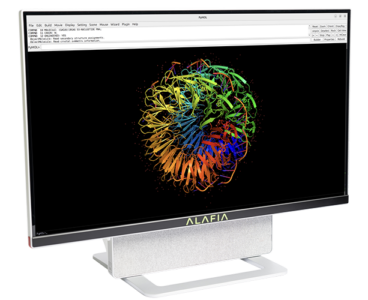
Imagine a hospital spending millions on advanced imaging equipment yet relying on decades-old computers to run the software. That paradox propelled robotics and computer vision veteran Camilo Buscaron—a former systems engineer at NVIDIA and Chief Technologist for AWS Robotics—into action. In 2023, he set out to commercialize an open-source computer vision library known as Kornia,…
UNSW engineers create quantum ‘Schrödinger’s cat’ in silicon chip

Quantum engineers at UNSW Sydney have placed a ‘Schrödinger’s cat‘—the famous paradox of quantum superposition where a system exists simultaneously in a quantum superposition, in this case being both dead and alive—inside the nucleus of a single antimony atom on a silicon chip. “Antimony is a heavy atom, which possesses a large nuclear spin—meaning a…