
Scientists at the University of Chicago have introduced “volumetric DNA microscopy,” which has the potential to transform our understanding of biology by producing detailed, three-dimensional images of organisms at the molecular level. For the first time, this technology can provide a spatial map of gene expression for an entire organism. Traditional genetic sequencing provides valuable…
NIH layoffs threaten US’s edge in science and health innovation
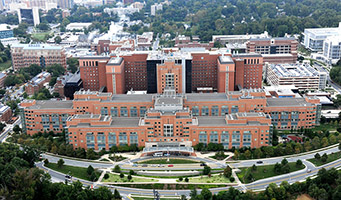
With federal layoffs across various government agencies making the weekly news, one announcement deserves far more attention than it is receiving: staffing cuts at the National Institutes of Health (NIH). Amid a wave of reductions affecting civil servants in science, health, and environmental agencies, the NIH layoffs could quietly deliver a significant blow to the…
Breathing easier on the moon: NASA and Corscience team up to monitor spacesuit safety

As NASA prepares for astronauts’ return to the Moon through the Artemis program, even the most minor details inside a spacesuit can make a big difference. The top priority is ensuring astronauts can breathe safely and efficiently during long hours on the lunar surface. In pursuit of that goal, NASA has teamed up with German…
New podcast from ISS National Lab brings space research down to Earth
If you’ve ever wondered what’s happening aboard the International Space Station — beyond the amazing views and zero-gravity stunts — a new podcast is ready to take you inside the science. The ISS National Laboratory has launched Between a Rocket and a Hard Space, a fascinating podcast that gives listeners a behind-the-scenes look at the discoveries,…
Quantum industry sees rapid growth in 2025, report finds
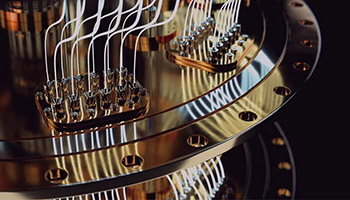
According to the Quantum Economic Development Consortium’s (QED-C) “2025 State of the Global Quantum Industry” report, the global quantum technology industry is experiencing unprecedented growth and investment. The report reveals a rapidly expanding market driven by advancements in quantum computing, sensing, and communication technologies, fueled by significant public and private funding. The following is a…
Floating solar mats clean polluted water — and generate power
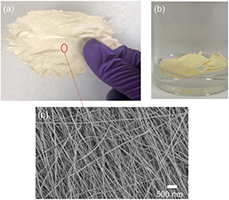
Most people bring a blanket to the beach to soak up the sun — this “blanket” soaks up pollution instead. Researchers at Ohio State University have created a solar-activated “nanomat” that floats on water like a beach mat, but instead of providing comfort, it goes to work cleaning up harmful contaminants. The lightweight, reusable material…
Proscia raises $50M to expand AI pathology platform amid growing demand for precision diagnostics
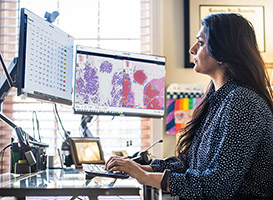
Proscia, a company developing digital and AI-based pathology software, has raised $50 million in a Series C funding round to expand the adoption of its Concentriq platform. The new investment brings the company’s total funding to $130 million as demand grows for more efficient diagnostic tools in oncology and other disease areas. The funding round…
Japanese drug shows promise in preventing COVID-19 infection

You’ve just seen your favorite rock band in a packed arena — and as the excitement fades, the worry sets in. Was this a “super spreader” event? When was your last booster? In that moment, wouldn’t it be a relief to know you could just take a pill to protect yourself? A recent study presented…
New AI model offers faster, adaptive CO₂ retrieval from satellite data
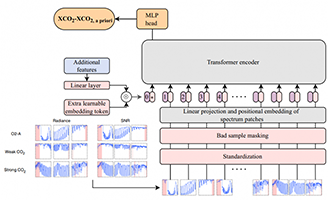
A team of researchers from Shanghai Jiao Tong University and the Chinese Academy of Sciences has developed a new artificial intelligence-based model for retrieving atmospheric carbon dioxide (CO₂) concentrations from satellite data. The Spectrum Transformer (SpT) model is designed to address long-standing challenges in real-time global CO₂ monitoring. Published in the Journal of Remote Sensing,…
NASA eliminates Chief Scientist role and shuts down key offices amid broader federal cuts
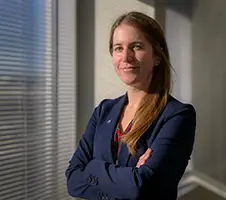
NASA has announced the elimination of its chief scientist position and the closure of several internal offices, including the Office of Technology Policy and Strategy and the agency’s Diversity, Equity, Inclusion, and Accessibility (DEIA) branch. According to Reuters, the move, which affects at least 23 employees, is part of a broader reorganization aligned with federal…
Physicists create supersolid state of light, blending properties of liquids and solids

Light: it’s fast, massless, and goes straight through stuff. Right? Well, physicists in Italy just said, “Hold my espresso,” and turned light into something that’s both a solid and a liquid. Yes, you read that correctly. They’ve created a supersolid out of light, a feat previously thought to be the exclusive domain of ridiculously cold atoms. Researchers in Italy have…
Thermo Fisher launches Vulcan Automated Lab to accelerate semiconductor analysis with AI-powered TEM metrology workflow
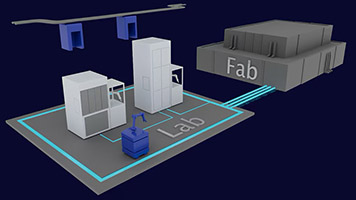
Thermo Fisher Scientific has unveiled the Vulcan Automated Lab, a fully integrated system designed to streamline transmission electron microscopy (TEM) workflows and enhance semiconductor process control. The industry is under increasing pressure to deliver atomic-scale precision at high volumes amid global demand for advanced chips. The Vulcan system integrates robotic sample handling, artificial intelligence (AI)-enhanced…
Quantinuum joins NVIDIA’s Accelerated Quantum Research Center as founding collaborator

Quantinuum has been chosen as a founding collaborator in the upcoming NVIDIA Accelerated Quantum Research Center (NVAQC), an initiative to advance hybrid quantum-classical computing. Set to open later this year, the center will integrate Quantinuum’s System Model H2 — one of the highest-performing quantum systems—with NVIDIA’s CUDA-Q platform and the GB200 NVL72 supercomputer to enhance…
Trump administration science cuts disrupt U.S. research landscape
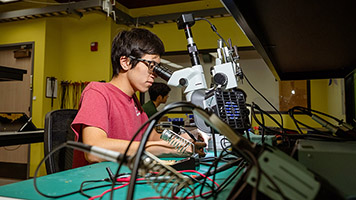
The Trump administration’s broad cuts to federal science budgets and staff are significantly impacting the U.S. research and development community. From National Institute of Health (NIH) labs to top-tier universities, scientists and engineers are facing stalled projects, hiring freezes, and growing uncertainty as efforts to reduce the federal workforce and suspend research funding take hold.…
Thermo Fisher Scientific debuts Transcend VTLX-1 UHPLC system for automated sample preparation
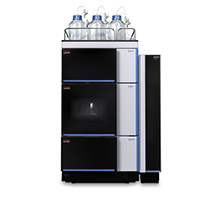
Thermo Fisher Scientific has announced the release of the Transcend VTLX-1, a new ultra-high performance liquid chromatography (UHPLC) system designed to automate sample cleanup and preparation for liquid chromatography-mass spectrometry (LC-MS) workflows. The system addresses a common bottleneck in laboratories: the time-consuming and often manual process of preparing samples for LC-MS analysis. Manual sample preparation,…
Foxconn launches FoxBrain: AI for manufacturing in Traditional Chinese

Several years ago, a catchy electronic dance tune captured the airwaves, leaving everyone wondering, “What Does the Fox Say?” Foxconn might have an answer with the launch of FoxBrain, the first large language model (LLM) designed for traditional Chinese applications. While it’s not exactly what the real fox says, it connects to the inner workings…
Nanodots enable fine-tuned light emission for sharper displays and faster quantum devices

Penn State and Université Paris-Saclay researchers report a new way to control light by embedding “nanodots” in ultra-thin, two-dimensional (2D) materials. The team says this precision could lead to higher-resolution screens and advances in quantum computing technologies. In a study published in ACS Photonics, the scientists demonstrated how these nanodots — tiny islands of a…
Alice & Bob reports 160-fold improvement in cat qubit error protection
The quantum computing company Alice & Bob has announced a new method for stabilizing its cat qubits. Cat qubits are a type of multi-qubit superposition that mimics the macroscopic superposition idea of Schrödinger’s cat. The company says this method can achieve up to 160 times better bit-flip error protection. The approach involves “squeezing” cat qubits…
Ex-Google AI team launches “Generation,” an AI-driven fragrance venture
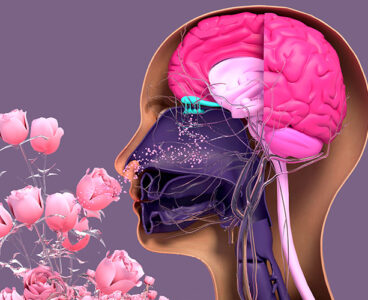
A new player has entered the fragrance industry, aiming to use artificial intelligence in scent creation. Osmo, a company founded by former Google AI researcher Alex Wiltschko, has launched “Generation,” a project that applies machine learning to various aspects of fragrance development, from ingredient design to market analysis. While the potential of AI in this…
Duracell to anchor new Atlanta R&D hub, boosting regional research ecosystem

Battery giant Duracell is moving its global Research and Development (R&D) headquarters to Atlanta’s Science Square Labs, marking a significant advancement for the region’s growing research and innovation landscape. The relocation, announced by real estate developer Trammell Crow Company (TCC), represents a major investment in battery technology and further strengthens Atlanta’s status as an emerging…
Quantum Brilliance, Pawsey integrate room-temp quantum with HPC on NVIDIA GH200
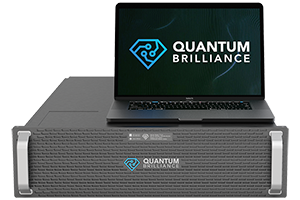
Imagine no longer needing to stand next to a giant supercomputer to dive into quantum research. Thanks to Quantum Brilliance’s virtual Quantum Processing Unit (vQPU), you can now explore quantum computing applications from wherever you are — whether that’s a standard workstation, a remote HPC cluster, or the cloud. This advancement emulates the experience of…
Frontier supercomputer reveals new detail in nuclear structure
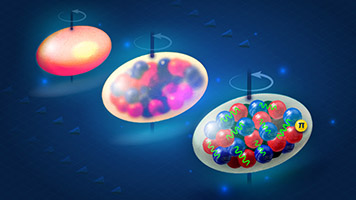
A team of researchers at the Department of Energy’s Oak Ridge National Laboratory has unveiled a new technique to predict nuclear properties with unprecedented precision. By harnessing the Frontier supercomputer, the world’s first exascale system, the scientists modeled how subatomic particles bind and shape an atomic nucleus — work that could open new frontiers in…
This week in semiconductor news: TSMC’s $100B investment, Broadcom’s strong earnings, Trump threatening to repeal CHIPS Act, and more

Major investments, policy debates, and sustainability efforts are reshaping the semiconductor industry. TSMC’s $100 billion U.S. expansion carries geopolitical significance, while Broadcom’s strong earnings highlight AI’s growing role. Siemens is investing $285 million in U.S. manufacturing, adding to its long-term growth. Meanwhile, the CHIPS Act faces scrutiny, with Trump calling for its repeal. The Semiconductor…
Scientists develop reversible adhesive that could transform composites
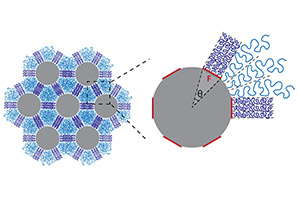
For decades, the strength and durability of composite adhesives such as epoxy resins have made them essential in everything from construction to aerospace. However, this exceptional strength presents a frustrating downside: these materials become stubbornly permanent once bonded. Recently, researchers have unveiled a new class of composite materials that are equally robust but feature a…
U.S. Semiconductor industry faces uncertainty as calls to repeal CHIPS Act emerge

President Donald Trump’s recent push to repeal the CHIPS and Science Act, signed into law in August 2022, has raised concerns about the future of U.S. semiconductor manufacturing. The act allocates $39 billion in subsidies and up to $75 billion in government-backed loans to strengthen domestic chip production. Proponents credit the measure with prompting high-profile…