
The century old mission to understand how the proteins responsible for amyloid-based diseases such as Alzheimer’s, Huntingdon’s and Parkinson’s work has taken major steps forward in the last 12 months, thanks to a revolution in a powerful microscopy technique used by scientists. High-powered microscopes using electrons instead of light to “see” the actual shape of samples…
Invention Opens the Door to Safer and Less Expensive X-Ray Imaging
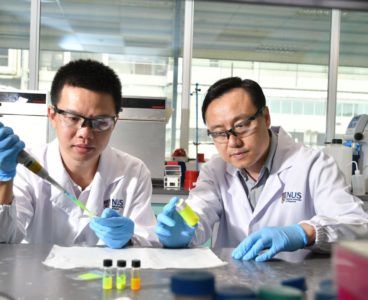
Medical imaging, such as X-ray or computerised tomography (CT), may soon be cheaper and safer, thanks to a recent discovery made by chemists from the National University of Singapore (NUS). Professor Liu Xiaogang and his team from the Department of Chemistry under the NUS Faculty of Science had developed novel lead halide perovskite nanocrystals that…
3D Imaging Opens Door to Better Understanding of Fascinating Leaf Complexity
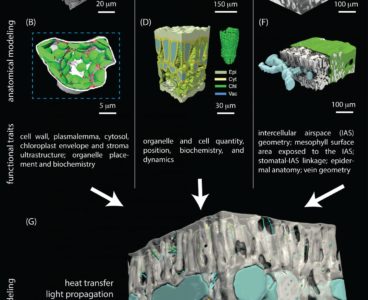
The field of plant science is in the process of being profoundly transformed by new imaging and modelling technologies. These tools are allowing scientists to peer inside the leaf with a clarity and resolution inconceivable a generation ago. In a recent publication, a team of Australian and US scientists demonstrated how three-dimensional (3D) imaging can…
New Nuclear Medicine Tracer Will Help Study the Aging Brain
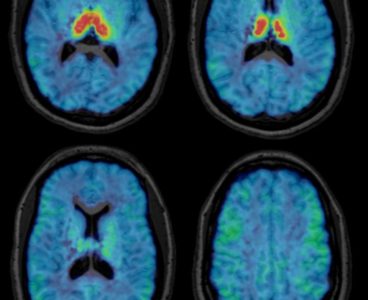
A new PET imaging radiotracer could help researchers understand neurodegenerative disease and the aging brain. The study is featured in the October issue of The Journal of Nuclear Medicine. Past studies have shown a reduced density of the α4β2 nicotinic acetylcholine receptor (α4β2-nAChR) in the cortex and hippocampus of the brain in aging patients and those…
Revolutionary Ultra-Thin ‘Meta-Lens’ Enables Full-Color Imaging

First Experiments at New X-ray Laser Reveal Unknown Structure of Antibiotics Killer

An international collaboration led by DESY and consisting of over 120 researchers has announced the results of the first scientific experiments at Europe’s new X-ray laser European XFEL. The pioneering work not only demonstrates that the new research facility can speed up experiments by more than an order of magnitude, it also reveals a previously…
Enhanced Imaging Technique Gives Microscopic Look At Ancient Remains

A team of researchers from Sweden has successfully imaged the soft tissue of an ancient Egyptian mummy’s hand down to the microscopic level using a new computer tomography (CT) scan. In the past, archaeologists and paleopathologists have used non-destructive imaging techniques like X-rays and CT scans for human and animal mummies to gain a better…
Multimodal Imaging Shows Strain Can Drive Chemistry in a Photovoltaic Material
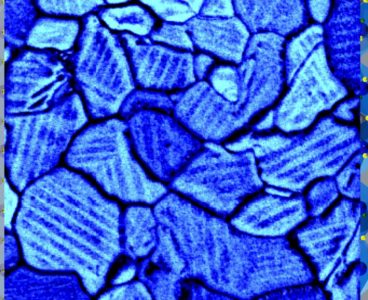
A unique combination of imaging tools and atomic-level simulations has allowed a team led by the Department of Energy’s Oak Ridge National Laboratory to solve a longstanding debate about the properties of a promising material that can harvest energy from light. The researchers used multimodal imaging to “see” nanoscale interactions within a thin film of…
Fiber Optic Sensor Measures Tiny Magnetic Fields
New Fluorescent Dyes Could Be Used For Biological Imaging

A newly discovered class of fluorescent dyes could be useful in the next wave of biological imaging technology. Chemists from the University of Oregon (UO) have developed the new fluorescent dyes that function in water and emit colors based on the diameter of circular nanotubes comprised of carbon and hydrogen. The researchers focused on synthesized…
New Photoacoustic Imaging Tech Combines Lasers and Ultrasound

New Technology Yields Cheaper Ultrasound Machine
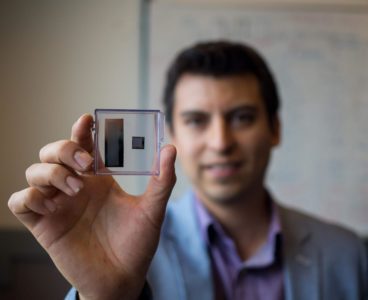
A team from the University of British Columbia has created a portable, wearable ultrasound transducer that could reduce the cost of ultrasound scanners down to about $100. Conventional ultrasound scanners utilize piezoelectric crystals that are able to create images of the inside of the body and send them to a computer to create sonograms. However,…
New Compact Hyperspectral System Captures 5D Images

Researchers Identify Structural Changes That Occur in Enveloped Viruses Before Invading Host

Ultrasound Could Improve Early Detection of Vascular Diseases

A Near-Infrared Fluorescent Dye For Long Term Bioimaging

A group of chemists at the Institute of Transformative Bio-Molecules (ITbM), Nagoya University, has developed a new near infrared (NIR) emitting photostable fluorescent dye PREX 710 (photo-resistant xanthene dye which can be excited at 710 nanometers) to have uses ranging from long term single molecule imaging to in vivo deep imaging, according to a study…
High-Resolution Imaging of Nanoparticle Surface Structures is Now Possible

Using scanning tunnelling microscopy (STM), extremely high resolution imaging of the molecule-covered surface structures of silver nanoparticles is possible, even down to the recognition of individual parts of the molecules protecting the surface. This was the finding of joint research between China and Finland, led in Finland by Academy Professor Hannu Häkkinen of the University…
Versatile Ultrasound System Could Transform How Doctors Use Medical Imaging
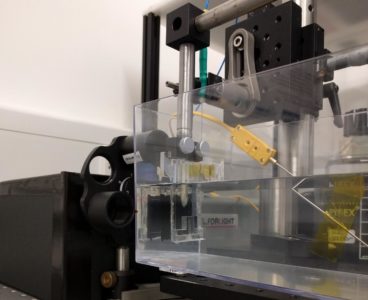
While ultrasound is one of the most common medical imaging tools, conventional electronic ultrasound devices tend to be bulky and cannot be used at the same time as some other imaging technologies. A new ultrasound system that uses optical, instead of electronic components, could improve performance while giving doctors significantly more flexibility in how they…
Graphene the Key to the Next Wave of Photodetectors
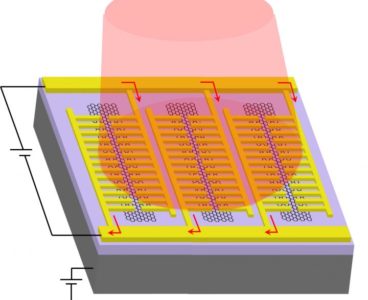
Researchers from UCLA are using graphene to develop a new type of photodetector that has superior sensing and imaging capabilities and is able to work with several different types of light. Graphene, which is a very good conductor of electrical current, is able to detect photons due to its ability to absorb energy form a…
New 3D Imaging Analysis Technique Could Lead to Improved Arthritis Treatment
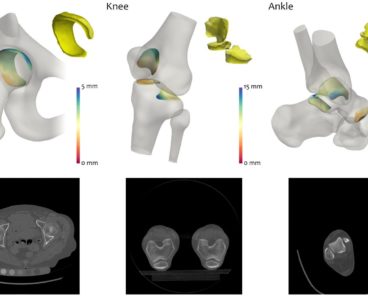
An algorithm to monitor the joints of patients with arthritis, which could change the way that the severity of the condition is assessed, has been developed by a team of engineers, physicians and radiologists led by the University of Cambridge. The technique, which detects tiny changes in arthritic joints, could enable greater understanding of how…
3D Imaging and Computer Modeling Capture Breast Duct Development
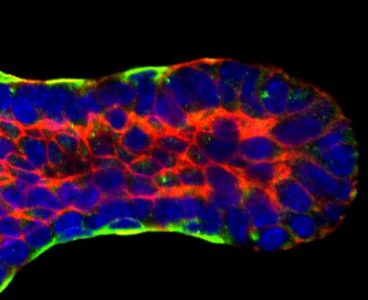
Working with hundreds of time-lapse videos of mouse tissue, a team of biologists joined up with civil engineers to create what is believed to be the first 3D computer model to show precisely how the tiny tubes that funnel milk through the breasts of mammals form. A report on the model was published April 9 in Developmental Cell.…
Dolphin Echolocation Discovery Could Improve Ultrasound Technology

Diamond ‘Spin-Off’ Tech Could Lead to Low-Cost Medical Imaging and Drug Discovery Tools
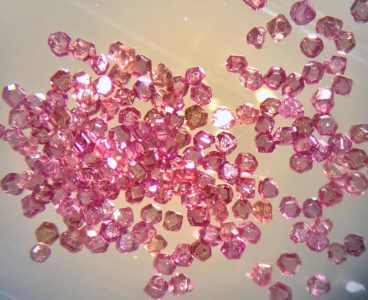
It may sound contradictory, but diamonds are the key to a new technique that could provide a very-low-cost alternative to multimillion-dollar medical imaging and drug-discovery devices. An international team led by scientists at the Department of Energy’s Lawrence Berkeley National Laboratory (Berkeley Lab) and UC Berkeley discovered how to exploit defects in nanoscale and microscale…
X-rays from Tabletop Lasers Allows Scientists to Peer Through the ‘Water Window’
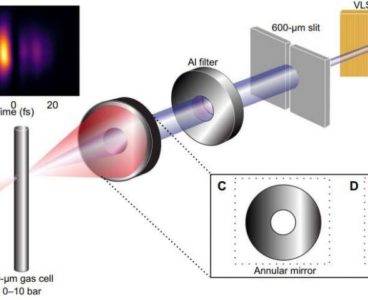
Studying the fleeting actions of electrons in organic materials will now be much easier, thanks to a new method for generating fast X-rays. The technique means advanced measurements of fast reactions will now be possible in physics labs around the world, without having to wait to use expensive and scarce equipment. It could be used,…
MRI Glove Gives Doctors a Deeper Look at the Hand
A new kind of MRI component in the shape of a glove delivers the first clear images of bones, tendons and ligaments moving together, a new study finds. Led by NYU School of Medicine and just published in Nature Biomedical Engineering, the study shows how a new MRI element design woven into garment-like detectors can capture…