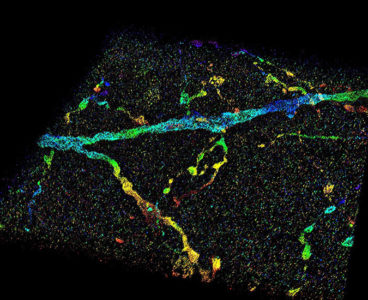
Since Robert Hooke’s first description of a cell in Micrographia 350 years ago, microscopy has played an important role in understanding the rules of life. However, the smallest resolvable feature, the resolution, is restricted by the wave nature of light. This century-old barrier has restricted understanding of cellular functions, interactions and dynamics, particularly at the…
New Leica platform adds an additional dimension to confocal imaging
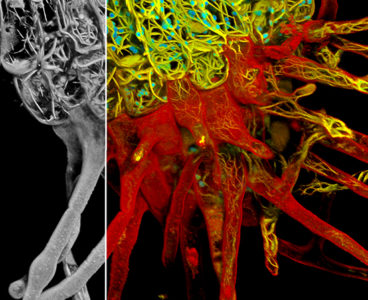
Designer and manufacturer of microscopes and scientific equipment, Leica Microsystems, has launched its flagship new confocal microscopy platform, STELLARIS. The platform will significantly improve how scientists are able to capture three-dimensional images of living cells and tissues. Due to its optimized imaging performance, the new confocal platform gives researchers the power to see more and,…
Park Systems completes equity investment in Molecular Vista
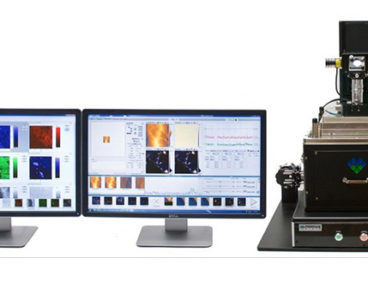
Park Systems, manufacturer of Atomic Force Microscopes (AFM), announces it has made an equity investment in Molecular Vista, based in San Jose, CA. Molecular Vista produces AFM tools to probe and understand matter at the molecular level through quantitative visualization using Infrared Photo-induced Force Microscopy (IR PiFM). PiFM is a combination of AFM and IR…
Patient-friendly brain imager gets green light toward first prototype
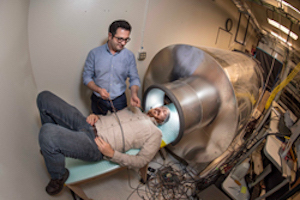
It might not start a fashion trend, but Sandia National Laboratories is designing a wearable brain imager. The National Institutes of Health has granted Sandia $6 million to build the prototype medical device that would make magnetoencephalography (MEG) — a type of noninvasive brain scan — more comfortable, more accessible and potentially more accurate. “This…
Mass Photometry: revolutionary biotech by Refeyn Ltd. wins prestigious awards

Refeyn Ltd., a spinout from the Department of Chemistry at the University of Oxford, has been recognized by two prestigious science and innovation awards for its revolutionary mass photometry technology. Refeyn’s first instrument, the Refeyn OneMP, enables users to measure the mass of single molecules in solution – quickly, simply and accurately. The company’s proprietary…
Getting cancer drugs to the brain is difficult – but a new ‘road map’ might make it easier
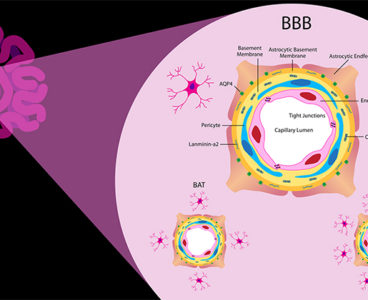
The human brain has some remarkable capabilities – including the ability to block cancer drugs from effectively reaching cancer cells in the brain. The greatest obstacle when it comes to treating cancer that has spread to the brain is the blood-brain barrier, the brain’s natural defense mechanism that is a collection of blood vessels that…
Coherent poly propagation materials with 3-dimensional photonic control over visible light
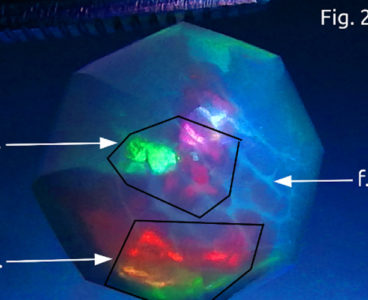
By: Dr. Michelle R. Stem Three-dimensional visible light photonic control is accomplished via the newly identified property of coherent poly propagation (CPP). This property is exhibited by a special silicate that is a rare form of a gemstone found in nature – opal. Dr. Michelle R. Stem discovered and examined several specimens of this material.…
Detecting patients’ pain levels via their brain signals
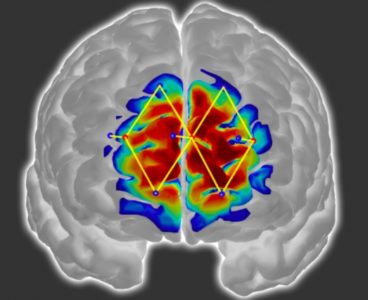
Researchers from MIT and elsewhere have developed a system that measures a patient’s pain level by analyzing brain activity from a portable neuroimaging device. The system could help doctors diagnose and treat pain in unconscious and noncommunicative patients, which could reduce the risk of chronic pain that can occur after surgery. Pain management is a…
Researchers Develop New Metamaterial That Can Improve MRI Quality and Reduce Scan Time
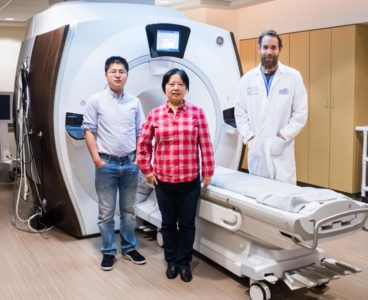
Could a small ringlike structure made of plastic and copper amplify the already powerful imaging capabilities of a magnetic resonance imaging (MRI) machine? Xin Zhang, Stephan Anderson, and their team at the Boston University Photonics Center can clearly picture such a feat. With their combined expertise in engineering, materials science, and medical imaging, Zhang and…
Researchers Test New Imaging Method for First Time on Human Patients
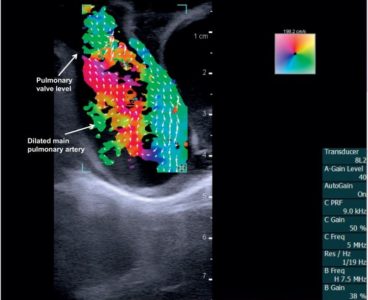
A new study by biomedical engineering researchers at the University of Arkansas could significantly improve methods for detecting and diagnosing congenital heart disease in infants and small children. The researchers, collaborating with cardiologists at Arkansas Children’s Hospital in Little Rock, tested a new ultrasound technology called vector flow imaging for the first time on pediatric…
Cancer Imaging Technology Can Help Reveal Life-Threatening Pregnancy Disorder
Breakthrough Could Enable Cheaper Infrared Cameras

There’s an entire world our eyes miss, hidden in the ranges of light wavelengths that human eyes can’t see. But infrared cameras can pick up the secret light emitted as plants photosynthesize, as cool stars burn and batteries get hot. They can see through smoke and fog and plastic. But infrared cameras are much more…
Scientists Develop a Tunable Bio-Imaging Device Using Terahertz Plasmonics
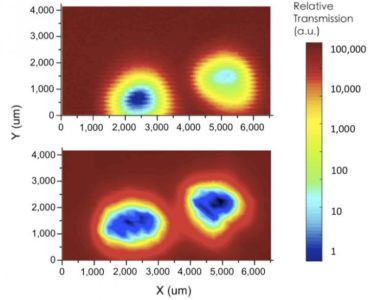
Researchers at Tokyo Institute of Technology (Tokyo Tech) have developed an easy-to-use, tunable biosensor tailored for the terahertz range. Images of mouse organs obtained using their new device verify that the sensor is capable of distinguishing between different tissues. The achievement expands possibilities for terahertz applications in biological analysis and future diagnostics. Plasmonics are highly…
New Method Improves Infrared Imaging Performance

Using Virtual Reality, Researchers Get a Closer Look at Autoimmune Disease
Novel X-ray Imaging Technique Provides Nanoscale Insights into Behavior of Biological Molecules

Berkeley Lab researchers, in collaboration with scientists from SLAC National Accelerator Laboratory and the Max Planck Institute, have demonstrated that fluctuation X-ray scattering is capable of capturing the behavior of biological systems in unprecedented detail. Although this technique was first proposed more than four decades ago, its implementation was hindered by the lack of sufficiently…
Faster 3D Imaging Could Aid Diagnosis of Cardiovascular, Gastrointestinal Disease

‘Sudoku’ X-ray Uncovers Movements Within Opaque Materials

When strolling along the beach, our footprints tell us that the sand under the surface must have moved but not precisely where or how. Similar movements occur in many other natural and man-made substances, such as snow, construction materials, pharmaceutical powders, and even cereals. To examine these largely unknown granular movements, academics from the Sydney…
Two New Techniques Improve 3D X-Ray Imaging
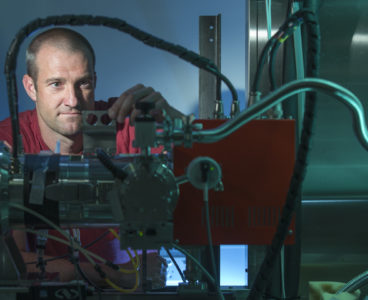
In a pair of studies, researchers may have found a way to improve the safety of and expand the use of 3D x-ray imaging in a number of applications. Researchers from the Australian National University, together with a team at the European Synchrotron Radiation Facility (ESRF) in France, have found a way to produce 3D…
Advanced Imaging Technology Measures Magnetite Levels in the Living Brain
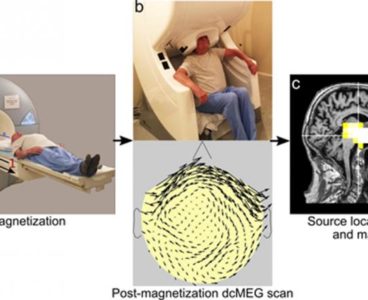
Investigators at the Martinos Center for Biomedical Imaging at Massachusetts General Hospital (MGH) have used magnetoencephalography (MEG) – a technology that measures brain activity by detecting the weak magnetic fields produced by the brain’s normal electrical currents – to measure levels of the iron-based mineral called magnetite in the human brain. While magnetite is known…
Scientists Produce 3-D Chemical Maps of Single Bacteria
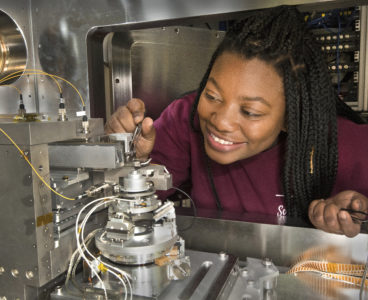
Scientists at the National Synchrotron Light Source II (NSLS-II)—a U.S. Department of Energy (DOE) Office of Science User Facility at DOE’s Brookhaven National Laboratory—have used ultrabright x-rays to image single bacteria with higher spatial resolution than ever before. Their work, published in Scientific Reports, demonstrates an x-ray imaging technique, called x-ray fluorescence microscopy (XRF), as an effective approach to produce…
Playing High School Football Changes the Teenage Brain
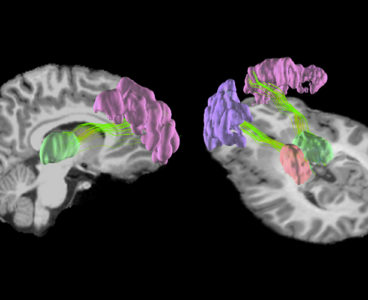
A single season of high school football may be enough to cause microscopic changes in the structure of the brain, according to a new study by researchers at the University of California, Berkeley, Duke University and the University of North Carolina at Chapel Hill. The researchers used a new type of magnetic resonance imaging (MRI)…
Feeling the Pressure With Universal Tactile Imaging

Touch, or tactile sensing, is fundamentally important for a range of real-life applications, from robotics to surgical medicine to sports science. Tactile sensors are modeled on the biological sense of touch and can help researchers to understand human perception and motion. Researchers from Osaka University have now developed a new approach to pressure distribution measurement…
Miniaturized Pipe Organ Could Aid Medical Imaging
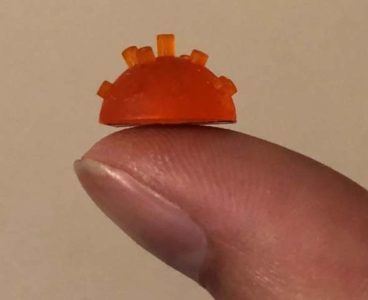
A miniaturised version of a musical instrument that could be used to improve the quality of medical images has been manufactured by researchers at the University of Strathclyde. The Science and Engineering researchers have created a miniaturised pipe organ, based on the wide range of pipes seen in the full-sized instrument. The device has been…
New Images Show Serotonin Activating its Receptor for First Time

Serotonin (3A) receptors are common drug targets in the treatment of pain, gastrointestinal dysfunctions, and mood disorders yet little is known about their three-dimensional structure. Details about serotonin receptor structures could provide important clues to designing better drugs with less side effects. Now, a team of researchers from Case Western Reserve University School of Medicine…