New Way of Producing Intense Radiation Could Offer Less Harmful Alternative to X-Rays
Improving Mid-Infrared Imaging and Sensing

New Imaging System Makes Back Surgery Safer, Faster and Less Expensive

Fluorescent Dye Could Enable Sharper Biological Imaging
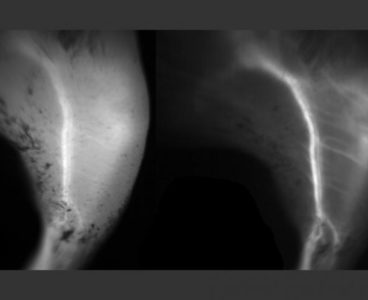
Fluorescence imaging is widely used for visualizing biological tissues such as the back of the eye, where signs of macular degeneration can be detected. It is also commonly used to image blood vessels during reconstructive surgery, allowing surgeons to make sure the vessels are properly connected. For these procedures, as well as others now in…
New Technique Improves MRI Images
Powerful New Imaging Method Reveals in Detail How Particles Move in Solution
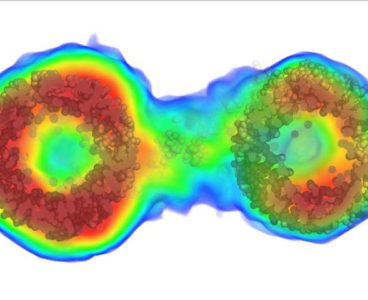
New research published in Nature Methods will dramatically improve how scientists “see inside” molecular structures in solution, allowing for much more precise ways to image data in various fields, from astronomy to drug discovery. The new method will allow for the visualization of many more biological molecules, providing critical information about what is inside molecules…
X-Rays Reveal ‘Handedness’ in Swirling Electric Vortices

Engineers Create Next-Generation Sensor for Multiple R&D Applications

Lensless Camera Captures Highly Detailed 3D Images
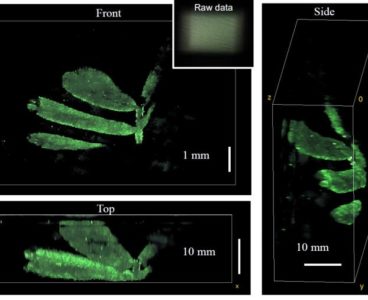
An experimental camera can produce extremely detailed images without even using a lens. Scientists from the University of California, Berkeley has created an easy-to-build lensless camera that produces 3D images from a single 2D image. “The DiffuserCam can, in a single shot, capture 3D information in a large volume with high resolution,” research team leader Laura Waller,…
MRI Technique Can Forecast Survival, Treatment Response in Patients with Brain Metastasis
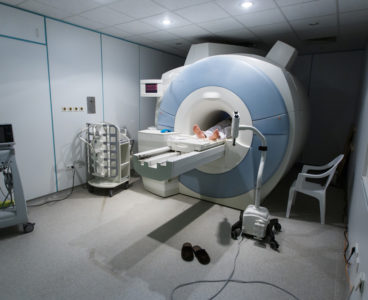
New Hyperlens Can Capture Images of Living Cells
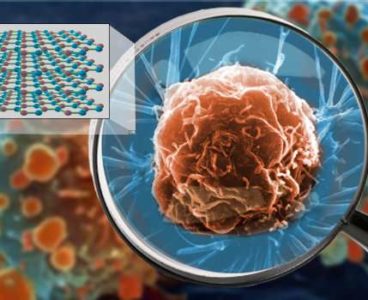
New hyperlenses are giving scientists the ability to capture images of living cells in great detail. A team from Vanderbilt University has created a new hyperlens that can resolve objects much smaller than the wavelength of light using hexagonal boron nitride (hBN)—a natural crystal with hyperlensing properties. Previously, the best resolution using hBN was an…
Molecular Beacon Signals Low Oxygen With Ultrasound
Areas of hypoxia, or low oxygen in tissue, are hallmarks of fast-growing cancers and of blockages or narrowing in blood vessels, such as stroke or peripheral artery disease. University of Illinois researchers have developed a way to find hypoxic spots noninvasively in real time. The researchers developed an oxygen-sensitive molecular beacon that emits ultrasound signals…
Seeing Through Walls of Unknown Materials
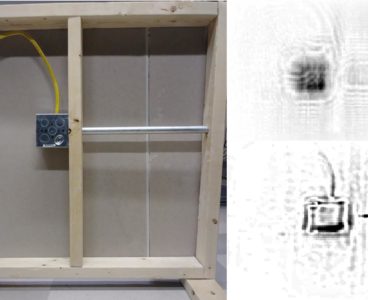
Researchers at Duke University have devised a way to see through walls using a narrow band of microwave frequencies without any advance knowledge of what the walls are made out of. Besides having obvious applications in the realm of security, the approach could lead to inexpensive devices to help construction workers easily locate conduits, pipes…
Compact Hyperspectral Imaging at Low Cost
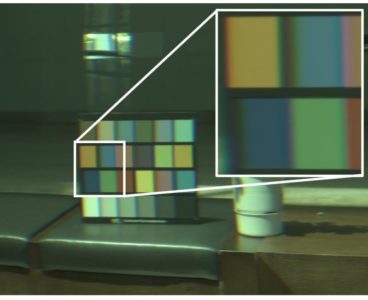
With hyperspectral imaging, photographers can obtain super fine detailed images, capturing the spectrum for each pixel in an image of a scene. This technology has wide reach and is being applied in fields such as military combat, astronomy, agriculture, biomedical imaging and geoscience. Scientists, for instance, rely on hyperspectral imaging to observe and analyze materials…
Ultrasound Imaging Needle to Transform Heart Surgery
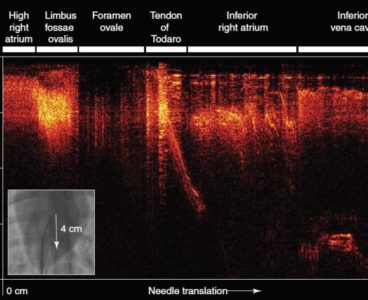
Heart tissue can be imaged in real-time during keyhole procedures using a new optical ultrasound needle developed by researchers at UCL and Queen Mary University of London (QMUL). The revolutionary technology has been successfully used for minimally invasive heart surgery in pigs, giving an unprecedented, high-resolution view of soft tissues up to 2.5 cm in…
Visible Signals From Brain and Heart
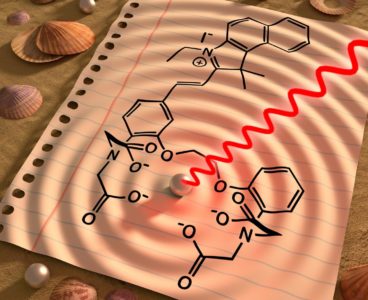
Key processes in the body are controlled by the concentration of calcium in and around cells. A team from the Technical University of Munich (TUM) and the Helmholtz Zentrum München have developed the first sensor molecule that is able to visualize calcium in living animals with the help of a radiation-free imaging technique known as…
MRI-Compatible Robot Could Lead to Individualized Treatments for Stroke Survivors

Engineers Use Machine Learning to Reconstruct Holograms and Improve Optical Microscopy
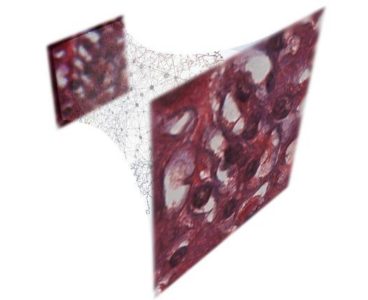
A form of machine learning called deep learning is one of the key technologies behind recent advances in applications like real-time speech recognition and automated image and video labeling. The approach, which uses multi-layered artificial neural networks to automate data analysis, also has shown significant promise for health care: It could be used, for example, to…
Revolutionary Imaging Technique Uses CRISPR to Map DNA Mutations
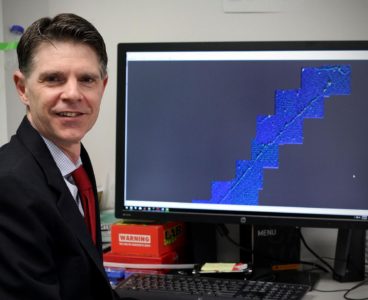
A team of scientists led by Virginia Commonwealth University physicist Jason Reed, Ph.D., have developed new nanomapping technology that could transform the way disease-causing genetic mutations are diagnosed and discovered. Described in a study published today in the journal Nature Communications, this novel approach uses high-speed atomic force microscopy (AFM) combined with a CRISPR-based chemical barcoding…
Algorithm Better at Diagnosing Pneumonia Than Radiologists
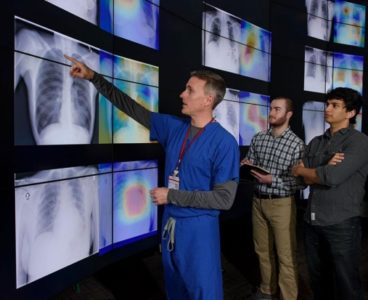
Stanford researchers have developed an algorithm that offers diagnoses based off chest X-ray images. It can diagnose up to 14 types of medical conditions and is able to diagnose pneumonia better than expert radiologists working alone A paper about the algorithm, called CheXNet, was published Nov. 14 on the open-access, scientific preprint website arXiv. “Interpreting X-ray images…
X-Rays Reveal the Biting Truth About Parrotfish Teeth

So, you thought the fictional people-eating great white shark in the film “Jaws” had a powerful bite. But don’t overlook the mighty mouth of the parrotfish – its hardy teeth allow it to chomp on coral all day long, ultimately chewing and grinding it up through digestion into fine sand. That’s right: Its “beak” creates…
Novel ‘Tracking’ Nanoagents Illuminate Very Small Diseased Tissues
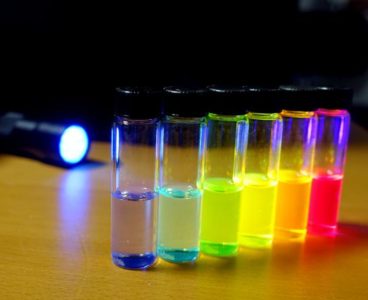
Polymer nanoagents that can ‘light up’ tiny areas of diseased tissues that conventional methods fail to detect, have been created by a research team led by Nanyang Technological University, Singapore (NTU Singapore) The nanoagents, known as ‘semiconductor polymer nanoparticles’ (SPNs), can store light energy from sources such as sunlight, near-infrared light or even light from…
LEDs Light the Way for Better Drug Therapies
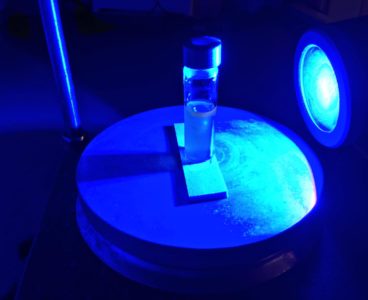
Radioactivity may have a bad rap, but it plays a critical role in medical research. A revolutionary new technique to create radioactive molecules, pioneered in the lab of Princeton chemistry professor David MacMillan, has the potential to bring new medicines to patients much faster than before. “Your average drug takes 12 to 14 years to…