
IBM, Medymatch Partner on Imaging Technology for Brain Bleeding
Imaging at the Speed of Light
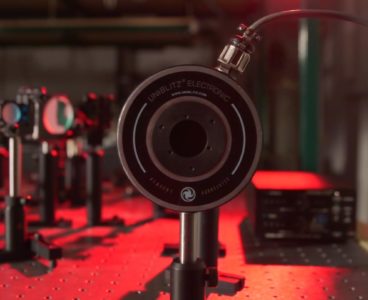
Tiny micro- and nanoscale structures within a material’s surface are invisible to the naked eye, but play a big role in determining a material’s physical, chemical, and biomedical properties. Over the past few years, Chunlei Guo and his research team at the University of Rochester have found ways to manipulate those structures by irradiating laser…
Imaging High Explosive Detonators
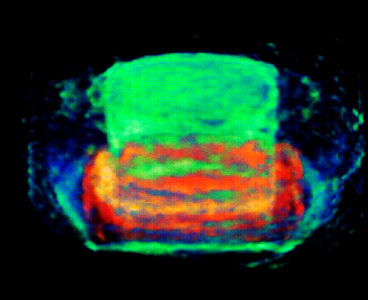
Lawrence Livermore National Laboratory (LLNL) scientists and collaborators at Los Alamos National Laboratory(link is external) (LANL) for the first time have taken 3D snapshots of operating high explosive detonators. Scientists from LLNL, Los Alamos and National Security Technologies, LLC (link is external)(NSTech) combined state-of-the-art imaging capabilities with computed tomographic reconstruction (X-ray cross sectional imaging) in experiments performed at the Argonne National…
Breakthrough in Live Coral Imaging

Super Resolution Imaging Helps Determine a Stem Cell’s Future

Laser-Generated Bubbles Create 3-D Images in Liquid
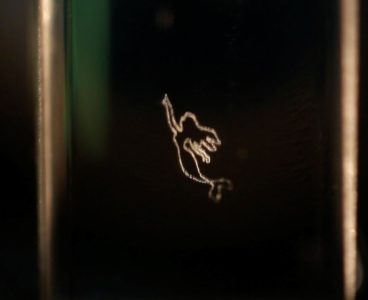
Researchers have developed a completely new type of display that creates 3D images by using a laser to form tiny bubbles inside a liquid “screen.” Instead of rendering a 3D scene on a flat surface, the display itself is three-dimensional, a property known as volumetric. This allows viewers to see a 3D image in the…
Why Medical Technology Often Doesn’t Make It From Drawing Board to Hospital
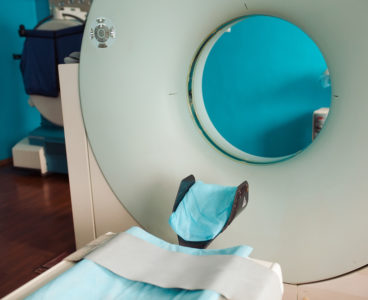
Laser-Based Camera Improves View of Carotid Artery
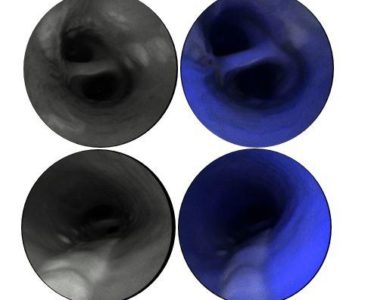
Strokes and heart attacks often strike without warning. But, a unique application of a medical camera could one day help physicians know who is at risk for a cardiovascular event by providing a better view of potential problem areas. A new paper in Nature Biomedical Engineering reports proof-of-concept results for this new imaging platform for atherosclerosis. “The…
Terahertz Wave Microchip Furthers Spectroscopy, Security, Medical Imaging
A new method to harvest terahertz waves— electromagnetic pulses which last one millionth of a millionth of a second—may be the key to advances in medical imaging, communications and drug development. While utilizing these pulses previously required elaborate and expensive equipment, a research team at Princeton University believes they have drastically streamlined the process by…
Novel Liquid Crystal Could Triple Sharpness of Today’s Televisions
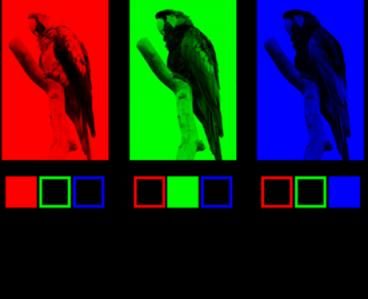
An international team of researchers has developed a new blue-phase liquid crystal that could enable televisions, computer screens and other displays that pack more pixels into the same space while also reducing the power needed to run the device. The new liquid crystal is optimized for field-sequential color liquid crystal displays (LCDs), a promising technology…
Imaging Technique Measures Tumor Stiffness to Aid Surgical Planning
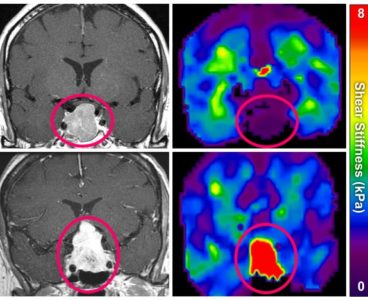
Important steps in planning tumor surgery include identifying borders between tumor and healthy tissue and assessing the tumor stiffness, e.g. hard and calcified or soft and pliant. For decades, tumors near the surface of the body have been evaluated for stiffness by simple palpation—the physician pressing on the tissue. Because tumors within the skull cannot…
X-Ray Imaging at Argonne Captures Material Defect Process

From blacksmiths forging iron to artisans blowing glass, humans have for centuries been changing the properties of materials to build better tools – from iron horseshoes and swords to glass jars and medicine vials. In modern life, new materials are created to improve today’s items, such as stronger steel for skyscrapers and more reliable semiconductors…
New Technology Enables 5D Imaging in Live Animals, Humans

A new image analysis technique makes it easier for scientists to quickly find and track important biological molecules including tell-tale signs of disease. Called “Hyper-Spectral Phasor” analysis, or HySP, it could even be useful for diagnosing and monitoring diseases by using cell phone images. It is much faster and far less expensive than current techniques.…
Chemistry on the Edge

Defects and jagged surfaces at the edges of nanosized platinum and gold particles are key hot spots for chemical reactivity, a team of researchers working at the Department of Energy’s Lawrence Berkeley National Laboratory (Berkeley Lab) and the Hebrew University of Jerusalem in Israel confirmed with a unique infrared probe. Experiments like this should help…
Optical Device Offers Widest Real-Time Views of Vast Regions of the Sun
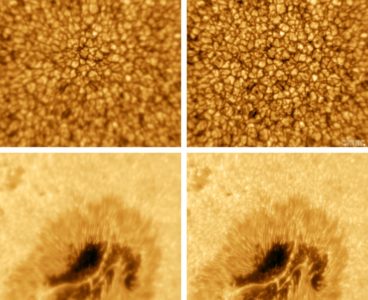
A groundbreaking new optical device, developed at NJIT’s Big Bear Solar Observatory (BBSO) to correct images of the Sun distorted by multiple layers of atmospheric turbulence, is providing scientists with the most precisely detailed, real-time pictures to date of solar activity occurring across vast stretches of the star’s surface. The observatory’s 1.6-meter New Solar Telescope…
New Microscope Chemically Identifies Micron-Sized Particles

Researchers have developed a microscope that can chemically identify individual micron-sized particles. The new approach could one day be used in airports or other high-security venues as a highly sensitive and low-cost way to rapidly screen people for microscopic amounts of potentially dangerous materials. In the journal Optics Letters, from The Optical Society (OSA), researchers from the Massachusetts…
Brain Scans Could Help Detect Concussions

There may be a new method in helping to detect concussions that conventional scans might miss. Researchers from Simon Fraser University in Burnaby, Canada have found that high-resolution brain scans along with computational analysis could help play a role in detecting concussions. The recent study shows how magnetoencephalography (MEG), which maps interactions between regions of…
ALMA Measures Size of Seeds of Planets
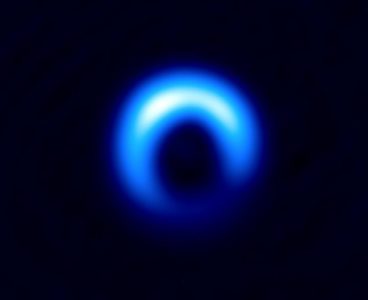
Researchers using the Atacama Large Millimeter/submillimeter Array (ALMA), have for the first time, achieved a precise size measurement of small dust particles around a young star through radio-wave polarization. ALMA’s high sensitivity for detecting polarized radio waves made possible this important step in tracing the formation of planets around young stars. Astronomers have believed that…
Light Detector with Record-High Sensitivity to Revolutionize Imaging
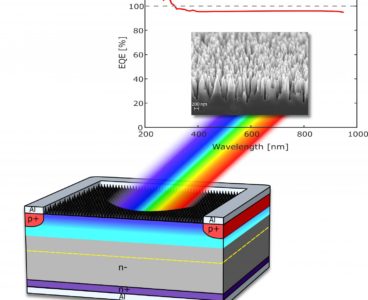
The research team led by Professor Hele Savin has developed a new light detector that can capture more than 96 percent of the photons covering visible, ultraviolet and infrared wavelengths. “Present-day light detectors suffer from severe reflection losses as currently used antireflection coatings are limited to specific wavelengths and a fixed angle of incidence. Our…
First Multicolor Electron Microscopy Images Revealed

The best microscope we have for peering inside of a cell can now produce color images. University of California, San Diego, scientists demonstrate this advancement in electron microscopy — of the ability to magnify objects up to ten million times — with photographs of cellular membranes and the synaptic connections between brain cells. The development…
Metamaterial Device Allows Chameleon-Like Behavior in the Infrared

An electric current will not only heat a hybrid metamaterial, but will also trigger it to change state and fade into the background like a chameleon in what may be the proof-of-concept of the first controllable metamaterial device, or metadevice, according to a team of engineers. “Previous metamaterials work focused mainly on cloaking objects so…
A Team of Physicists Dispel Rayleigh’s Curse

The resolution of an optical system (like a telescope or a camera) is limited by the so-called Rayleigh criterion. An international team, led by Complutense University of Madrid, has broken this limit, showing that it is not a fundamental curse. This opens the door to considerable improvement in resolution and could force the revision of…
Solving The Problem of Glare

Non-Linear Image Filters for Element X-Ray Maps
The 1960s and 1970s proved to be a revolutionary period for the development of new digital image processing techniques. These efforts were mainly focused on medical imaging at the light microscope level and were developed primarily for gray level images acquired with video cameras. With the ensuing emergence of solid state and color cameras, many…