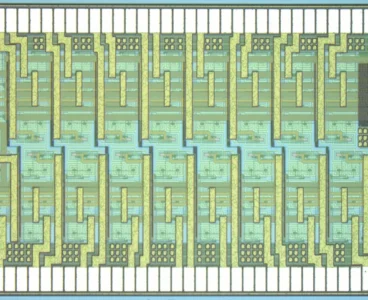
The challenge of powering tiny robots and medical implants may have just gotten a boost. Researchers at UC San Diego and CEA-Leti have developed a microactuator driving system that’s not only compact and lightweight but also highly efficient. The research, which integrates energy storage and voltage conversion, could pave the way for novel designs in…
R&D 100 winner of the day: Onso short-read sequencing system
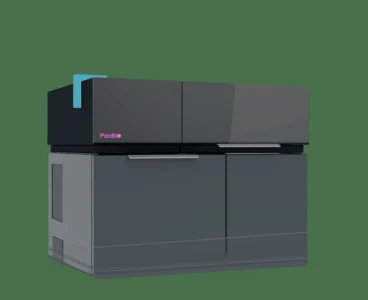
PacBio’s new Onso system offers a unique approach to short-read sequencing using sequencing-by-binding chemistry. This technology delivers low error rates, achieving a Q40+ specification – a 15-fold improvement over traditional methods. This translates to increased sensitivity for detecting rare variants, reduced sequencing requirements, and higher throughput at a lower cost per sample. Onso’s accuracy is…
Ex-OpenAI CTO launches startup to bridge the gap between AI research and real-world applications

Former OpenAI CTO Mira Murati has launched Thinking Machines Lab, an AI startup aimed at democratizing AI by making it more understandable, customizable, and collaborative for diverse applications. “We’re building a future where everyone has access to the knowledge and tools to make AI work for their unique needs and goals,” the company states on…
R&D 100 winner of the day: TRIPWIRE

Nuclear energy is poised to reduce the world’s carbon footprint. TRIPWIRE from Idaho National Laboratory’s approach to managing and mitigating radiological risk is vital to building public trust in nuclear energy as a sustainable, low-carbon power source for a clean energy future. The radiation-monitoring system enables the safe, secure, and cost-effective long-term storage of nuclear…
Musk co-founded OpenAI – now he and investors are offering $97.4B to acquire it

Elon Musk, who co-founded OpenAI in 2015 only to exit a few years later, has joined a consortium of tech investors in an unsolicited attempt to acquire OpenAI for $97.4 billion. Almost immediately after, CEO Sam Altman rebuked him over X, saying that OpenAI would buy the social media platform “for $9.74 billion if you…
R&D 100 winner of the day: Fixing Flue Gas CO2 Into High Performance Polycarbonate Resin
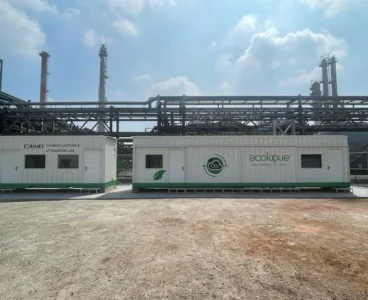
CHIMEI Corporation and Industrial Technology Research Institute (ITRI) have developed a close-looped, zero waste, and non-toxic method to make polycarbonate resin. It uses sophisticated catalysts to effectively address the common environmental problems in traditional methods. This technology avoids toxic chemical feedstock and recycles all solvents and wastewater, significantly reducing energy consumption and overall carbon emissions.…
R&D 100 winner of the day: MOSAIC, Memory-cube Operability in a Stacked AI Chip for Generative AI

The rapid advance of AI is hampered by the “memory bottleneck,” a challenge stemming from the separation of memory and processing units in the von Neumann architecture. This bottleneck is particularly pronounced in generative AI applications, where memory-intensive operations exacerbate the issue. Over the past two decades, the growth of computing power has outpaced memory…
R&D 100 winner of the day: Nanocrystalline Axial Flux Electric Motor
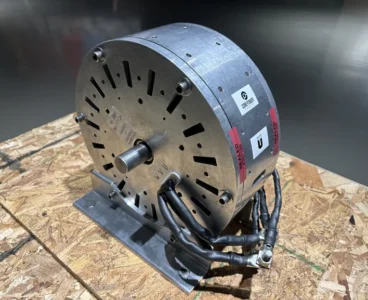
The rapid shift towards electric vehicles is driving a demand for more powerful and efficient electric motors. Traditional electric motors lose a significant amount of energy due to losses in their soft magnetic cores, which are typically the bulkiest components in these systems. CorePower Magnetics (Co-developer: Carnegie Mellon University) has developed a new electric motor…
R&D 100 winner of the day: Electrooculography and Balance Blast Overpressure Monitoring System (EYEBOOM)
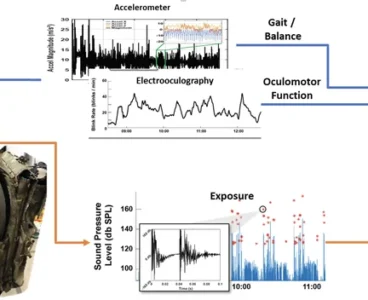
Military/law enforcement personnel are often exposed to blast overpressure in training and operational settings, which can lead to short-term cognitive impairments and increased risk of conditions like anxiety and depression. The Electrooculography and Balance Blast Overpressure Monitoring System (EYEBOOM) is a wearable monitoring system that provides early warning of blast exposure risk from MIT Lincoln…
R&D 100 winner of the day: A Planet-Friendly Powerhouse Behind Data Centers of the Future
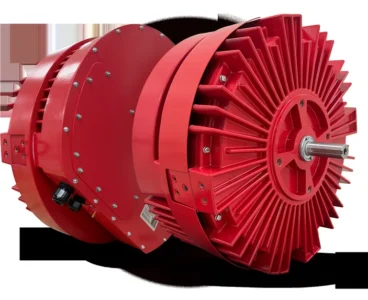
Data centers are facing a growing energy challenge as demand for computing power, particularly for AI applications, continues to surge. According to Goldman Sachs Research, data center power demand is projected to increase by 160% by 2030. This growing demand translates into increased heat generation and, consequently, higher cooling requirements, putting a strain on energy…
R&D 100 winner of the day: Polyphase electromagnetic couplers for extreme fast wireless charging of electric vehicles

Current wireless charging technology for electric vehicles is limited by the bulky and heavy nature of high-power systems. While light-duty vehicles are limited to 11 kW charging, systems capable of 100 to 250 kW are too large for practical use, even in heavier vehicles. This new wireless charging technology development from Oak Ridge National Laboratory…
R&D 100 winner of the day: Ameba RAN for NTN/TN convergence network

Satellite communications, known as non-terrestrial networks (NTN), are bridging the gap in cellular coverage, bringing connectivity to remote areas and disaster zones. NTN technology allows devices to remain connected even when outside the range of traditional cell towers, enabling users to communicate, receive emergency warnings, and navigate.Ameba RAN is a software-defined cellular base station. Ameba…
New printing technology enhances durability and precision in flexible electronics

Tree root systems are often metaphors for strong foundations, strength, and resilience. They are also being used as prototypes for more substantial, adaptable electronics. Researchers at Xi’an Jiaotong University have unveiled a new development in conformal electronics, addressing long-standing mechanical and thermal durability challenges. Their newly developed Template-Constrained Additive (TCA) printing technology, inspired by the…
R&D winner of the day: ENFINIA DNA
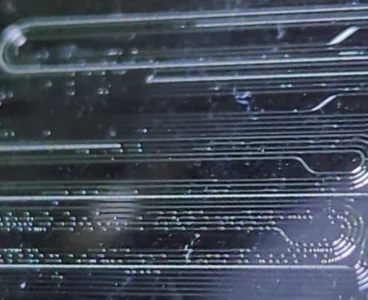
Elegen has developed a custom synthetic DNA product that is changing genetic medicine development. This new technology, which uses a combination of molecular biology, chemistry, and microfluidics, produces linear, double-stranded DNA in a fraction of the time compared to traditional methods. ENFINIA DNA boasts a 20x higher accuracy and lengths up to 20,000 base pairs,…
R&D 100 winner of the day: Autonomous Sparse-Aperture Multibeam Echo Sounder

Detailed knowledge of seafloor topography is valuable for applications ranging from locating missing objects and undersea resources like oil and minerals to tracking human impacts, monitoring marine life, and modeling deep-ocean currents’ climate effects. Yet, most of the Earth’s oceans remain largely unmapped. The challenge lies in the lack of technology capable of producing high-resolution,…
R&D 100 winner of the day: GEM Premier 7000 with iQM3
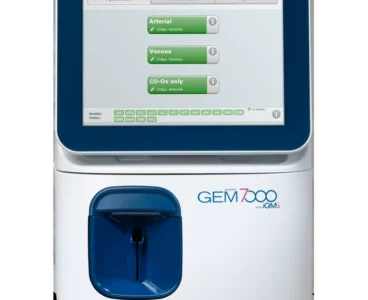
Hemolysis accounts for up to 70% of all unsuitable specimens and can falsely elevate potassium by up to 152%. Potassium is critical in managing cardiac function. Misdiagnosis due to hemolysis can significantly affect the management of the patient, causing repeated blood draws, delays in care, or unnecessary medical interventions. Studies demonstrate hemolysis prevalence throughout acute…
From voice cloning to supply chain attacks, how AI could transform cybersecurity threats in 2025

It’s 10 p.m. on a Sunday when your lead researcher rushes onto an emergency video call. On screen are your CTO and CISO—both visibly alarmed—demanding the immediate deployment of an untested AI model to patch a critical security vulnerability. Their voices and mannerisms feel perfectly authentic. Except they aren’t real. They’re AI-generated clones. And with…
Mary Marcus appointed CEO of NewAge Industries
Press release: Southampton, PA – NewAge Industries, Inc., parent company of AdvantaPure™ and NewAge Performance Products, a global leader in fluid transfer systems solutions for the biopharma and industrial markets, is pleased to announce the appointment of Mary Marcus to the position of CEO. “Since her arrival in 2008, Mary has been a vital part…
Exclusive infographic: Tech giants increase patent lead in 2024
According to an R&D World analysis of major technology companies, the largest tech companies continue to maintain a commanding lead in patent generation, with the profiled companies producing more than 35,000 patents in 2023. This lead widened in 2024, with the 14 tech firms generating patents at 2.8x the rate of the automotive companies profiles…
This week in AI research: OpenAI’s o1 shows STEM promise while Insilico achieves AI drug discovery milestone

In this week in AI research, OpenAI’s latest models impress in some STEM related tasks, especially in coding. Math is another strong point. In addition, Salesforce is making good on its promise to base its company on AI “agents” – autonomous entities handling customer service and scheduling. CEO Marc Benioff posits them as a scalable alternative…
Japanese researchers claim world’s first ‘footprint-free’ cat stem cells

Researchers at Osaka Metropolitan University have announced the generation of the world’s first high-quality, “footprint-free” feline induced pluripotent stem cells (fiPSCs). Publishing their research in Regenerative Therapy, the scientists created novel stem cells that are free from residual reprogramming genes. In other words, no trace of the genetic manipulation used to create them remains. These…
Researchers discover the heaviest antimatter hypernucleus ever observed
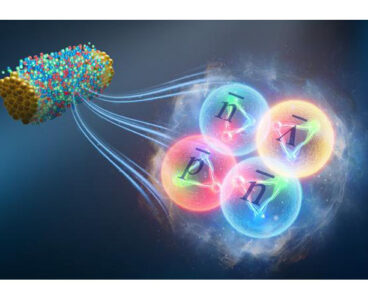
The STAR Collaboration, an international team of scientists using the STAR detector at Brookhaven National Laboratory’s Relativistic Heavy Ion Collider (RHIC), has announced the first observation of an antimatter hypernucleus, antihyperhydrogen-4. Published in Nature, the research describes the hypernucleus, the heaviest antimatter hypernucleus found to date. It is composed of an antiproton, two antineutrons, and…
Deloitte AI expert urges businesses to dive deeper into generative AI

It is becoming increasingly apparent that peak generative AI hype is in the rearview mirror. In June, Goldman Sachs published a report titled “Gen AI: Too Much Spend, Too Little Benefit?” A growing number of AI users on social media are lamenting about the quality of prominent genAI systems — or are complaining about the…
Scientists use neural network to engineer atomic-scale quantum emitter in 2D material
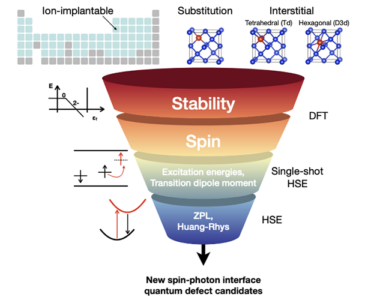
Scientists have engineered a promising new quantum defect using computational modeling. Published in Nature Communications, the research highlights how cobalt, a common metal, could be key to building future quantum computers. The team began by simulating more than 700 potential defects in tungsten disulfide (WS2), a material with desirable electronic properties. To sift through this…
From chiplets to graphene and a second exascale computer, the first half of 2024 continued to push semiconductor limits

Moore’s Law, which predicted the doubling of transistor density roughly every two years, is approaching fundamental physical limits. Yet, GPU technology continues to evolve rapidly, with innovations in architecture and specialized processing units driving consistent performance gains. Multi-chip modules, 3D chip stacking, and advanced cache hierarchies are pushing beyond monolithic die limitations. The first half…