While most labs are bracing for funding cuts and a decreasing payline, Lithios and Deep Isolation just secured a combined $40 million from the Department of Energy as part of the Advanced Research Projects Agency-Energy’s (ARPA-E) SCALEUP Ready program. SCALEUP Ready is a rolling program designed to accelerate the commercial scale-up of high-impact energy technologies…
Three applications of liquid metals for space exploration
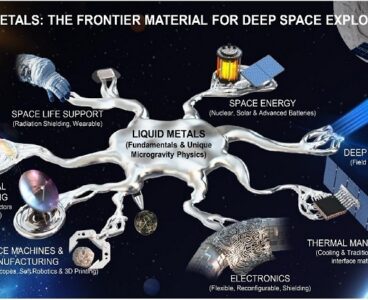
Liquid metals (LMs) have a unique combination of properties that suit the extreme environment of space, such as wide liquid-temperature ranges, high thermal and electrical conductivity, low vapor pressure, large surface tension and responsiveness to electric and magnetic fields. Gallium and bismuth-based alloys are often highlighted as the most promising candidates due to their chemical…
This contact lens measures eye pressure and automatically dispenses medicine
Glaucoma is a leading cause of irreversible blindness, primarily driven by elevated intraocular pressure (IOP) inside the eye. Current treatments include eye drops and clinic visits to check eye pressure, meaning that doctors often miss pressure spikes between visits. A research team from the Teraski Institute for Biomedical Innovation (TIBI) has developed a smart contact…
Trump administration abandons Supreme Court challenge to NIH indirect cost cap

The deadline for the Trump administration to petition the Supreme Court to slash federal support for science funding has passed without action from the administration. This could end a 14-month standoff over a policy to reduce the rate of reimbursement for indirect costs on federal grants. The 14-month standoff The issue began with a decision…
Researchers use hydrothermal carbonization to turn distillery waste into supercapacitor electrodes
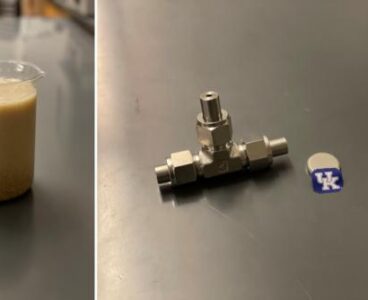
A research team at the University of Kentucky has converted waste from bourbon distillation into electrodes for supercapacitors. They presented their work at the American Chemical Society’s meeting in Atlanta, Georgia, last month, and it is currently under review at a journal. For every barrel of bourbon produced, there are up to 10 barrels of…
U.S. and Korea solidify AI-energy pact: Genesis Mission and K-Moonshot join forces
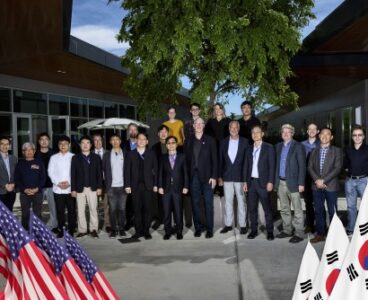
The Korea Institute of Energy Research (KIER) and top U.S. National Laboratories formalize a roadmap to integrate AI into the global energy transition. The KIER, Korea’s only government-funded energy research institute, held workshops from March 23 to 30 with leading U.S. Department of Energy (DOE) national laboratories—the Lawrence Livermore National Laboratory (LLNL) and the National…
HHS to award $144 million for microplastic research

Health and Human Services (HHS) Secretary Robert F. Kennedy Jr. and Environmental Protection Agency (EPA) Administrator Lee Zeldin announced that the HHS’s Advanced Research Projects Agency for Health (ARPA-H) will spend $144 million on external research grants over five years as part of the Systematic Targeting Of MicroPlastics (STOMP) program. The program aims to create…
The photon frontier: how O2O Lasercom is redefining deep-space data on Artemis II
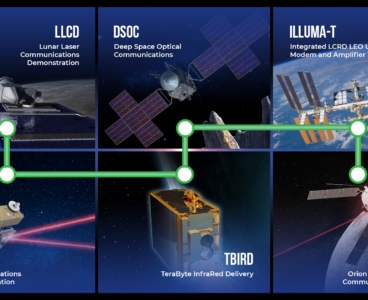
The Artemis II crew has completed its lunar flyby and is embarking on its return trajectory to Earth after setting a new record for the farthest distance humans have ever traveled from our home planet, 252,760 miles. Artemis II is the first crewed mission to the lunar vicinity in over 50 years, since Apollo 17…
Bioengineers utilize AI-driven protein modeling to reconstruct dinosaur leather
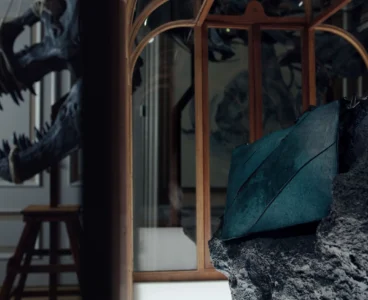
Bioengineers have successfully utilized AI-driven protein modeling to reconstruct Type I collagen from the Tyrannosaurus rex genome. Scientists and designers unveiled the world’s first handbag made from T-Rex Leather last week. The leather was engineered using reconstructed dinosaur collagen. The handbag will be on display beside a life-sized T. rex statue in Amsterdam. VML, a…
Machine learning rewrites the rules for measuring scientific disruption
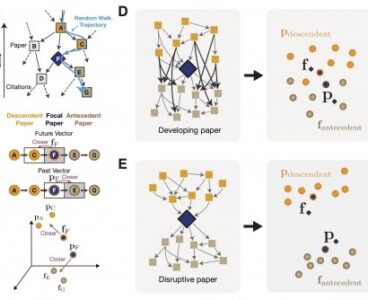
A study in Science Advances maps the landscape of innovation to identify disruptive studies and patents that challenge existing paradigms and inspire waves of follow-up research. The most widely used metric for tracking progress in science, the CD index, focuses on a paper’s local citation patterns, meaning it looks at whether papers citing a focal…
A dual-energy catalyst breaks down drug pollution where conventional treatments fail
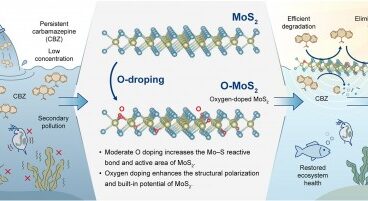
Carbamazepine, a common antiepileptic, is frequently detected in surface water, groundwater and drinking water, where it can induce toxic effects in aquatic organisms and potentially impact human health through long-term exposure. Conventional treatment technologies are often inefficient, have high energy demands or cause secondary pollution when addressing persistent compounds such as pharmaceutical contaminants. Current advanced…
Industrializing the stem cell: NeuroKaire’s new platform for rapid psychiatric drug screening and clinical trials
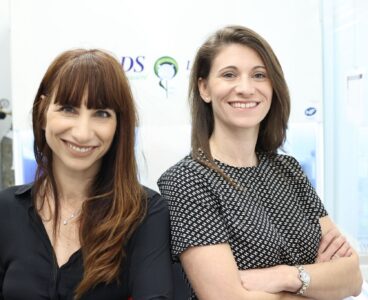
Only one-third of major depressive disorder patients find relief with their first prescribed antidepressant. The current clinical standard involves 4 to 12 week observation periods per drug, leading to months or years of patient suffering and systemic healthcare costs. NeuroKaire’s new CLIA-certified BrightKaire test could help healthcare providers determine which antidepressant could be most effective…
A digital twin for rare earths: Argonne’s bet on AI-driven scale-up
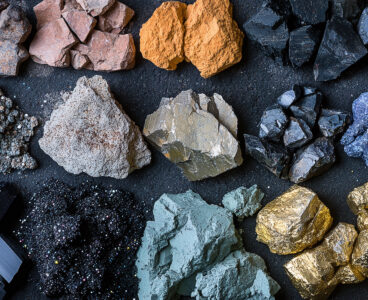
Argonne National Laboratory is working with companies across the mining, processing, recycling and manufacturing value chain to reduce risks associated with the rare earth element industry. These collaborations focus on developing technologies that make domestic production more efficient, resilient and economically viable. As the United States expands artificial intelligence, modernizes the electricity grid and grows…
The self-driving lab: a new roadmap for automation in synthetic biology
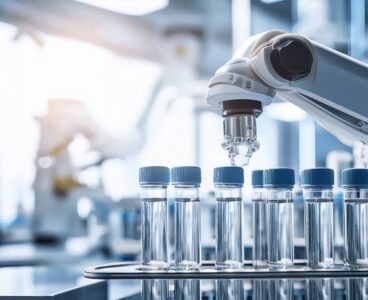
Imagine this: a biology lab at 2 a.m. No researchers are present, but the lab is far from stalled. Robots are hard at work pipetting, incubating and running assays. An AI model is analyzing the results of the last experimental cycle as it queues up the next round. When the team arrives in the morning,…
Bioptimus launches massive patient data atlas to train its biology AI
Bioptimus, a global AI company building models for biology, announced the launch of its Spatial Tissue Embedding Learning Atlas (STELA), a multinational spatial data generation initiative in partnership with 10x Genomics and Broad Clinical Labs. The company aims to solve issues in drug discovery and development, improving efficiency and decreasing costs. Building foundation models for…
NASA prepares Artemis II for launch, marking a critical milestone in SLS and Orion R&D
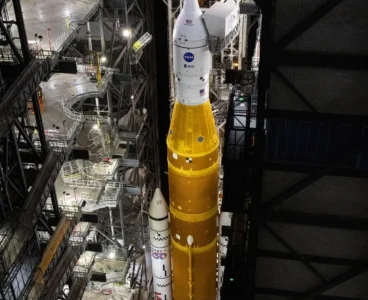
NASA’s Artemis II mission is scheduled to launch this Wednesday evening from the Kennedy Space Center in Florida. The mission is a 10-day journey around the moon, marking the first launch towards the moon since 1972. The crew includes three NASA astronauts: Reid Wiseman, Christina Koch and Victor Glover and one Canadian astronaut: Jeremy Hansen.…
Billionaires, chip makers and one physicist: inside Trump’s PCAST picks

President Donald Trump appointed the first members to the President’s Council of Advisors on Science and Technology (PCAST) last week. PCAST was established by an executive order in January to advise the president on “matters involving science, technology, education and technical information.” The council members are: Marc Andreessen, Sergey Brin, Safra Catz, Michael Dell, Jacob…
New AI satellite framework detects disasters in near real-time
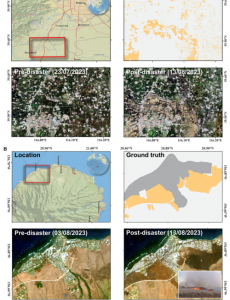
Researchers from Beijing Normal University and East China Normal University have developed a new disaster detection framework called Single-temportal High-spatial resolution image Individual unsupervised change Detection (Shield). They published their research in the Journal of Remote Sensing. The system allows satellites to detect disaster-affected areas directly in orbit. By combining change detection and anomaly detection,…
NASA’s Hubble detects first-ever spin reversal of comet
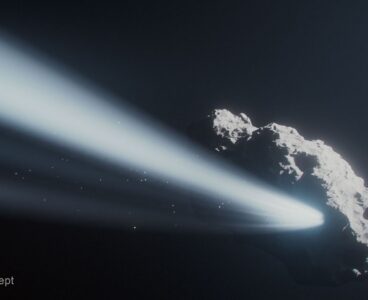
Astronomers using NASA’s Hubble Space Telescope have found evidence that the spinning of a small comet slowed and then reversed its direction of rotation, offering a dramatic example of how volatile activity can affect the spin and physical evolution of small bodies in the solar system. This is the first time researchers have observed evidence…
The (AI twin of the) doctor is in, but it can’t diagnose you

Talk2Me Inc., a licensed celebrity digital twin platform, announced the launch of the Dr. Karan Rajan Talk2Me Twin, an AI-powered version of Rajan’s persona that enables private, one-on-one health education conversations with the doctor. The digital twin is powered by Talk2Me’s proprietary TrueHuman persona modeling platform and enforced by its Guardian Layer medical oversight framework.…
Droplet Biosciences cuts genomic analysis time from 10 days to two with NVIDIA-accelerated computing
Droplet Biosciences, a diagnostics company using lymph-based liquid biopsy testing, is reducing genomic analysis time with NVIDIA AI infrastructure, improving test turnaround times. Unlike blood tests, which are widely used for minimal residual disease (MRD) monitoring, lymphatic fluid allows for earlier collection and increased sensitivity. Droplet has found that postsurgical lymphatic fluid has 130 times…
How Syngenta turned a CNC router into a precision media dispenser for 1/50th of the cost
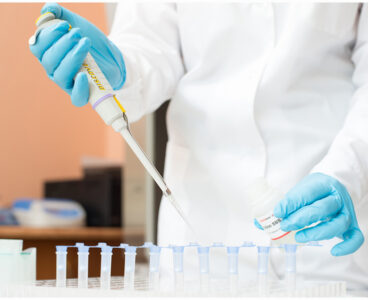
Researchers at Syngenta built a custom Automated Media Dispensing System (AMDS) by repurposing an off-the-shelf OpenBuilds CNC router, showing how manufacturing hardware can be adapted into precision lab instruments for a fraction of commercial cost. They published their findings in SLAS Technology. Plant biotechnology labs routinely need to fill hundreds or thousands of specialized containers…
NASA outlines path to Moon base, permanent lunar presence
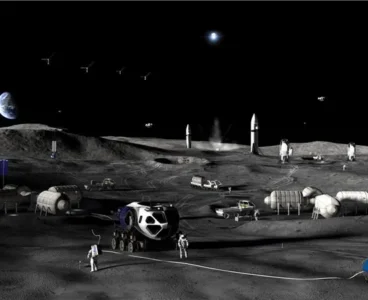
NASA announced a series of agency-wide initiatives designed to achieve President Trump’s National Space Policy on Tuesday. The initiatives include building a Moon base, a plan for continuous American presence on the International Space Station, several science missions and a nuclear-powered interplanetary spacecraft. “NASA is committed to achieving the near‑impossible once again, to return to…
IBM physicist and Montreal computer scientist share Turing Award for quantum information breakthroughs

The A.M. Turing Award, one of the biggest awards in computer science, has been awarded to Charles Bennett, a physicist at IBM, and Gilles Brassard, a computer scientist at the University of Montreal, for “their essential role in establishing the foundations of quantum information science and transforming secure communication and computing.” The award, given by…
Perseverance uncovers buried evidence of Mars’ ancient water history using ground-penetrating radar
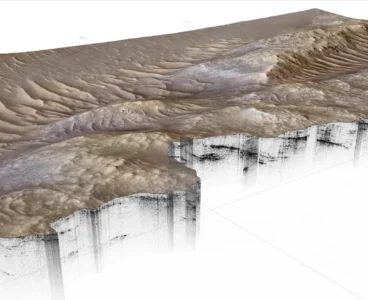
NASA’s Perseverance rover’s ground-penetrating radar detected a magnesium-carbonate formation, evidence of an ancient river delta on Mars. Carbonates record past interactions between water and carbon dioxide in Mars’ atmosphere. The results of the radar observations were published in Science Advances. Researchers said the rover revealed geological features up to 115 feet (35 meters) underground while…