
A research project in Hawaii is turning recycled plastic waste into asphalt, aiming to reduce the environmental impact of marine debris and improve the state’s infrastructure. The program, called Nets-to-Roads, is run by Hawaii Pacific University’s Center for Marine Debris Research (CMDR). The CMDR pulls approximately 200 tons of plastic from the ocean each year,…
DOE announces first selections for nuclear energy DOME program
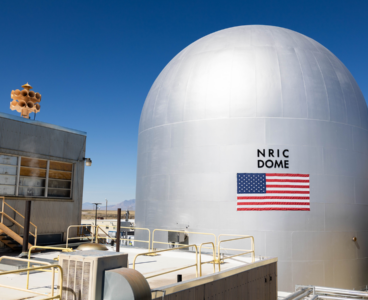
The Department of Energy’s Office of Nuclear Energy and the National Reactor Innovation Center have announced the first selections for the Nuclear Energy Launch Pad. Deployable Energy, General Matter, NuCube Energy and Radiant Industries were selected from an initial pool of Reactor Pilot Program and Fuel Line Pilot Program applicants, the two precursor programs to…
Study shows LLMs can diagnose ER patients more accurately than physicians
A new study in Science reveals that LLMs can now outperform physicians at diagnosis. The study demonstrated that OpenAI’s o1 model identified the correct or a very close diagnosis in 67% of early ER cases, compared to about 50% to 55% for physicians. The model was required to complete various tasks such as reading medical…
These microrobots can collect nanoplastics from water
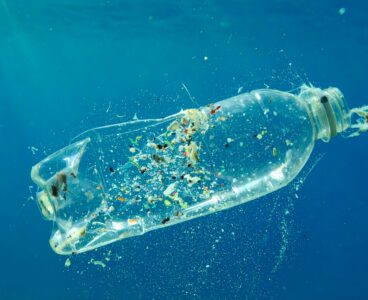
Researchers at Brno University of Technology have developed magnetic microbots that can remove nanoplastics from water via electrostatic attraction. They published their findings in Environmental Science: Nano. Nanoplastics, plastic particles smaller than 100 nm, are considered more dangerous than microplastics because their size allows them to cross cell membranes. They have been detected in the…
House panel reins in Trump’s proposed cuts to science funding for FY 2027

The U.S. House of Representatives Appropriations Subcommittee on Commerce, Justice, Science and Related Agencies approved a bill proposing slimmer cuts to science agencies than those proposed in President Donald Trump’s proposed FY 2027 budget. The bill would still leave the National Science Foundation (NSF), NASA, the National Institute of Standards and Technology (NIST) and the…
Martian chemistry: how the Curiosity rover detected organic compounds on Mars
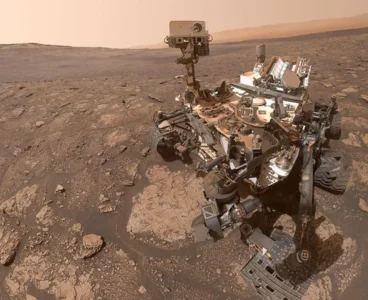
NASA’s Curiosity Mars rover found organic molecules that have never been seen before on Mars. A rock that the rover drilled and analyzed in 2020 includes the most diverse collection of organic molecules ever found on Mars, NASA announced last week. Of the 21 carbon-containing molecules identified in the sample, seven of them had never…
New Pistoia Alliance survey shows just 1% of professionals report AI’s value in the wet lab

The Pistoia Alliance, a life sciences nonprofit organization, today announced new data showing that only 1% of professionals report AI having value in the wet lab. The data also shows that while 30% of organizations claim to have rolled out enterprise-wide AI, 69% lack metrics to show the impact of AI on reducing costs or…
UniX AI’s new robot can tackle your household chores
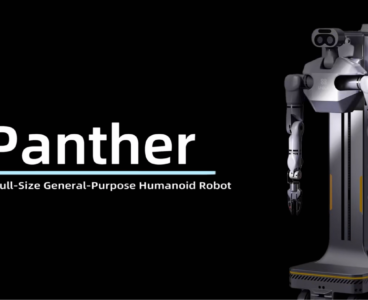
A Chinese robotics company is finally tackling what we all wanted to see robots do: our chores. UniX AI announced earlier this month that its Panther service robot had begun the “first real-home deployment of a mass-produced humanoid robot.” The Panther robot has completed full-stack, continuous multi-task validation in real, unmodified household environments without staging…
Trump fired all 22 members of the NSF’s advisory board, possibly making budget cuts easier to execute
President Donald Trump fired all 22 members of the National Science Board, which oversees the National Science Foundation and guides the president and Congress on science policy, via email on Friday. The board was created in 1950 to advise the administration on science and engineering policy and approve major funding awards. It is usually made…
New metal-organic material can capture water from atmosphere
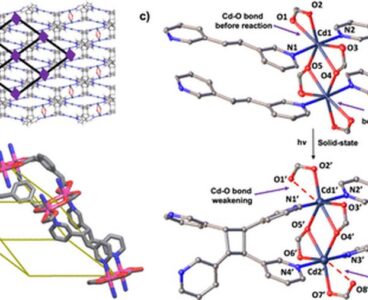
Researchers have developed a metal-organic material (MOM) that can capture water from the air. They published their findings in the Journal of the American Chemical Society. Materials like this could be critical to combating global water scarcity, the paper stated. According to the United Nations, water stress levels reached 18.6% in 2021, rising 2.8% globally…
Roblonski platform automates photochemistry with 1,000-fold reduction in reagent use
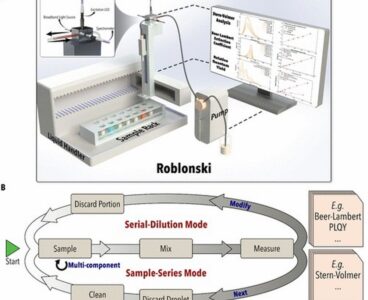
Researchers from North Carolina State University have developed a compact, automated robotic platform for foundational photochemical assays. They call the system Roblonski, after A. Jablonski, who created the Jablonski diagram. They published their findings in ACS Central Science. Reliable photochemical and photophysical characterization is essential for understanding and optimizing photocatalytic processes. However, traditional spectroscopic methods…
Five key trends that defined the show floor at Interphex 2026

Interphex 2026 brought over 600 exhibitors to the Javits Center in New York City this week. Among the hundreds of vendors, a few themes emerged: AI and automation, digitalization and sustainability. The show indicated that discussions around the digital transformation are turning into action. “I think we’re seeing the transition of the discussion around digital…
Interphex 2026 awards honor technologies focused on flexibility, automated workflows and ease of use
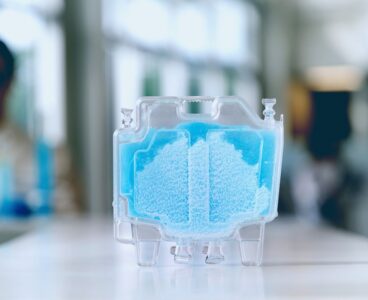
Interphex 2026 featured over 600 exhibitors at the Javits Center in New York City, taking place April 21 through 23. At the show, six technologies were awarded Interphex Exhibitor awards across various categories. The Interphex Exhibitor Awards recognize leading vendors at the show each year for innovative, state-of-the-art technologies. The submissions are reviewed by a…
Sandia scientists develop rapid PFAS test using desorption electrospray ionization
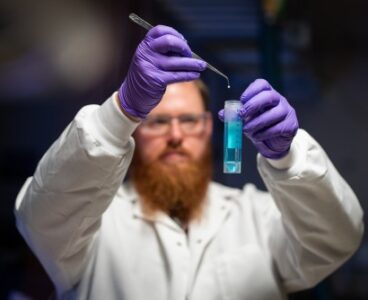
Ryan Davis and Nathan Bays, scientists at Sandia National Laboratories, set out to find a better way to absorb and degrade per- and polyfluoroalkyl substances (PFAS) in water sources, but quickly discovered that detecting the chemicals in the water took too long. They pivoted and have developed a faster, cheaper way to test for PFAS…
NANO Nuclear could have a reactor on the Moon by 2030 CEO says
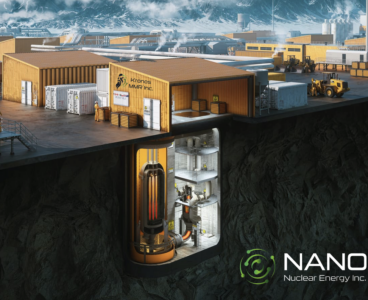
NANO Nuclear Space Inc., a subsidiary of NANO Nuclear Energy, is designing a nuclear reactor for the Moon. James Walker, CEO of NANO Nuclear Energy, says they can get it there by 2030. There are several challenges associated with a lunar reactor, Walker said. The payload has to be smaller for launch, the operation has…
Artemis II experiment uses organ chips to prepare for long-duration missions
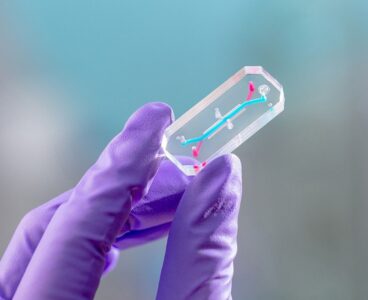
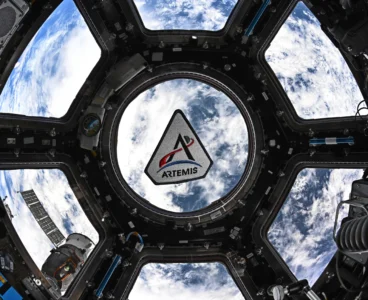
While the Artemis II mission was primarily a test flight for future lunar missions, a small experiment aboard the spacecraft is investigating space’s effects on the human body. The A Virtual Astronaut Tissue Analog Response (AVATAR) experiment used organ-on-a-chip devices to study the effects of deep space radiation and microgravity on human health. The experiment…
Researchers load complete genome onto quantum computer for first time

Researchers last week encoded the complete genome of the hepatitis D virus into a quantum computer for the first time. This indicates that quantum computers could one day aid in genomics research. A team from the Wellcome Sanger Institute and partner universities Oxford, Cambridge, Melbourne and Kyiv Academic University encoded the viral genome using quantum…
What’s next for NASA? Following Artemis II success, NASA pivots to orbital testing for next mission
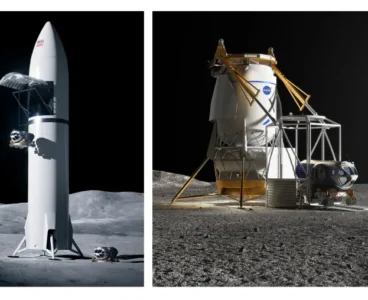
Artemis II splashed down last week, ending the first American lunar mission in over 50 years. But the Artemis initiative is far from over. Artemis III was originally envisioned as a lunar landing mission, but it was significantly revised in February 2026 to ensure safety and technology readiness. Now, it will instead serve as a…
New brain-computer interface allows monkeys to navigate 3D virtual reality
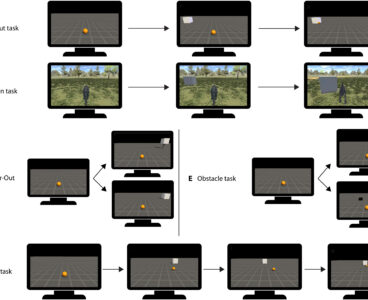
Researchers have developed an intracortical brain-computer interface (BCI) that could someday help paralyzed patients control devices such as wheelchairs and prostheses. They tested the technology in macaque monkeys and published the results in Science Advances. The BCI system drew on neural signals from three regions of the macaque brain: the primary motor cortex and the…
Anthropic and industry leaders debut Project Glasswing to preempt AI-driven cyberattacks

Anthropic last week announced Project Glasswing, in partnership with Amazon Web Services, Anthropic, Apple, Broadcom, Cisco, CrowdStrike, Google, JPMorganChase, the Linux Foundation, Microsoft, NVIDIA, and Palo Alto Networks. Claude Mythos Preview revealed that “AI models have reached a level of coding capability where they can surpass all but the most skilled humans at finding and…
DARPA’s quantum benchmarking push: Can a useful quantum computer exist by 2033?
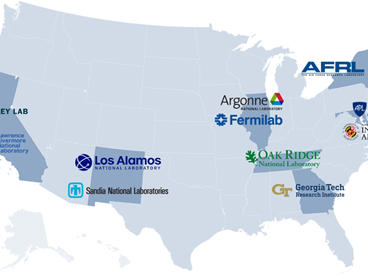
The U.S. Defense Advanced Research Projects Agency (DARPA) is evaluating quantum computing companies through the Quantum Benchmarking Initiative (QBI) to “rigorously verify and validate whether any quantum computing approach can achieve utility-scale operation – meaning its computational value exceeds its cost – by the year 2033,” according to the agency. An initial six-month phase of…
Researchers create first genetic lock to protect billion-dollar cell lines
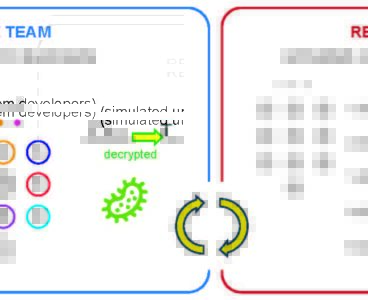
Researchers from Georgia Tech have developed a new biological security technology, GeneLock, to protect high-value engineered cell lines. “A small vial of genetically engineered cells can contain millions of dollars’ worth of intellectual property and require several years of work to develop,” said Corey Wilson, a professor in Georgia Tech’s School of Chemical and Biomolecular…
Proposed budget slashes NSF research funding while prioritizing $900 million Antarctic icebreaker

President Donald Trump’s budget request, released April 3, asks for major cuts to research funding at the National Science Foundation (NSF) while proposing $900 million to fund the construction of a new Antarctic research icebreaker. In 2025, the NSF ended its lease of the RV Nathaniel B. Palmer icebreaker, which it had relied on to…
Researchers develop immune-capable cervix-on-a-chip to advance STI research

Researchers have created an immune-capable “cervix-on-a-chip” that replicates the human cervical environment. The research, published in Science Advances, aims to model how infections develop and spread. Sexually transmitted infections (STIs) of the cervicovaginal mucosa are among the most common global infections. Current monolayer cell culture and animal models fail to reproduce the multilevel complexity required…
How NASA engineered around a known Avcoat failure mode to fly Artemis II’s crew safely home
The heat shield on Orion was tested during the uncrewed Artemis I mission and experienced an anomaly during reentry. As the Orion spacecraft reenters the atmosphere this evening, the Avcoat heat shield will be essential to the safety of the crew. Although NASA is confident the splashdown will occur safely as planned, some experts disagree. …