National laboratories are the primary submitting organization on 51 of this year’s 100 R&D 100 Award winners, with Oak Ridge alone accounting for 18. Companies account for 21. The 2026 winners, announced today by R&D World, were selected from 149 finalists across six categories, 38 of them in Process/Prototyping. This year’s judging panel included more…
Actualyze AI targets the cost and security risks of enterprise AI sprawl

The current AI wave is running into a type of sticker shock reminiscent of what happened when cloud computing went mainstream in the late 2000s and early 2010s. The pitch then was essentially: stop worrying about buying servers and running a data center for capacity you might not need. But it turns out that the…
No propulsion, no problem: How CYGNSS’s solar panels will enable deorbit without propulsion
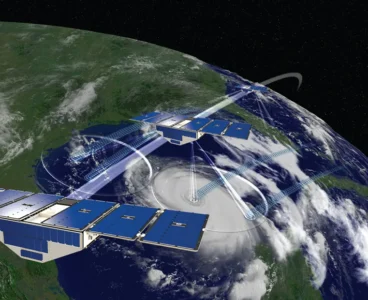
NASA’s Cyclone Global Navigation Satellite System (CYGNSS), which launched in 2016, is deorbiting on New Year’s Day. The technology will live on, commercialized by Muon Space, a Silicon Valley startup that grew out of a Stanford class project. The satellites lack propulsion systems, so they have been steadily losing altitude since launch. They would naturally deorbit sometime next year, burning up on reentry, but NASA decided…
Introducing the 2026 R&D 100 Market Disruptor winners
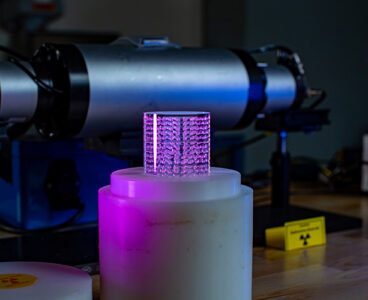
A neutron detector built around abundant lithium instead of scarce helium-3, a battery made of heated sand, and software that spots the faint electrical arcing that starts wildfires. The three winners of the 2026 R&D 100 Special Recognition: Market Disruptor award, announced today by R&D World. Each listing includes the primary submitting organization, followed by…
HORIBA launches combined particle size and shape analyzer
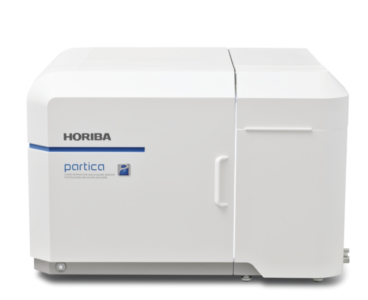
After nearly four decades of developing laser diffraction particle analyzers, HORIBA is repositioning Partica, the brand that has covered its LA-series instruments, around analyzing particle size and shape in a single workflow. The new Partica system combines laser diffraction with dynamic image analysis. HORIBA says the approach gives materials researchers and manufacturers both sets of…
Presenting the 2026 R&D 100 Corporate Social Responsibility winners
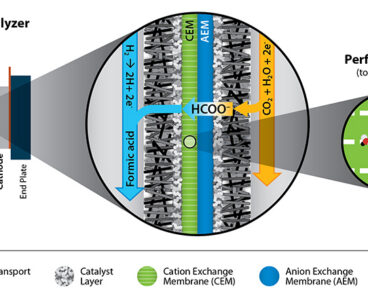
A carbon converter that projects formic acid at $0.60 per kilogram, a freight rail simulator released for free, and a sensor that can tell how much of a plastic bottle used to be a plastic bottle. The three winners of the 2026 R&D 100 Special Recognition: Corporate Social Responsibility award, announced today by R&D World,…
How a Duke-led HPC method brought cell-scale cancer simulation to a single cloud node
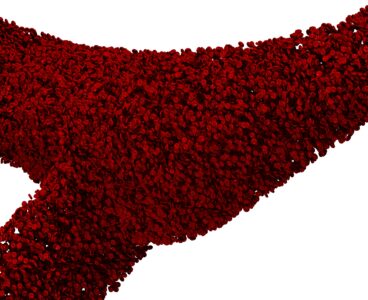
Even on the largest supercomputers, simulations that explicitly resolve every blood cell can only cover a small volume. On Summit, Oak Ridge National Labs’ supercomputer, cell-resolved simulations topped out at roughly a three-millimeter cube. Exascale machines like Aurora and Frontier have pushed that to about a one-centimeter cube with several billion cells, up from around 500 million, said Amanda Randles of Duke…
Announcing the 2026 R&D 100 Special Recognition: Green Tech winners
The Special Recognition: Green Tech winners for the 2026 R&D 100 Awards have been announced by R&D World. Now in its 64th year, the global science and innovation competition drew a similarly global judging panel of more than 50 industry professionals. All three winners this year target the thermal and carbon load of the built…
Operational discipline is a critical determinant of clinical utility for neurologic monoclonal antibodies

By Bill Holt, DO, Vice President, Neuroscience Therapeutic Area, ICON For neurologic monoclonal antibodies (mAbs), the scientific hurdle is no longer the primary barrier to success. Increasingly, operational execution—not efficacy—determines whether these therapies reach patients at scale. From multiple sclerosis (MS) to neuromyelitis optica spectrum disorder (NMOSD) to early Alzheimer’s disease, mAbs have moved from…
AI agents with $3,000 budget flunk open-ended AI research assignment

Will AI soon be able to build AI? Maybe not quite as soon as some pundits have expected, based on a recent preprint from researchers at Princeton, Stanford, UC Berkeley, Johns Hopkins, the University of Toronto, Georgetown and the UK AI Security Institute. One important driver of the current AI wave is the expectation that…
OpenAI debuts ChatGPT for Academic Researchers program will offer complimentary access to 100,000
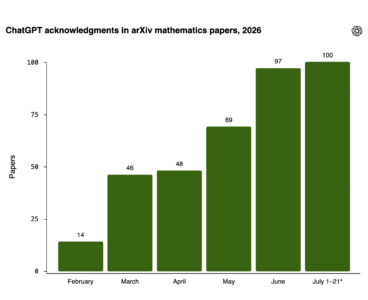
OpenAI has launched ChatGPT for Academic Researchers, a program that offers 100,000 scientists, mathematicians and engineers free access to its frontier models. An initial cohort of 10,000 researchers will receive access this summer, with the program expanding through 2027. OpenAI says participant data will remain excluded from model training by default. The program joins ChatGPT…
Presenting the 2026 R&D 100 Finalists

A total of 149 Finalists for the 2026 R&D 100 Awards have been announced by R&D World. Now in its 64th year, the global science and innovation competition drew entries from eight countries. A similarly global judging panel featured more than 50 industry professionals. Of the 149 Finalists, 76, or 51%, named at least one…
As AI floods drug discovery with designs, Twist uses DNA chips to tackle the wet-lab bottleneck
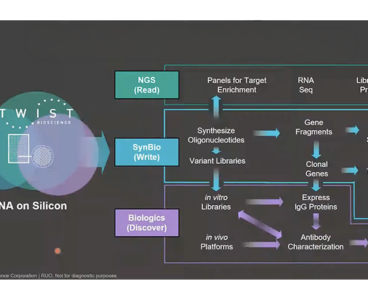
Whatever your take on the current AI wave, it is clear that the prospect of creating software has been transformed. “The most impressive edge of it is probably using [genAI models] to help speed code development. And that’s kind of working,” said the computer scientist Jaron Lanier recently. Frontier AI labs are now pushing for…
Inside AutoLabs: PNNL’s self-correcting AI still needs an expert in the loop
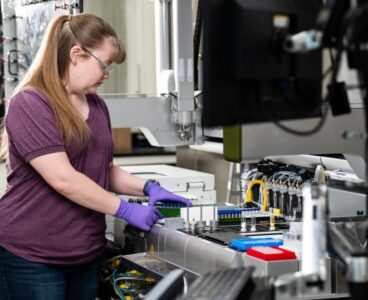
Researchers from Pacific Northwest National Laboratory (PNNL) developed a generative agentic AI that can translate experimental goals into instructions for a laboratory robot. Their paper was published in Scientific Reports. Gihan Panapitiya, a data scientist at PNNL and the lead author of the paper, said the researchers had plans to extend AutoLabs to literature review, persistent memory and other autonomous lab equipment besides the automated lab workstation Big Kahuna…
Claude Opus 5 outscores Fable 5 on 8 of 13 benchmarks at half the token price
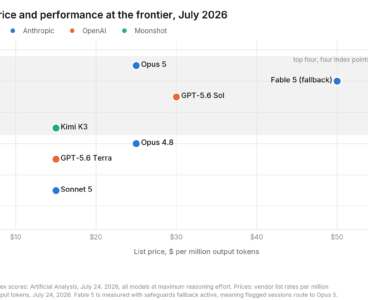
Anthropic’s Claude Fable 5 is arguably the most influential LLM to launch in recent memory, marking the biggest leap in capabilities since Opus 4.5 debuted in November 2025. The publicly available counterpart to Claude Mythos Preview, which had a sizable jump in capabilities, most notably, in cybersecurity, Claude Fable featured stronger agentic performance and markedly…
R&D 100 announcement schedule is released for 2026

This year’s R&D 100 Awards’ grand reveal is coming up quickly. The dates for the various category announcements have now been set. All announcements will first appear here, at R&D World’s website, on the following dates: Friday, July 30th — R&D 100 Finalists Monday, August 3rd — Special Recognition: Green Tech Winners Tuesday, August 4th…
As U.S. power demand surges, Brookhaven taps AWS in aim to drive 20-100x faster power grid decision-making with GridSearch AI
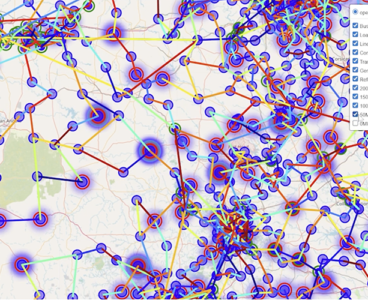
Brookhaven National Laboratory says its GridSearch AI system could cut grid simulations from months to minutes as DOE targets 20–100× faster grid decision-making. Speaking at the recent Genesis Mission Annual Summit, an event dedicated to the U.S. government’s AI-focused initiative that aims to double the productivity and impact of American research and innovation within a…
Judging panel announced for 2026 R&D 100 awards program
This year’s iteration of the esteemed R&D 100 Awards features a judging panel comprised of professionals from across the globe, who boast an impressive collection of accomplishments and honors. Finalists in this year’s 64th R&D 100 Awards will be announced at rdworldonline.com. Winners of this year’s R&D 100 Awards, along with the medalists in the…
SwRI and SMU join push to engineer solid-state battery interfaces

Solid-state batteries have clear advantages, replacing the flammable liquid electrolytes in traditional lithium-ion cells. Manufacturing them remains difficult, given the challenges inherent in solid-to-solid contact during continuous charge and discharge cycles. A central challenge in a solid-state battery is dealing with the boundary between a lithium-metal anode and solid electrolyte. That region will be the…
UC San Diego engineers found a short-cut to higher-energy recycled EV batteries

Engineers at the University of California San Diego have developed a new method to upcycle cathodes from used lithium iron phosphate (LFP) batteries into lithium manganese iron phosphate (LMFP), a material that stores more energy and could offer a more valuable second life for batteries used in electric vehicles and grid storage. The findings were published in Joule. …
The difference between using GenAI and working alongside it
R&D leaders entered 2026 with little doubt that generative AI would reshape how innovation gets done. The uncertainty now lies elsewhere: how much value is actually being created, and where? Despite widespread investment and executive pressure to accelerate adoption, a clear majority of R&D leaders we surveyed say that their current level of GenAI integration…
Recursion says its Norstella-backed real-time simulation can expand trial eligibility by up to 40%

Clinical trials are notoriously difficult to predict, and they have grown more so as protocols pile on endpoints, procedures and eligibility rules. As that complexity climbs, so do the odds of studies needing mid-course changes. The share of Phase 1 through 4 protocols requiring at least one amendment hit 76%, up from 57% in 2015,…
How EcoBOT’s automated plant lab knows where it’s guessing
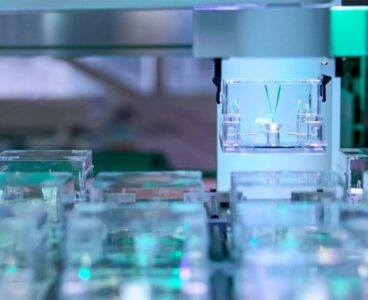
Establishing causal relationships in plant-microbe studies can be exceptionally difficult, as it requires juggling sterility, standardization and manual labor. A single contaminant or inconsistent measurement can render weeks of work unusable. For example, one study on the effects of plant genotype and soil microbiome on growth in Lotus japonicus found that 15% of variability in shoot length was due to variability in the…
China’s Kimi K3 comes close to Fable benchmarks at one-third the token price
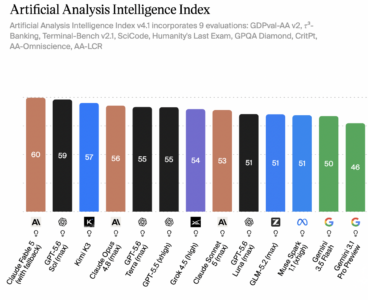
China has done it again. They have launched a new AI model that comes close to the frontier roughly a year and a half after Hangzhou, China–based Deepseek launched R1, a model that was roughly tied with OpenAI’s then frontier model o1. Now, Moonshot AI’s Kimi K3, released yesterday, follows a similar template while matching…
Building a discovery ecosystem: Essential strategies for new science facilities

First-time lab developers succeed not by replicating existing models, but by intentionally building flexible, partnership-driven discovery ecosystems that align tenants, infrastructure and market timing. As demand for science and research space grows and traditional office markets soften, developers are increasingly exploring laboratory and advanced manufacturing projects to diversify their portfolios. Entering the life sciences market, however, presents unique…