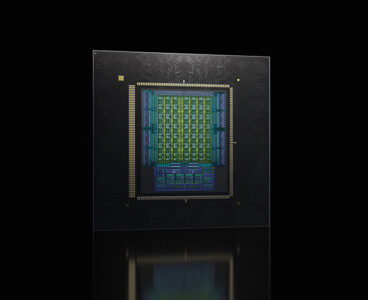
Over the past several months, SpaceX CEO Elon Musk has been increasingly vocal about putting AI data centers in space. In February, he predicted that, within five years, “we will launch and be operating every year more AI in space than the cumulative total on Earth.” He said then that SpaceX, then still a private…
One SwRI R&D 100 winner turns buckled fiberglass into a spacecraft truss. The other models freight rail with 900 hours of BNSF field data
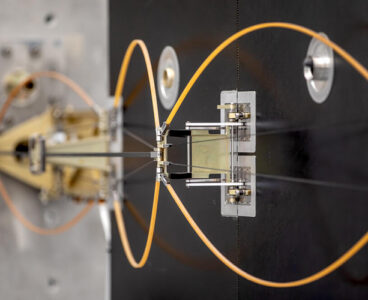
Solar arrays have been standard spacecraft hardware for decades, but their tendency to flex can complicate maneuvers needing precision such as docking. To tame the wobble, Southwest Research Institute (SwRI) developed PaSTA, a technology that can bring rigidity to deployable structures on spacecraft, thus enabling autonomous spacecraft docking operations. PaSTA also happens to be one…
NVIDIA and Apple unveil compact AI computers for robots and agents, claiming 2x and 4x generational AI gains
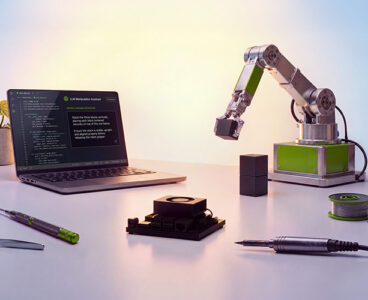
NVIDIA just announced the Jetson Orin Nano 2, a new computer platform for robotics and edge AI that the company says doubles inference performance compared with the Jetson Orin Nano Super. It can also run at 40% less power at equivalent performance. NVIDIA has not yet disclosed pricing, and says the module and developer kit…
SLAC- and Sandia-led program that aims to turn national lab projects into startups has $8.4 million in financial backing
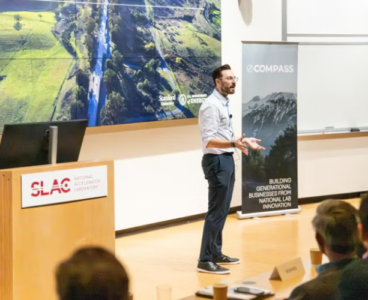
SLAC National Accelerator Laboratory and Sandia National Laboratories will lead COMPASS, a new program with funding from the DOE’s Office of Technology Commercialization that aims to facilitate the launch of startups based on national lab technologies. The program, which is short for Commercialization Pathways for Accelerating Scientific Solutions, has received 8.4 million in funding over three years from the…
Inside the Lab: NETL’s Oil and Gas Center of Excellence focuses on technologies to enhance production
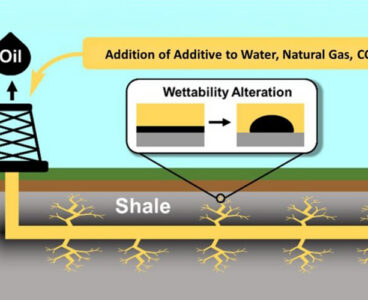
At the National Energy Technology Laboratory (NETL), we are undertaking integrated research aligned with U.S. Department of Energy (DOE) priorities and industrial needs to increase the recovery of hydrocarbons from challenging subsurface formations and enable the development of secure, efficient, and low-impact oil and gas systems. In April 2026, DOE’s Hydrocarbons and Geothermal Energy Office established the Oil and Gas Center of Excellence at NETL. Our capabilities and expertise position us to advance the…
Inside S&C Electric’s and Argonne National Lab’s CRADA partnership
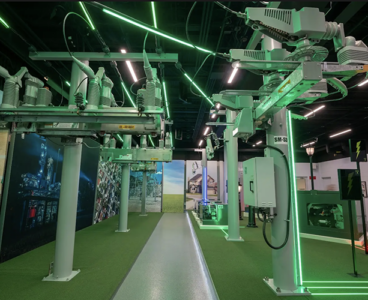
The U.S. power grid is at an inflection point, with factors ranging from blistering summer heat to data center power demand that is potentially set to double from 2025 to 2027, an uptick in wildfires and aging transmission infrastructure. But a significant effort to reshape the grid is also underway. “In this era we’re in…
How LLNL won a $2M grant and found a commercialization partner for its methanol reactor design
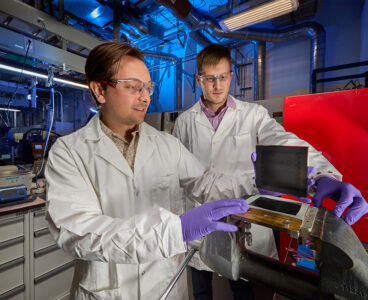
Lawrence Livermore National Laboratory (LLNL) is partnering with Oxylus, a Yale spinout focused on CO2 electrolysis technology, to develop and, potentially, commercialize a reactor that could convert carbon waste to methanol without alkali cations. LLNL won $2 million from the DOE’s Industrial Technologies Office through the Technology Commercialization Fund with the aim of advancing the technology toward commercial use. The partnership between LLN and Oxylus is a Cooperative Research and Development…
EigenQ CEO: Quantum risk puts everything from pharma data and government secrets on the clock
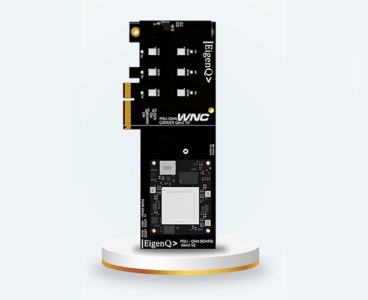
No one knows for sure when quantum computers will be able to crack widely used public-key encryption methods, but the anxieties are on the rise that the threshold may be in the relatively near term. The probability of a cryptographically relevant quantum computer is in the ballpark of 28% to 49% within 10 years and…
The Practical Blueprint for Delivering Flexible, Competitive Labs

Delivering laboratory buildings within tight budgets remains a challenge, particularly for developer-led projects where cost certainty is critical. Early planning decisions shape upfront costs and long-term adaptability. Establishing parameters early helps control capital investment without limiting future usability. Integrating cost estimation consultants, construction managers, and general contractors early in the design process is a key…
New process could reduce energy needed for crude-oil distillation by 31%
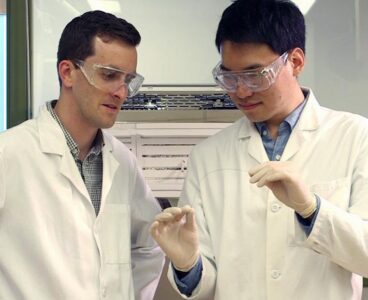
A team of researchers from the U.S. and South Korea have developed a potentially more sustainable way to refine crude oil, reducing the energy needed for the process by 31.6% in process simulations. The team published their findings in Nature. The scientists investigated the use of polyacrylonitrile (PAN) membranes, which are commonly used as a non-selective…
Researchers develop method to convert factory emissions to fuel feedstock without purification

An international team of researchers developed a method to convert the carbon dioxide emitted from factories into fuel feedstock without cleaning or purifying the gas. Traditionally, carbon capture requires costly, energy-intensive purification steps. A paper published in Science estimates that separating carbon dioxide from coal flue gas and compressing it to 150 bar requires at least 0.11 megawatt-hours per ton, or about 0.4 GJ. The…
Winners unveiled for 2026 R&D 100 Special Recognition categories

The winners in the 2026 R&D 100 Awards Special Recognition categories have been announced by R&D World. The honorees were selected by an esteemed judging panel including over 50 well-respected industry professionals from across the world. These and other winners will be celebrated at the R&D 100 Awards Banquet in Scottsdale, Arizona on November 19th. 2026…
R&D World announces 2026 R&D 100 Professional Award Winners
R&D World has announced the winners of the 2026 R&D 100 Professional Awards. The list of 2026 winners follows, along with highlights from their nomination letters. These winners will be formally awarded at the R&D 100 Awards Banquet at the Hyatt Scottsdale, AZ on November 19, 2025. R&D Leader of the Year Kumar Sanketh, R&D…
Anthropic backers eye $2 trillion valuation. Its projected Q2 revenue was $10.9B

Investors have set their sights high for Anthropic, with some eyeing a valuation of $2 trillion or even $3 trillion. While the figures comes from investor models rather than a valuation target set by Anthropic, according to the Financial Times and CNBC, Anthropic could rival or best SpaceX’s record IPO, which raised $75 billion at…
WHOI’s Alvin returns to sea with an autonomous vehicle that can explore down to 11,000 meters
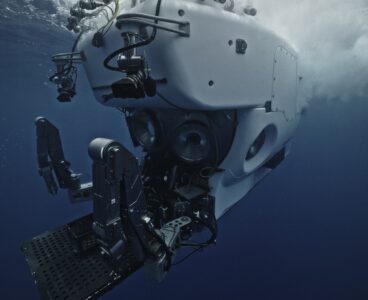
The Human-Occupied Vehicle (HOV) Alvin is returning to the ocean, now with an autonomous underwater vehicle (AUV) that could enable scientists to explore deep-sea trenches. The Woods Hole Oceanographic Institution (WHOI) announced that the U.S. Navy’s Director of Submarine Programs (DSP) has certified the human-occupied submersible Alvin to return to service after its overhaul and testing program. Alvin is owned by…
Norstella launches Atlas, a biopharma agentic platform that can ‘train you’

Enterprise software in drug development tends to arrive slowly. Laboratory information management systems, quality platforms and the enterprise resource planning software they connect to typically take months to deploy. In Panorama Consulting Group’s 2026 ERP report, based on 170 organizations across industries surveyed between January 2025 and January 2026, the median project ran nine months,…
R&D World announces 2026 R&D 100 Leader of the Year
Kumar Sanketh, R&D director of Functional Polymers product R&D within Packaging, Specialty Plastics and Hydrocarbons at Dow Inc., is the 2026 R&D 100 Leader of the Year. Sanketh leads a global product R&D organization of more than 110 employees at six sites across the Americas, Europe and China. He supports business portfolios that drive more…
AI landmine detection reveals bigger problems in computer vision testing

Researchers at Binghamton University are using computer vision and machine-learning to detect landmines from aerial images. Their results reveal the importance of out-of-sample (OOS) testing, which evaluates a model on independently collected images beyond the dataset used to train and tune it. “It’s easy to get numbers in the 80 or 90 percent range if you’re not doing out-of-sample testing,” said…
R&D World reveals 2026 R&D 100 Researcher of the Year
M. Parans Paranthaman, distinguished corporate fellow in the Chemical Sciences Division at Oak Ridge National Laboratory, is the 2026 R&D 100 Researcher of the Year. Paranthaman joined ORNL in 1993 and has worked across materials chemistry, energy storage, high-temperature superconductors, permanent magnets, critical-material recovery and advanced manufacturing. He also holds a joint appointment as a…
Manny Villafaña, who brought the first lithium-powered pacemaker to market, headlines free Min-Vasive Medtech webinar series

Medical Design & Outsourcing‘s Min-Vasive Medtech webinar series runs August 18–20, with one-on-one interviews on medical device engineering and R&D strategy. The sessions are built for device developers, though the topics on the agenda cut across disciplines, including remote robotic ultrasound, multi-arm surgical robots and resorbable artificial grafts. The free, three-day series pairs Arrowfly editors…
R&D World announces 2026 R&D 100 Technician of the Year
Cody Somers, lead technician at Kennametal, Inc., is the 2026 R&D 100 Technician of the Year. Having worked at the industrial technology and manufacturing company Kennametal since 2015, Somers has more than a decade of hands-on experience with tungsten carbide manufacturing processes. At Kennametal, Somers serves as a lead operator for multiple industrial-scale additive-manufacturing systems.…
NSF narrows anti-discrimination rules in grantmaking process
The National Science Foundation (NSF) rescinded a rule that prohibited the use of “criteria or methods of administration which have the effect of subjecting individuals to discrimination because of their race, color or national origin.” In the rule change, the NSF removed the words “or effect” from a rule that prohibited aid recipients from making selections of sites or locations of facilities “with…
Shimadzu updates triple-quadrupole GC-MS line with new detector, multimode inlet
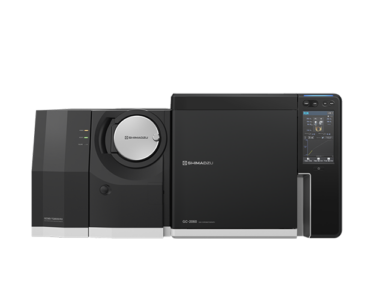
Shimadzu has introduced the new triple-quadrupole GC-MS platform offers an optional multimode inlet and, on the higher-end GCMS-TQ8050 RX, a newly developed detector designed to reduce noise in trace analysis. Shimadzu says the new series delivers up to 25% higher sensitivity than previous models, while faster inlet cooling cuts maintenance waiting time from 40 minutes…
Where AI pioneers Hinton, Li and Ng converge and diverge regarding AI cybersecurity, jobs and education

Nobel Prize winner and deep learning pioneer Geoffrey Hinton, Ph.D., has frequently expressed concern that AI systems could escape human control. At a keynote at the AI4 event in Las Vegas, he pointed to developments that are “scary,” pointing to recent examples of AIs escaping sandboxes at prominent AI companies. “You are seeing AIs with…
Argonne’s ChemGraph opens quantum chemistry to non-experts, tracks AI model performance
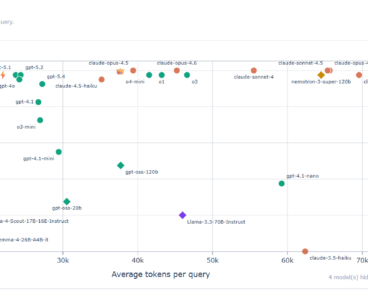
ChemGraph, an open-source AI framework from scientists at Argonne National Laboratory, lets scientists without computational chemistry expertise run quantum chemistry simulations through natural language prompts. Its creators also made a model-by-model reliability leaderboard that ranks models based on various criteria and tasks. In a paper published early this year, the team evaluated ChemGraph across 13 benchmark experiments involving six integrated tools, organized into three categories: molecule names,…