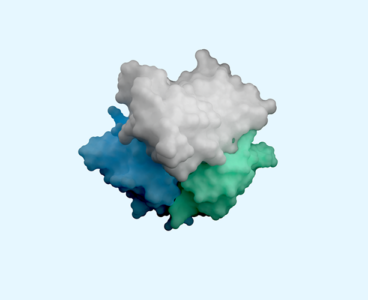
Isomorphic Labs, the Alphabet-backed AI drug design company led by Sir Demis Hassabis, who shared the 2024 Nobel Prize in Chemistry with John Jumper for their work on the protein structure prediction platform AlphaFold, announced a $2.1 billion Series B on May 12. The total outside capital raised to date is about $2.6 billion. Thrive Capital…
New Pistoia Alliance survey shows just 1% of professionals report AI’s value in the wet lab

The Pistoia Alliance, a life sciences nonprofit organization, today announced new data showing that only 1% of professionals report AI having value in the wet lab. The data also shows that while 30% of organizations claim to have rolled out enterprise-wide AI, 69% lack metrics to show the impact of AI on reducing costs or…
Norstella’s AI bet: Clinical trials are often won or lost before the first patient enrolls

Somewhere in the world right now, a patient sits in a clinic waiting room ahead of a clinical trial visit. On the clipboard is eligibility status, recent labs, comorbidities, medication history, prior notes, all of it needing clinician review before anything else happens. This is the smallest waiting room in the whole system. Zoom out,…
Five key trends that defined the show floor at Interphex 2026

Interphex 2026 brought over 600 exhibitors to the Javits Center in New York City this week. Among the hundreds of vendors, a few themes emerged: AI and automation, digitalization and sustainability. The show indicated that discussions around the digital transformation are turning into action. “I think we’re seeing the transition of the discussion around digital…
Why pharma R&D procurement is often still too bespoke

The pharmaceutical industry operates in a universe where the inverse of Moore’s Law holds true. In a seminal 2012 paper, investment analyst and researcher Jack Scannell coined the term “Eroom’s Law” to explain the reality that drug development tends to get dramatically more expensive over long stretches of time. While Eroom’s Law is not usually…
Anthropic and industry leaders debut Project Glasswing to preempt AI-driven cyberattacks

Anthropic last week announced Project Glasswing, in partnership with Amazon Web Services, Anthropic, Apple, Broadcom, Cisco, CrowdStrike, Google, JPMorganChase, the Linux Foundation, Microsoft, NVIDIA, and Palo Alto Networks. Claude Mythos Preview revealed that “AI models have reached a level of coding capability where they can surpass all but the most skilled humans at finding and…
Three Ways AI and Automation Are Reshaping Drug Safety
As clinical trials expand globally, their complexity has intensified, with a recent study indicating average complexity scores have risen by more than 10 percentage points in the last decade. This growing intricacy, compounded by exponential data growth and rapidly evolving regulations, reveals the limitations of traditional, manual pharmacovigilance systems and the urgent need for innovation.…
Industrializing the stem cell: NeuroKaire’s new platform for rapid psychiatric drug screening and clinical trials
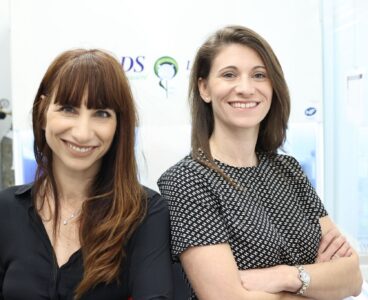
Only one-third of major depressive disorder patients find relief with their first prescribed antidepressant. The current clinical standard involves 4 to 12 week observation periods per drug, leading to months or years of patient suffering and systemic healthcare costs. NeuroKaire’s new CLIA-certified BrightKaire test could help healthcare providers determine which antidepressant could be most effective…
A digital twin for rare earths: Argonne’s bet on AI-driven scale-up
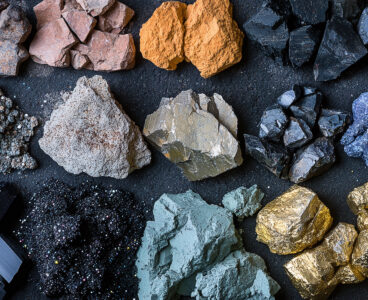
Argonne National Laboratory is working with companies across the mining, processing, recycling and manufacturing value chain to reduce risks associated with the rare earth element industry. These collaborations focus on developing technologies that make domestic production more efficient, resilient and economically viable. As the United States expands artificial intelligence, modernizes the electricity grid and grows…
UniteLabs is building the software layer for automated labs
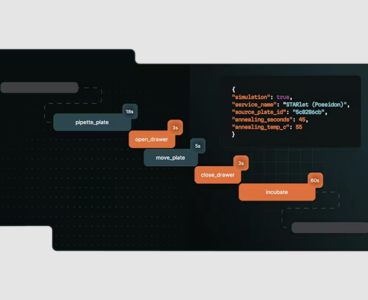
The idea of autonomous labs may be in the air, but most labs are still mostly manual. In fact, self-driving labs today are roughly where self-driving cars were a decade ago: a handful work impressively in controlled conditions, but the infrastructure to make them general-purpose, which from instrument connectivity to data standards and workflow…
Trump’s first science advisors have a financial stake in AI. Five alone have a net worth $874 billion.

A financial stake in AI. That is the single common thread linking all 13 members of the President’s Council of Advisors on Science and Technology. Seven are current or former tech company CEOs or co-founders whose revenues depend directly on AI growth. Jensen Huang leads NVIDIA, which posted $216 billion in revenue last year, nearly…
Unlocking AI’s potential in the lab: Practical strategies to strengthen your automation and data foundation
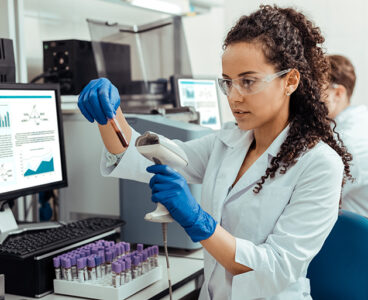
It’s accepted wisdom that digital transformation in the lab, including AI, can produce a significant improvement in efficiency, reproducibility and scientific insights. Life sciences organizations now see AI as the route to accelerating every step of the discovery process, from hypothesis generation and experiment planning and execution to data analysis and decision-making. In practice, however,…
Pittcon 2026 guide to exhibitors, launches and key trends

Pittcon 2026 brought together more than 300 exhibitors across analytical instrumentation, laboratory informatics, automation, materials characterization, and scientific services. This guide pair in-depth company profiles with concise A-to-Z capsule summaries so readers can quickly identify notable launches. Agilent (Booth 1436) Agilent brought its LC refresh to San Antonio. The Infinity III LC Series, spanning the…
White House wins pledge from tech firms including Amazon, Google, Meta and Microsoft to fund power for AI data centers

When a major commercial development goes up in the U.S., the builder typically pays for nearby road improvements, projects that can run into the millions of dollars per mile. On Wednesday, the White House applied that same logic at a vastly different scale, announcing that seven of the world’s largest tech companies have pledged to…
Atinary launches its first self-driving lab in Boston

Atinary this week announced the launch of its new AI-powered laboratory in Boston, MA. The new lab will enable faster, more reliable discovery across chemistry, materials and pharmaceutical R&D. By moving beyond software into the physical execution of science, the facility is designed to catalyze faster, more reliable breakthroughs in chemistry, materials science and pharmaceuticals.…
First memristor-based cellular neural network cuts power demands
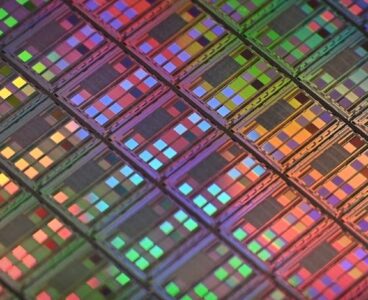
A research team led by the University of Massachusetts Amherst aims to address the massive volumes of digital information that drain energy and slow data transmission speeds with a new technology that uses old-school analog computing: an electrical component called a memristor. The name memristor is a combination of “memory” and “resistor.” A memristor is…
AI tool used to detect pancreatic cancer in routine CT scans in China
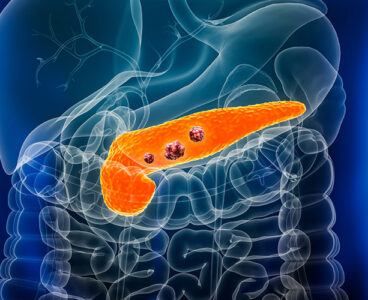
A clinical trial of an AI system at the Affiliated People’s Hospital of Ningbo University in Ningbo, China, has detected more than 20 cases of pancreatic cancer, 14 of which were in early stages, since the trial started in November 2024. Early detection is essential for the treatment of pancreatic cancer, which has a five-year…
Revvity joins R&D’s move toward MaaS, touting intelligence as a service
Revvity, a science technology company, announced the introduction of a new Model-as-a-Service (MaaS) called Signals Xynthetica on Tuesday, adding to a growing trend that is democratizing predictive modeling. Instead of building models, which is expensive and requires specialized skills, companies are now subscribing to pre-trained, high-fidelity models. This allows labs that couldn’t afford to build…
Trump’s Genesis Mission – making the world’s most complex AI platform

The White House announced “a dedicated, coordinated national effort to unleash a new age of AI‑accelerated innovation and discovery that can solve the most challenging problems of this century,” the Genesis Mission, according to an executive order published on Monday. The mission will train AI agents to test hypotheses, automate research workflows and accelerate innovation…
The researcher of the future uses AI, collaborates globally and conducts research with a real-world impact

Elsevier’s “Researcher of the Future Report,” published earlier this month, reveals that while 58% of researchers use AI tools for work, 45% feel undertrained in AI. Even so, researchers identify the benefits of AI, with 58% of researchers saying it saves them time. 68% of researchers say the pressure to publish is greater than it was…
AI is decoding whale songs

The Cetacean Translation Initiative (CETI) has been translating sperm whale communications since its founding in 2020. CETI is now made up of more than 50 researchers who are using artificial intelligence to help them understand the whales’ language. Now, with help from a team at MIT, they are using an LLM (large language model) to…
Verily integrates NVIDIA AI tools into precision health platform
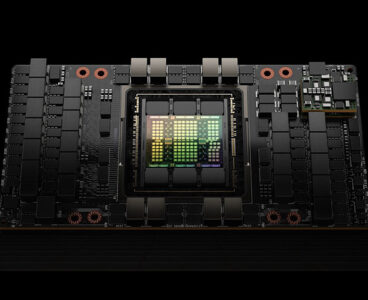
Verily, a Dallas-based Alphabet subsidiary that Alphabet is preparing to spin off or sell, announced Tuesday it is integrating NVIDIA’s AI software stack into Pre platform, its platform for analyzing health data. Specifically, NVIDIA NeMo, Parabricks and CUDA-X Data Science are now available as pre-configured applications within Verily Workbench, the company’s trusted research environment (TRE),…
ELaiN: Sapio Sciences’ new AI-powered ELN

Since the 1990s, scientists across fields have used electronic lab notebooks to record data and take notes. Before that, they used paper records. Now, the next generation of lab notebooks is emerging: AI ELNs. AI ELNs, sometimes called AILNs, are ELNs with generative AI tools and features built into the user interface. These new programs…
Thermo Fisher to collaborate with OpenAI to speed drug discovery

Thermo Fisher is entering a collaboration with OpenAI to “help to improve the speed and success of drug development,” the company announced today. Thermo Fisher is embedding OpenAI Application Programming Interfaces (APIs) into product development, service delivery, customer engagement and operational efficiency, the company said. Thermo Fisher said the collaboration will shorten the cycle time…
Could AI smell cancer? Science says yes

In 1982, Joy Milne detected her husband’s Parkinson’s disease with her heightened sense of smell. She wouldn’t realize the source of the scent until after her husband was diagnosed with Parkinson’s over a decade later. The couple attended a support group, and Milne smelled the disease on almost every person there. The Milnes’ case was…