
NVIDIA has unveiled the BioNeMo Agent Toolkit, an open, harness-agnostic platform that gives AI agents or software platforms the building blocks to specialize for science. Debuting with adoption from nearly 50 partners, including Eli Lilly, Thermo Fisher Scientific and Dassault Systèmes, the toolkit packages NVIDIA’s life-sciences software, models for tasks such as protein-structure prediction, molecular…
MilliporeSigma’s CTO on AI retrosynthesis, the Merck KGaA–Siemens deal and the chemistry that runs the autonomous lab

Over the past decade and a half, the Darmstadt-based Merck KGaA has assembled a supplier that touches nearly every bench in the lab. It bought Millipore in 2010, with the membrane filters and Milli-Q water systems that had been lab staples since the 1950s, and added Sigma-Aldrich and its ubiquitous reagents catalog in 2015 for…
Medable’s Digital Data Flow Agent focuses on protocol translation as the agentic race accelerates

In January 2024, Medable, the decentralized clinical-trial company headquartered in Palo Alto, used AI to translate a study protocol directly into a configured eCOA mobile app, complete with questionnaires, workflows and translation into roughly 25 languages. The company said then the feature could halve eCOA deployment timelines, which had typically run 12 to 16 weeks.…
AI image firm Midjourney spins up health division, unveils ‘Ultrasonic CT’

A blog post from the AI image company announced the launch of a whole-body ultrasound scanner users would step into through a pool of water. “We’re building a bold new kind of machine to reimagine the foundations of healthcare and our relationships to our bodies,” the company noted. The “Ultrasonic CT” will be featured in…
Q&A: Owkin’s five-year Sanofi deal bets on ‘purpose-built’ AI agents

Over the past two years, software engineering has handed a growing share of its routine work to AI agents. At one end of the spectrum, companies ranging from Google to Anthropic use AI to write the bulk of their code. At the other, there are reports of the bills coming due for heavy users at…
Genetically modified hookworms could produce and deliver therapeutics within a host

Researchers at Washington University have genetically engineered hookworms to produce and secrete a human antibody, creating a “living pharmaceutical biofactory,” according to the study published in Nature Communications. To survive within the human gut, hookworms secrete over 800 molecules to modulate inflammation and maintain homeostasis. “We thought: what if we make it secrete one more…
Leica, Indica Labs and Lunit team up as AI biomarker scoring moves toward clinical scale
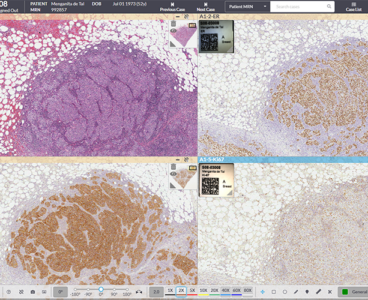
Digital pathology matured quickly during the pandemic, when remote work needs and temporary FDA enforcement discretion lowered the perceived barriers to whole-slide imaging. Capital followed. Roche’s May agreement to acquire PathAI for up to $1.05 billion, pending closing, is only the most recent sign of how much money is chasing the field. The most valuable…
Beyond the sequence: how Ötzi the Iceman exposed the blind spots of pure metagenomics

A team of researchers recently uncovered living microorganisms on the remains of the 5,300-year-old Iceman, revealing a methodological gap in modern genomics. In a study published in Microbiome, the team showed that while DNA analysis can map the presence of ancient genetic material, traditional petri dish cultivation remains necessary to determine if those microorganisms are…
Flatworms sacrifice healthy cells to destroy the root cause of mutations in explosive immune response

Stanford scientists have discovered a new kind of cell death in flatworm immune cells. Called ruptosis, the mechanism results in the cell exploding and taking out approximately 70 cells surrounding it. The flatworms, Schmidtea mediterranea, evolved to sacrifice healthy cells through this process in order to ensure the elimination of biological threats. Unlike vertebrate immune…
OpenAI research and product leads detail GPT-Rosalind capabilities and benchmarks

Solving humanity’s biggest problems has been OpenAI’s stated reason for pursuing artificial general intelligence since its 2015 founding, and over time, life science challenges have crystallized as core parts of its vision. In February 2025, CEO Sam Altman wrote that “we can now imagine a world where we cure all diseases,” and by that September…
Sanofi deepens its Owkin bet with a five-year deal to build bespoke drug-development agents
Agentic AI company Owkin and Sanofi have extended their collaboration with a five-year license for K Pro, Owkin’s AI scientist, under which Owkin will lead the end-to-end development of novel, purpose-built biopharma agents for Sanofi. Owkin pitches K Pro as a system that reasons over biological data and orchestrates AI agents to run research and…
Mammogen raises up to $30M to advance RNA blood test for early breast cancer detection

The Newport Beach, California diagnostics company Mammogen has raised up to $30 million in Series A financing led by a major U.S. public retirement system to advance genTRU-breast. The technology is an RNA-powered blood test for earlier breast cancer detection in women with dense breast tissue, where mammograms are harder to read and patients often…
Lilly’s $3.8B vaccine deal caps a $25B, 2026 push to preempt disease

2026 wasn’t looking like a strong year for vaccine dealmaking. Robert Kennedy Jr.’s HHS terminated $500 million in BARDA-backed mRNA contracts last August, then recommended shrinking the childhood vaccine schedule from 17 diseases to 11. A federal judge blocked those changes in March; the legal status of U.S. vaccine policy remains unresolved. Meanwhile, in February,…
Pistoia Alliance on why 69% of life sciences firms can’t measure AI’s impact, and the architectural shift that could change that

Over the past few years, consulting firms and vendors have urged life science organizations to reinvent their operations with generative AI and, more recently, with semi-autonomous agents. A February 2026 Pharmaphorum analysis by NVIDIA’s David Ruau predicted that AI scientists would become “essential collaborators” embedded across the research lifecycle as 2026 progresses. The transition remains…
Accelerating drug discovery: The convergence of quantum chemistry, machine learning and molecular dynamics

The modern pharmaceutical industry is navigating an era of rapid scientific progress, yet it remains constrained by a fundamentally inefficient development pipeline. Bringing a single new drug to market takes an average of 12 years and costs nearly $3 billion.1 Roughly 90% of drug candidates that enter clinical trials fail to achieve regulatory approval,2 often…
Longevity biotech learned to speak pharma’s language. Now the field is maturing.

Longevity medicine is gradually going mainstream in pharma. In April, Insilco Medicine unveiled what it termed the industry’s first longevity board, a panel aimed at accelerating AI-driven aging research into new therapies. Chairing the board is Eli Lilly molecular discovery executive Andrew Adams, alongside Nobel laureate Michael Levitt, Medici Therapeutics CEO Denitsa Milanova, and Insilico…
Fujifilm Cellular Dynamics opens Madison iPSC manufacturing site as stem-cell science moves toward scale

FUJIFILM Cellular Dynamics opened a new headquarters and iPSC manufacturing facility in Madison on May 19, expanding the company’s capacity to produce human cells for drug discovery, toxicity testing, stem cell banking and cell therapy development. The 175,000-square-foot campus, part of a $200 million strategic investment announced in 2023, includes process development laboratories and a…
Stanford bioengineers compress protein engineering cycle to 24 hours

Stanford researchers have announced that they have compressed a time-intensive protein building and testing process to 24 hours. Published in Molecular Systems Biology, the paper describes a method known as MIDAS (Microbe-Independent Deep Assembly and Screening) that differs from traditional protein engineering, which requires cloning genes into circular plasmids, growing them in bacteria or yeast,…
Why Accenture is investing in the Seattle startup Iridius to unblock AI in regulated industries

Companies from Palantir to Salesforce to Veeva are racing to speed up regulatory workflows with AI agents, as is a wave of startups targeting everything from clinical document generation to pharmacovigilance case processing. Meanwhile, many large pharmas are pursuing a build-and-compose strategy of their own, stitching AI into existing regulatory systems, validated workflows and company-specific…
Why Twist Bioscience’s complex genes offering is a bet on AI-driven protein design

Say you are in the market for form-fitted clothing for a special event. Off the rack won’t do, and your tailoring requests are demanding: structural alterations, unusual fabrics, tight deadline. Some tailors might balk at the request. Others might take your measurements, feed them into the system and tell you the job can’t be done.…
Cradle co-founder Elise de Reus on why openness is protein engineering’s competitive advantage

Several of the highest-profile AI-biology startups have made openness part of their strategy. Profluent, an Emeryville-based protein design company, open-sourced OpenCRISPR-1, which it calls the first AI-created gene editor to successfully modify human DNA, and says tens of thousands of researchers have accessed it since 2024. Xaira Therapeutics, co-founded by Nobel laureate David Baker with…
PacBio’s HiFi Solves Consortium identifies genetic causes in 1 in 10 infertile couples

PacBio’s HiFi Solves Sub-fertility Consortium published a preprint of its first major study. The study focused on couples with unexplained subfertility or recurrent pregnancy loss after standard clinical evaluation had ruled out known causes. Subfertility affects approximately one in six couples globally. Genetic evaluation often remains fragmented, requiring multiple sequential tests over months to years…
Researchers validate first clinical test for Andes virus

An outbreak of Andes virus (ANDV), a strain of hantavirus, on a cruise ship has made a diagnostic test more urgent than ever. The incubation period for ANDV ranges from four to 42 days, with symptoms becoming life-threatening in 24 to 48 hours, making early detection essential. ANDV is also the only known strain of…
Alphabet-spinoff Isomorphic Labs raises $2.1 billion in quest to ‘solve all disease’ with AI-based drug discovery tools
Isomorphic Labs, the Alphabet-backed AI drug design company led by Sir Demis Hassabis, who shared the 2024 Nobel Prize in Chemistry with John Jumper for their work on the protein structure prediction platform AlphaFold, announced a $2.1 billion Series B on May 12. The total outside capital raised to date is about $2.6 billion. Thrive Capital…
We are still likely years away from a hantavirus vaccine

A recent outbreak of the Andes (ANDV) strain of the hantavirus aboard a cruise ship has increased public interest in efforts towards a vaccine. However, a publicly available vaccine is likely still several years away. ANDV causes Hantavirus Pulmonary Syndrome (HPS), which has a 30% to 50% fatality rate. Some research also indicated that the…